Why Faking Interaction Signals with Click Bots Always Ends in Failure
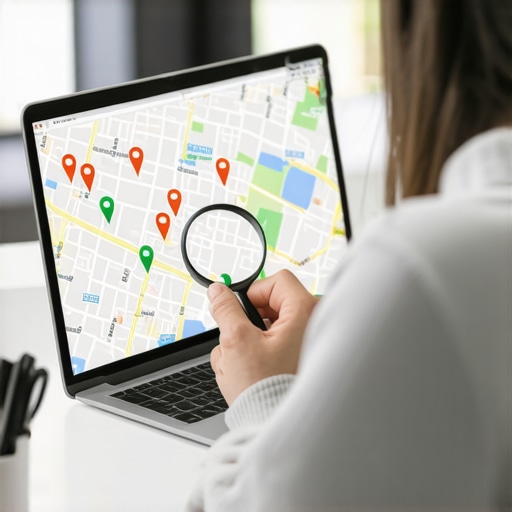
The sidewalk outside the local bakery was still damp from the morning rain. It smelled like wet concrete and burnt flour. I stood there, taking photos of the storefront, not for a brochure, but for a forensic audit. The owner had hired a cheap agency that promised the moon. They used click bots to inflate her engagement signals. Now, her business was invisible. I could see the glitch in her data before I even stepped inside. The clicks came from thousand-mile-away servers while the physical shop sat empty. Google knows when the movement is fake. The algorithm does not just look at clicks; it tracks the hardware footprint of the mobile device. If a thousand people click your listing but zero people actually drive to your GPS coordinates, you have a problem. This is how I started my investigation into the review extortion case that nearly ended a local cafe.
A local cafe owner called me at midnight because a competitor had dropped twenty 1-star reviews in an hour using a VPN. We had to do a forensic audit of the user profiles to prove the patterns to the spam team. It was not just about the text of the reviews. It was about the lack of behavioral data behind them. Those accounts had no history of physical movement. They were ghosts in the machine. This experience taught me that trying to cheat the Map Pack is a death sentence for a business. If you are struggling with your position, you should learn how to spot a local seo agency using click bots before they ruin your reputation. The search engine is too smart for these low-level tricks now.
The forensic trace of a fake click
Click bots fail because Google monitors GPS hardware signals, session duration, and historical user profiles. Modern algorithms detect the lack of physical proximity and the repetitive nature of VPN-based interactions. Legitimate local authority is earned through real customer movement and genuine engagement patterns rather than synthetic traffic spikes. Clicks are merely the surface. Below the surface lies a layer of spatial mathematics. When a real person clicks a Map Pack result, their phone sends a burst of data. This includes the accelerometer state, the relative distance to the nearest Wi-Fi nodes, and the current battery health. A bot running on a server farm in another country cannot replicate this. It is a hollow signal. Google sees a click from a device that has never moved from its data center. That is a red flag. You can try to hide, but the the interaction signals that finally move your map position are always tied to real, physical reality. When those signals are missing, the listing gets suppressed. It is that simple.
“Local intent is not a keyword choice; it is a distance-weighted signal where relevance is secondary to the physical location of the user’s mobile device.” – Map Search Fundamental
Why your proximity radius is shrinking
A shrinking proximity radius occurs when Google loses trust in your location signals due to mismatched NAP data or synthetic traffic. To fix this, you must engage in citation cleanup and remove black hat footprints. Restoring trust requires verifiable local interaction from real users within your specific service area polygon. If you have used bots, your ranking will start to hover. You might be at number four, just outside the winner’s circle. You can check how to stop your rank from hovering just outside the 3-pack to see why this happens. Usually, it is because the algorithm has flagged your interactions as suspicious. It reduces your reach. It keeps you on the outskirts. I have seen businesses that used to rank across the whole city suddenly only appear for searches made from their own parking lot. This is a proximity-based ranking drop. To recover, you need the tactical fix for businesses stuck outside the 3-pack which focuses on real signals. You cannot bot your way back into favor. You have to earn it with clean data and real customers.
The math behind behavioral patterns
Behavioral patterns are the foundation of modern local search rankings because they represent genuine user intent. Google prioritizes businesses that show high direction request volume and long-form review sentiment. Authentic engagement proves that a business is a relevant local authority for specific geographical queries. Think about the flow of a real customer. They search. They look at your photos. They check your hours. They hit the call button. Or they ask for directions. This is what we call a conversion loop. Bots do not do this. They click and then they vanish. This is why why most gmb software tools miss the local sentiment signal. They focus on the number of clicks rather than the quality of the journey. If you want to rank, you need the behavioral signals that finally push a business into the 3-pack. These are things like dwell time on your profile and the frequency of organic calls. These cannot be faked successfully over the long term. The algorithm eventually catches the anomaly in the click-to-call ratio.
Local Authority Reading List
- Verifying Real Interaction
- Signals of Authority
- Why Your Ranking Fails to Generate Calls
- The Cost of Automation
Recovering from a manual action or filter
Recovery from a Google manual action involves identifying toxic backlinks, cleaning up mismatched citations, and removing any automated bot footprints. You must submit a detailed reconsideration request that proves your business is a legitimate physical entity. Consistent NAP data and genuine reviews are the only path to restoration. If you find yourself in a situation where you need how to reclaim a suspended gmb profile without losing your reviews, you have to be honest. Google knows if you have been using click bots. They have the logs. The first step is to stop. Then, you need to use how to clean up messy citations without starting from scratch. This builds a foundation of trust again. You might also need how to identify a toxic citation profile before it kills your rank. Many times, agencies that use bots also use cheap, toxic directory links. These two things together are a recipe for a permanent ban. I have seen it happen to lawyers, plumbers, and dentists alike. The algorithm does not care about your industry. It only cares about the integrity of its database. One mismatched phone number or a weird spike in clicks from a non-residential IP range can trigger a suspension. You should understand the address conflict error that is hiding your business from maps if you are trying to debug a sudden drop.
“Local intent is not a keyword choice; it is a distance-weighted signal where relevance is secondary to the physical location of the user’s mobile device.” – Map Search Fundamental
The danger of keyword stuffing and name manipulation
Manipulating your business name with keywords creates a legacy black hat footprint that eventually triggers a suspension. Google uses street view data and official business licenses to verify the actual name on your storefront. Accuracy in your profile name is a critical factor for long term local search stability. Many businesses try to cheat by adding keywords to their name. This is a violation of terms. If you see this happening, you should look into how to handle a competitor using fake keyword-stuffed-names. It might work for a week, but it will fail. Just like the click bots, it is a synthetic signal. It creates a disconnect between the digital profile and the physical reality. If you want to rank for niche terms, use how to optimize your gmb services list to show up for niche queries instead. This is the legitimate way. It does not put your listing at risk. You should also consider the primary category choice that determines 80 percent of your rank. Choosing the right category is more powerful than a thousand fake clicks. It aligns your business with the way users actually search.