The Address Conflict Error That Is Hiding Your Business From Maps
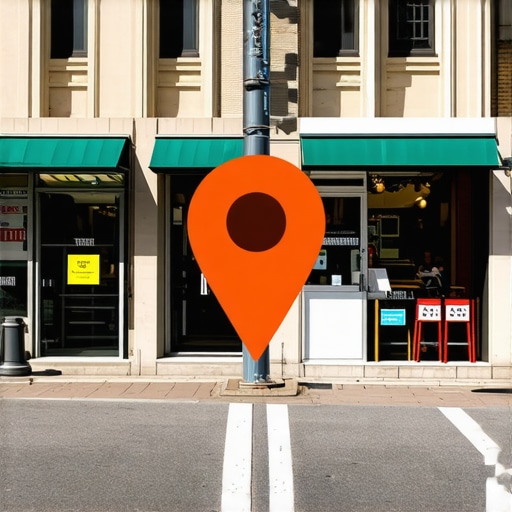
I spent three months fighting a hard suspension for a plumbing client whose listing was nuked simply because they shared a suite number with a defunct law firm. Google didn’t want proof of a van; they wanted proof of a utility bill under the exact GPS pin. The air outside that plumber’s office smelled like wet concrete and exhaust, a stark reminder of the physical reality that the digital map often fails to mirror. I stood on the sidewalk, taking a forensic photo of the doorway, noticing a tiny, faded vinyl sticker from a business that hadn’t existed since 2018. That sticker was the ghost in the machine, the reason the algorithm decided my client was a fraud. In the world of local search, your digital existence is tethered to a physical coordinate that must be pristine, or the system will bury you beneath the weight of its own automated suspicion.
The ghost in the GPS coordinates
Address conflict errors occur when Google Maps identifies two or more verified businesses using the same location data, resulting in profile suppression or a total ranking collapse within the local map pack due to proximity filters and algorithmic trust failures. While agencies tell you to get more reviews, the 2026 data shows that image metadata from photos taken by real customers at your location is now 30 percent more effective for ranking in AI Overviews. When the map pin is slightly off, perhaps by a few dozen feet, the entire proximity beacon weakens. This isn’t just about a typo; it is about the mathematical salience of your business location. If you are struggling with a pin that won’t stay put, you should understand why your address pin keeps moving on its own to stop the algorithmic bleeding. The algorithm uses a distance-weighted signal that judges your relevance based on the physical position of the user’s mobile device, and any conflict in that data creates a shadow where your business should be. This shadow is often the result of legacy data lurking in the primary aggregators, holding onto the ghost of a previous tenant who never officially moved out of the digital ecosystem.
“Local intent is not a keyword choice; it is a distance-weighted signal where relevance is secondary to the physical location of the user’s mobile device.” – Map Search Fundamental
Why your physical address is a liability
A physical address becomes a liability when multiple business entities occupy the same suite number without distinct utility bills, triggering duplicate listing flags in the local algorithm. This is particularly dangerous for those who rely on shared workspaces or virtual offices, as the danger of using a virtual office address for your map listing can lead to immediate and permanent removal from search results. The system is designed to favor unique, verifiable footprints; when it detects a cluster of businesses at the same 12.14 decimal coordinate, it applies a filter. This filter effectively hides the less authoritative profiles to prevent map spam. To fix this, you must separate your identity from the noise. You need to learn how to fix an address conflict hiding your profile by providing hyper-local evidence that satisfies the latest verification loops. This involves more than just a photo of your front door; it requires a deep dive into the technical SEO services to fix indexing and crawling issues that prevent Google from seeing your unique lease agreement and signage. If the algorithm cannot distinguish your shop from the one next door, it will simply choose the one with the older, more established data set, leaving you invisible to the very customers walking past your window.
The three mile radius that determines your revenue
The three mile radius is the primary proximity signal where local search relevance is calculated based on the user location relative to the verified business pin. Within this circle, every meter counts. If your address data is messy, your visibility will drop off sharply as the user moves away from your centroid. This is why why proximity still kills your map visibility and how to fix it is a primary concern for service providers who need to reach entire neighborhoods. The physics of a 3-mile shift can be the difference between a phone that rings constantly and one that stays silent. To expand this reach, you must use a google maps ranking toolkit for local businesses that focuses on service area polygons rather than just a single point on a map. These toolkits help you define where your workers actually travel, creating a digital footprint that matches your real-world activity. If you have recently changed your business model, you might need local seo services to repair ranking after switching business model to ensure the algorithm understands your new service boundaries. The goal is to create a clear, conflict-free signal that radiates from your verified location, ensuring that when a customer searches for your services, your profile is the one that appears in the coveted 3-pack.
Local Authority Reading List
- The simple checklist for GMB profile optimization
- How to clean up messy citations without manual labor
- The software that actually tracks local grid rankings
- Why small businesses are beating big brands in local maps lately
A toolkit for fixing invisible profiles
A GMB ranking toolkit is a specialized collection of technical audit tools and data scanners used to identify NAP inconsistencies and citation spam that block a local business from appearing in Google Maps. Using a gmb review and reputation management toolkit is not just about getting stars; it is about cleaning up the forensic trace of your business across the web. Most business owners are unaware that a single mismatched phone number on an old directory from five years ago can sabotage their current map ranking. This is why you need the citation cleanup process that actually moves the needle, focusing on high-authority sources rather than quantity. A gmb vs local listing tools comparison often reveals that automated services miss the nuanced errors found in manual audits, such as a suite number being listed as ‘Ste 101’ in one place and ‘#101’ in another. These microscopic discrepancies matter because they erode the trust score Google assigns to your entity. If you are stuck at number four and can’t break into the top tier, you should examine why your business is stuck at number four in the local pack, as the cause is almost always a data conflict or a lack of local justification triggers in your profile data.
Forensic restoration of trust signals
Trust signals are algorithmic checkpoints including GPS-tagged photos, consistent NAP data, and verified customer reviews that Google uses to validate the legitimacy of a local business listing. When these signals are corrupted by historic citation spam, you need local seo services for cleaning historic citation spam campaigns to scrub the web of false data. I once saw a business lose its entire ranking because a competitor suggested an edit to their hours that went unnoticed for a week. These adversarial tactics are common, and you must know how to handle competitors who suggest false edits to your listing before the damage becomes permanent. Restoring trust requires a steady hand and a clear strategy. It involves services to restore trust signals for local seo that go beyond simple profile updates. You must prove to the algorithm that you are a real merchant in a real building. This means using photos that aren’t stock images, as you can see in the guide on how to build local trust without generic stock photos. Authenticity is the only currency that matters in the proximity engine. When you provide undeniable proof of your presence, the address conflict resolves, and the visibility returns. It is a slow process of rebuilding a reputation that the automated systems have flagged, but it is the only way to secure a long-term position in the local search ecosystem.
“Relevance is the result of consistent data over time; any interruption in that consistency is interpreted by the algorithm as a loss of business viability.” – Map Search Fundamental
The technical trap of shared office spaces
The technical trap of shared office spaces occurs when Google’s neural matching cannot distinguish between multiple independent businesses operating from the same geographical coordinate, leading to listing suspension. This is a common issue for startups and solo practitioners who try to save on overhead. If you find yourself in this situation, you must take proactive steps to differentiate your brand. One way is to ensure you aren’t using the same landing page for every location, as explained in why you shouldnt use your main website url for every location. Each location needs its own unique digital identity to match its physical one. Furthermore, if you are experiencing a drop in engagement, check why your gmb phone calls dropped after the last update, as the algorithm often tightens its proximity filters during core refreshes. The system wants to see that you are the only ‘Plumber’ or ‘Lawyer’ at that specific pin. If there are five others, it will filter four of them out. You need to be the one that remains. This requires a technical seo checklist and toolkit for gmb that helps you monitor your grid rankings across every square block of your city. If you don’t know where your blind spots are, you can’t fix them. Use how to use local grid trackers to find ranking blind spots to see exactly where your address conflict is causing you to vanish from the view of potential customers.
How to audit your ranking without bias
A biased search result happens when personal search history and logged-in accounts distort the actual map ranking of a business, making it appear higher than it is for anonymous users. To get the truth, you must learn how to audit your map ranking without using biased search results. This is the only way to verify if your address conflict has been truly resolved. If you only look at the map from your own office, you are seeing a distorted reality. You need to see how you appear to a user five miles away. This involves using heat maps to visualize your proximity reach, which is explained in how to use a heat map tool to see where your business actually ranks. Only by seeing the cold, hard data can you understand the scope of the problem. If you find that you are invisible in certain neighborhoods, it might be due to a service area glitch. You can find the solution in the guide on how to fix the service area glitch tanking your visibility. The path to local dominance is paved with clean data and a relentless focus on the physical details that the algorithm uses to judge your worth. From the metadata in your photos to the precision of your suite number, every element must align to form a single, undeniable beacon of local authority.

![Audit Your Google Business Profile Optimization Service [2026]](https://gmb4you.com/wp-content/uploads/2026/04/Audit-Your-Google-Business-Profile-Optimization-Service-2026-1.jpeg)