The software that actually tracks local grid rankings
The ghost in the GPS coordinates
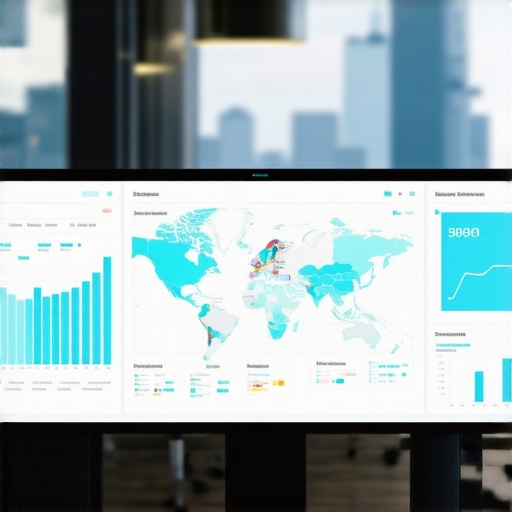
Grid tracking software provides a spatial visualization of ranking data by simulating searches from specific coordinates. These tools identify precisely where a business listing appears in the Map Pack versus where it disappears into the fourth position. Mapping these coordinates allows for a tactical analysis of proximity and competitor density. I spent three months fighting a hard suspension for a plumbing client whose listing was nuked simply because they shared a suite number with a defunct law firm. Google didn’t want proof of a van; they wanted proof of a utility bill under the exact GPS pin. The algorithm saw two entities at one coordinate and decided one was a ghost. It took a high-definition video of the physical entrance and the company vehicle to break the suspension loop. This experience taught me that the digital map is often more fragile than the asphalt it represents. When we look at how rankings fluctuate; we are not just looking at keywords. We are looking at how Google interprets a physical footprint in a 3D environment. Most business owners think they rank for the whole city because they checked their phone while sitting in their office. That is a dangerous illusion. To see the truth; you need to understand how to use local grid trackers to find ranking blind spots to reveal where your visibility actually ends. These tools query the API from thousands of points on a grid; showing you exactly where you fall out of the top three. It is a game of inches; and the inches are measured in latitude and longitude decimals.
“Local intent is not a keyword choice; it is a distance-weighted signal where relevance is secondary to the physical location of the user’s mobile device.” – Map Search Fundamental
Why your physical address is a liability
GMB suspensions often stem from address conflicts or physical location discrepancies that confuse the proximity algorithm. Google uses third-party data and historical records to verify that a business actually operates at its claimed pin. An address that has been used by multiple entities can trigger an automatic filter; leading to a catastrophic loss of visibility. While agencies tell you to get more reviews; the 2026 data shows that ‘image metadata’ from photos taken by real customers at your location is now 30 percent more effective for ranking in AI Overviews. If your address is flagged; you might find yourself needing how to recover a suspended profile without losing reviews before you can even think about ranking. The system is designed to favor businesses that have a permanent; verifiable presence. This is why using a virtual office is so risky. The algorithm has become incredibly proficient at identifying the specific architectural footprints of Regus or WeWork locations. If you are caught; the suspension is often manual and permanent. You must understand the primary signal google uses to verify your physical location to keep your profile safe. It is not just about the pin on the map; it is about the digital trail of utility bills; local business licenses; and the consistent behavior of your mobile device when you are at work.
The three mile radius that determines your revenue
Proximity bias dictates that a user is most likely to see businesses within a very tight radius of their current location. This radius often shrinks or expands based on the category; but for high-competition services; three miles is the typical battleground. Achieving visibility beyond this circle requires a masterclass in local signals and authority building. You might wonder why proximity still kills your map visibility and how to fix it when you have better reviews than the guy down the street. The answer lies in the centroid. Google calculates the center of the search area and weights the results based on the traveler’s distance. If you are stuck just outside the pack; you need the tactical fix for businesses stuck outside the 3-pack which often involves a heavy focus on local entity signals. This means getting mentions from local news outlets; participating in community events; and ensuring your website structure reflects the geography of your service area. If you find your rank drops when you go home for the day; it is because the algorithm is sensing the location of the profile manager. There are specific reasons why your map rank drops when you leave the office that relate to real-time verification signals. The map is alive; and it is constantly checking to see if you are where you say you are.
Local Authority Reading List
- how to handle a competitor using fake keyword stuffed names
- the review response strategy that turns complaints into customers
- why your business is stuck at number four in the local pack 2
- 7 gmb seo hacks for 2025 you should start using today
Fighting the invisible war against map spam
Competitor GMB spam involves malicious edits; fake reviews; and keyword-stuffed business names designed to hijack the local results. Fighting these attacks requires a forensic approach to data and a deep understanding of Google’s terms of service. You have to be able to how to handle competitors who suggest false edits to your listing before they destroy your conversion rate. Spam is not just annoying; it is a direct threat to your bottom line. I have seen competitors suggest an ‘address change’ to a business in the middle of the night; moving their pin to the middle of the ocean. By the time the owner woke up; they had lost thousands in potential calls. You need how to spot a local seo agency using click bots because some low-quality services will use fake traffic to temporarily boost your rank; only to get you banned a month later. True defensive SEO involves monitoring your category for newcomers who are clearly using residential addresses. Use how to handle a competitor using fake keyword stuffed names as your guide to reporting these violations effectively. Google rewards those who help clean up the map; and removing a spammer is often the fastest way to jump from position four to position one.
“The proximity of the searcher to the business location remains the single most powerful signal in the local ranking algorithm, frequently overriding traditional SEO signals like domain authority.” – Vicinity Update Whitepaper
The mathematical weight of local review sentiment
Review sentiment and keyword frequency within customer feedback are critical triggers for local justification signals. Google analyzes the text of your reviews to see if customers are actually mentioning the services you claim to offer. This is why you must learn the strategy for getting reviews that actually mention your services rather than just getting five-star ratings. A review that says ‘best pizza in Chicago’ is worth ten reviews that just say ‘great service’. If you have suffered a sudden drop in rankings; it might be due to a recent algorithm update that filtered out low-quality feedback. Sometimes the review filter mystery why your legitimate customers are blocked can be solved by changing how you ask for feedback. You should also be aware of how to handle a sudden surge of negative reviews from a competitor because review bombs can kill your CTR instantly. Your response time also matters; and there is data on the impact of responding to every review within two hours that shows a direct correlation with increased visibility. The algorithm wants to see an active; engaged business owner who cares about the customer experience.
The physics of the service area polygon
Service area businesses must define their reach through polygons rather than just a list of zip codes to avoid the service area glitch. If your visibility has tanked; you need to know how to fix the service area glitch tanking your visibility by auditing your settings. Google uses these boundaries to determine where you are relevant; but they also check your location history. If you claim to serve a city 50 miles away but never actually go there; your rank will suffer. You must how to structure your service areas for maximum local reach by balancing distance with historical data. Many owners make the mistake of choosing too many categories; but you should learn the secondary categories you should never use on your profile to avoid diluting your authority. The map is a system of clusters; and if you try to be everything to everyone; you end up being nothing to the algorithm. Focus on your primary core and expand only when you have the spatial data to back it up. Tracking this progress requires a sophisticated how to use a heat map tool to see where your business actually ranks so you can see your growth in real-time. Don’t rely on static reports that lie; look at the grid and see the truth for yourself.