The review sentiment secret that most SEOs ignore
A midnight call from the review extortion front lines
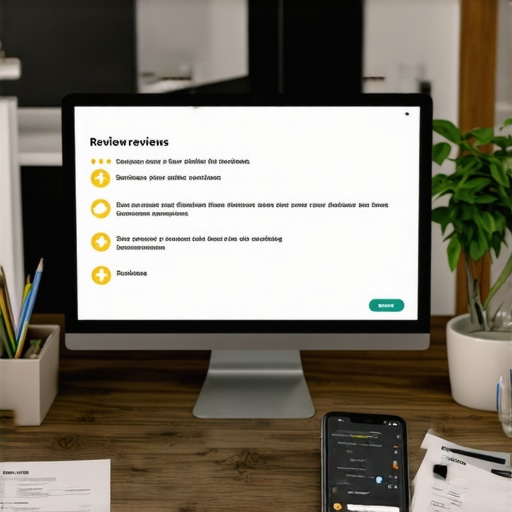
Review sentiment is the digital scent of trust that either draws a user closer or pushes them into the arms of a competitor. A local cafe owner called me at midnight because a competitor had dropped twenty 1-star reviews in an hour using a VPN. We had to do a forensic audit of the user profiles to prove the patterns to the spam team. It was not just about the star rating. It was about the lack of semantic variety in the complaints. The algorithm noticed the anomaly before we even filed the report. This incident highlights why simply collecting stars is a failed strategy. You need to understand how the machine reads the emotion behind the text. If you are struggling with a sudden drop, you might need to handle a sudden surge of negative reviews from a competitor by looking at the metadata of the accounts leaving the feedback.
The physical world is messy, but the map algorithm tries to make it mathematical. Most business owners think they are fighting for keywords. In reality, they are fighting for proximity salience. A business is a beacon. It emits signals through GPS coordinates and behavioral data. When a user stands on a street corner, the map pack they see is a direct reflection of that specific point in space. This is why proximity still kills your map visibility if you have not optimized for the specific neighborhood nuances that define a local search result. The machine knows if you are actually there or if you are just renting a mailbox.
The mathematical weight of local review sentiment
Sentiment analysis determines the ranking strength of your profile by evaluating the emotional intensity and service specific keywords in customer feedback. Google is no longer just looking for a 5.0 rating. It is looking for justifications. A justification is that small snippet of text in the search results that says ‘Their interior painting was excellent.’ This comes directly from the words your customers use. This is the strategy for getting reviews that actually mention your services which moves the needle. If your customers just say ‘Great job,’ you are missing out on the linguistic data that fuels the local search engine.
When we talk about best gmb ranking tools for local seo, we are usually looking at platforms that can track these justifications across a grid. A static rank tracker is useless because it only shows you the result from one spot. You need to see how your sentiment carries across the city. Many businesses find that five star reviews stop appearing publicly because they lack the behavioral signals of a real customer. If the user’s phone did not stay at your physical location for at least twenty minutes, the review might be flagged as fake. The algorithm is watching the dwell time.
“Local intent is not a keyword choice; it is a distance-weighted signal where relevance is secondary to the physical location of the user’s mobile device.” – Map Search Fundamental
The three mile radius that determines your revenue
Proximity is the most powerful ranking factor and it often overrides traditional SEO metrics like backlinks or domain authority. You can have the best website in the world, but if you are four miles away and your competitor is two blocks away, you will lose the map pack spot almost every time. This is why proximity still kills your ranking in suburban areas where the density of businesses is lower. You have to fight for relevance through interaction signals to overcome the distance gap. If you find yourself stuck, stop your rank from hovering just outside the 3 pack by focusing on local engagement rather than national citations.
The logistics of the map are unforgiving. If your address is in an industrial park but you want to rank in the downtown core, you are fighting uphill. Some try to cheat by using virtual offices, but the danger of using a virtual office address is a permanent hard suspension. Google wants to see a storefront with a permanent sign. They want to see your employees coming and going. They use mobile location history from millions of users to verify that your business is a real destination. If no one ever visits your pin, the pin will eventually disappear.
How GMB ranking toolkits work for local SEO
Modern optimization software uses API calls to simulate searches from thousands of specific latitude and longitude coordinates to create a heat map of visibility. These tools are the only way to truly see where you stand. If you rely on your own phone, you are seeing biased results based on your personal search history. To get an honest look, you must use a heat map tool to see where your business actually ranks across your entire service area. This data allows you to see the exact street where your dominance ends.
Once you have the data, you can identify the gaps. Maybe your ranking drops in the north because a competitor has more user uploaded photos there. Perhaps you need to geotag your photos for better local relevance in those specific zones. The goal is to create a density of signals that tells the algorithm you are the most popular choice for that specific neighborhood. It is about becoming a local authority, not just a business in a directory.
SEO services to recover GMB visibility after category change
Changing your primary category can cause a temporary ranking collapse as the algorithm re-evaluates your relevance for a new set of search terms. Many owners make the mistake of changing categories during a slow season, only to find their calls dry up completely. If you are in this position, you need seo services to recover gmb visibility after category change that focus on rebuilding the semantic connection between your brand and the new category. This often involves updating your website’s local landing pages to match the new profile data.
It is not just about the category name. It is about the secondary categories too. Using too many can dilute your ranking power. You should check the secondary categories you should never use on your profile to ensure you are not confusing the machine. The algorithm prefers a specialist over a generalist. If you try to be everything to everyone, you will end up ranking for nothing. Focus is the key to the 3-pack.
The forensic trace of a service area polygon
Service Area Businesses must define their boundaries with precision to avoid overlapping with competitors in a way that triggers a filter. If you set your service area too wide, the algorithm might view it as spam. It is better to have a smaller, more realistic area where you actually have a high density of customers. You can structure your service areas for maximum local reach by using zip codes instead of just drawing a giant circle. This tells the machine exactly where your trucks are on the road.
Many plumbing or HVAC companies suffer from seo services to fix gmb rankings after mass review removal because they tried to get reviews from people outside their service zone. When the GPS data of the reviewer does not match the service area of the business, the review is nuked. This is a common footprint for fake review networks. Authentic growth requires authentic proximity. You cannot fake the physical presence of a customer in a specific city block.
Local Authority Reading List
- The simple checklist for GMB profile optimization
- How to rank in the 3 pack for multiple zip codes
- Why buying citations on cheap marketplaces is a waste of money
- How to fix a stagnant map ranking that wont move
- The impact of responding to every review within two hours
SEO consulting services for complex penalty cases
Recovering from a manual suspension or a algorithmic shadow-ban requires a forensic audit of every digital footprint associated with your physical address. Sometimes the problem is not your profile. It is the toxic history of the building you occupy. If a previous tenant was banned for map spam, your new business might be guilty by association. You need seo consulting services for complex penalty cases to untangle these threads. This involves looking at the NAP consistency across dead directories that you did not even know existed.
We often see cases where seo services to fix brand confusion from merged gmb listings are required because a business bought another company and didn’t handle the data migration correctly. Two profiles at one address is a recipe for disaster. You must clean up duplicate listings that are stealing your traffic before you spend a single dollar on new ads. The map wants one clear answer for every location. Confusion leads to invisibility.
Cleaning up the debris of old locations
Old, closed locations act as anchors that drag down the ranking potential of your active storefront by creating data conflicts. If Google sees your brand name at an address where you no longer pay rent, it loses trust in your current location data. You need local seo services to clean up old or closed locations to ensure the map only shows where you are actually open for business. This is especially true for businesses that have moved multiple times over a decade.
The citation ecosystem is slow to update. Even if you change your address on your profile, an old Yelp page or an obscure local directory might still have the old info. This is why your citation audit is missing 30 percent of errors if you are only using automated tools. You need a human to go in and manually verify the data. This is the unglamorous work that actually moves the needle in 2025.
The danger of over optimized anchor text
Building backlinks with exact match location keywords can trigger a Penguin-style penalty for your local landing page, effectively killing your map ranking. If every link to your site says ‘Best Plumber in Chicago,’ the algorithm knows you are trying to manipulate the results. You need services to fix over optimized anchor text that can diversify your backlink profile with branded and naked URL anchors. Natural growth looks messy. It does not look like a spreadsheet of perfect keywords.
Your local landing page is the foundation of your map ranking. If the page is slow, has poor mobile UX, or lacks Schema markup, your profile will suffer. You should understand why your local landing page is just as important as your map listing. The two are tethered. A high bounce rate on your website tells Google that you are not a good recommendation for their map users. They want to send people to winners, not to broken links.
SEO services to fix toxic backlink profiles
Toxic backlinks from low quality PBNs or foreign directories can cause your map pin to drop out of the top three into the abyss of page two. Many business owners are sold ‘cheap SEO’ that involves blasting their site with thousands of junk links. This might work for a week, but the crash is inevitable. You need seo services to fix toxic backlink profile issues by performing a manual disavow and building high quality, local mentions. A link from a local news site or a neighborhood association is worth more than a thousand links from a blog farm in another country.
Focus on interaction signals. These are the clicks, the direction requests, and the phone calls. These tell the algorithm that people in the real world care about your business. You can win the map 3 pack every time if you focus on the user experience. Answer the phone. Respond to messages. Post updates. These are the pulses that keep your proximity beacon bright. Without them, you are just another dot on a crowded map.