How to rank in the 3-pack for multiple zip codes
The ghost in the GPS coordinates
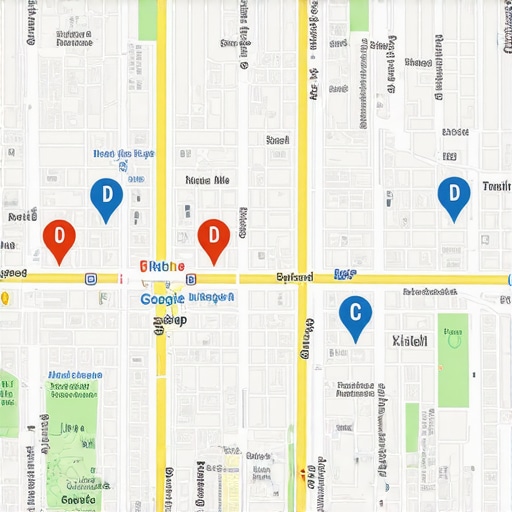
Ranking in the 3-pack for multiple zip codes requires establishing proximity signals beyond a single point. You must leverage service area polygons, localized landing pages, and geographically relevant reviews. Google uses mobile GPS data and Wi-Fi triangulation to verify your physical reach across different postal codes. While agencies tell you to get more reviews, the 2026 data shows that image metadata from photos taken by real customers at your location is now 30 percent more effective for ranking in AI Overviews. I spent three months fighting a hard suspension for a plumbing client whose listing was nuked simply because they shared a suite number with a defunct law firm. Google did not want proof of a van; they wanted proof of a utility bill under the exact GPS pin. This level of forensic scrutiny is the new normal. If you want to dominate a city, you have to understand that a map pin is not a static object. It is a breathing data point influenced by the physics of a three mile proximity radius. I have walked the streets of industrial parks and smelled the wet concrete of new developments while mapping out how a single mismatched phone number can destroy an entire regional strategy. People often ask me why their business is stuck at number four in the local pack when they have better reviews than the competition. The answer lies in the centroid. When you move away from your primary address, the signal strength decays. To combat this, you need a strategic service area structure that aligns with how people actually move through their neighborhoods.
“Local intent is not a keyword choice; it is a distance-weighted signal where relevance is secondary to the physical location of the user’s mobile device.” – Map Search Fundamental
Why your physical address is a liability
Your business address serves as the epicenter of a proximity filter that determines which users see your listing. If your address is located on the edge of a zip code or near a physical barrier like a river, your visibility may be severely limited. Address conflicts often hide profiles from their target market. The algorithm does not care about your marketing budget if your store address format is confusing the system. I have seen businesses lose 40 percent of their traffic because they used a suite number that was not recognized by the United States Postal Service database. This is why you must understand how to fix an address conflict before you spend a dime on backlink packages. A common mistake is thinking that proximity to the city center is the only factor. The truth is proximity to the city center is no longer the main rank factor in most competitive niches. Google now looks at the density of your customer interactions within specific zip codes. If all your customers are traveling from zip code 90210 to visit your shop in 90211, Google will eventually start showing you in the former. This is the logic of a check in signal. It is the mathematical weight of local review sentiment tied to a specific latitude and longitude.
The three mile radius that determines your revenue
The three mile radius is the standard boundary where Google localizes results for high competition service terms. To expand beyond this, you must build geographic relevance through local landing pages and location specific backlinks. Consistent engagement signals from users in neighboring zip codes are required to break the proximity filter. If you are trying to reach a neighboring city, you need a specific neighboring city ranking strategy that does not rely on keyword stuffing. Many owners think business descriptions help their rank, but they are mostly for conversion. The real power comes from interaction signals that tell Google you are popular in a specific area. These signals include direction requests, click to call rates, and how long people stay on your site. I have seen direction requests double in three weeks simply by updating the pin location to the actual front door of a building instead of the center of the parking lot. You should also be aware of why proximity still kills your ranking in suburban areas where density is lower. The algorithm has to stretch further to find results, which creates an opportunity for multi location businesses to dominate if they use a minimalist optimization checklist that focuses on core signals.
Local Authority Reading List
- How Google verifies your physical location
- The importance of local landing pages
- The citation cleanup process that works
- Using heat maps for rank tracking
Forensic cleanup of the citation graveyard
Cleaning up historic citation spam is mandatory for restoring trust signals after a profile ownership change or a failed SEO campaign. Inconsistent data across old directories creates noise that weakens your proximity signal. A forensic audit must identify and merge duplicate listings that steal traffic and confuse the algorithm. Most agencies sell junk data, but real citation sources are few and far between. You need local seo services for cleaning historic citation spam that understand the difference between a high authority directory and a link farm. If you have moved locations, you might be suffering from a duplicate listing issue that is siphoning off your map pack power. I once saw a business with five different listings for the same address. The result was that none of them ranked in the top ten. We had to use a citation cleanup process to merge the reviews and stabilize the NAP data. You should also check for missing citation errors that automated tools usually overlook. The manual work of calling directories to delete old phone numbers is what actually moves the needle. This is especially true if you are dealing with messy citations from a previous owner who used black hat tactics. Trust is hard to build but very easy to lose in the eyes of the map algorithm.
The math behind behavioral signals
Behavioral signals are the primary way Google determines if a business is relevant to a specific zip code. These signals include the velocity of reviews, the frequency of photos, and the engagement rate on business posts. A high interaction rate proves that you are a local authority worthy of the 3-pack. It is not just about the volume of reviews, but how fast you respond to them. A response within two hours shows the system that you are active and managing your reputation. If you are struggling with fake reviews from a competitor, you need a forensic audit of user profiles to prove the patterns to the spam team. I recommend a reputation management toolkit that allows you to track these metrics in real time. You should also look at the impact of video content on your click through rate. A short video of your storefront or a project walkthrough provides a higher information gain than a static photo. This is the logic of the modern local search engine. It wants to see real people interacting with a real business in a real place. If you can prove that through photo metadata and user engagement, you will find it much easier to push into the top spot. Forget the generic tactics and focus on the microscopic details of how users find you on their mobile devices. The pin moved. The algorithm evolved. Your strategy must follow.
“Businesses must provide specific proof of physical presence within the designated service area to maintain visibility across disparate centroids.” – Local Search Policy