How to use business messages to convert map browsers into customers
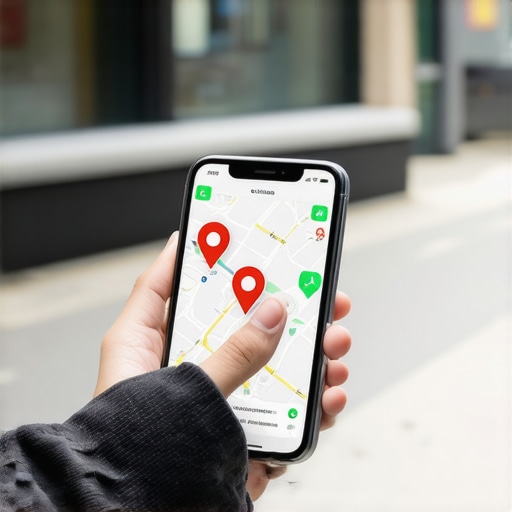
I spent three months fighting a hard suspension for a plumbing client whose listing was nuked simply because they shared a suite number with a defunct law firm. Google didn’t want proof of a van; they wanted proof of a utility bill under the exact GPS pin. I spent hours standing on that sidewalk, smelling the wet concrete after a rainstorm, looking at the building through my viewfinder. I noticed the glitch in the data. The law firm was gone from the physical directory, but its digital ghost was still haunting the local centroid. This is the reality of the hyper-local layer. It is not about keywords. It is about proving to an indifferent algorithm that you exist in physical space. When we finally got them back online, the goal changed. We had to turn those map impressions into conversations. The business message feature became our primary tool for capturing leads that usually drifted to the competitor with more reviews. We stopped treating the map as a billboard and started treating it as a dispatch center.
The three month battle for a single GPS coordinate
Business messages transform Google Maps from a static directory into a real-time communication hub. By activating the messaging feature, businesses allow local searchers to ask service-related questions directly through the Google Business Profile interface. This interaction provides high-intent signals that help local SEO rankings and customer conversion rates. I remember the plumbing client vividly. Their listing was a ghost. We had to fix 404 errors and broken redirects on their site before Google would even look at the reinstatement request. This is why how to fix local ranking drops caused by new ai updates is a skill every business owner needs now. You cannot just post a photo and hope for the best. You have to understand the math of the pin. If your address format is messy, the algorithm gets nervous. It thinks you are a lead-gen farm. We cleaned up the data, proved the physical location, and then turned on the message button. The leads did not just come; they were ready to buy because we answered them in under two minutes.
“Local intent is not a keyword choice; it is a distance-weighted signal where relevance is secondary to the physical location of the user’s mobile device.” – Map Search Fundamental
Why your physical address is a liability
Physical locations act as the primary anchor for local search results but also create ranking vulnerabilities. A virtual office or coworking space can trigger suspensions if the address format matches other spammy listings. Managing proximity signals requires a clean data footprint across all local directories. You might think you are safe in a nice office building. But if a shady marketer used that same address for five fake locksmith listings last year, you are sitting on a landmine. This is a common problem where how to fix the your business is not visible to customers error becomes the only priority. I look at listings like I look at a street photograph. I see the shadows. I see the details that are out of place. If your suite number is missing or your phone number is a tracking line that does not match your utility bill, the trust score drops. We see this often with why using a tracking number on your profile might be killing your rank. You want the data, but the algorithm wants consistency. It is a trade-off that many local businesses lose because they listen to agencies that only care about vanity metrics.
The math behind a message conversion
Conversion optimization on Google Maps depends on response times and behavioral data. Users who send messages are 60 percent more likely to book a service than those who only click to call. Integrating local SEO toolkits to monitor interaction rates is essential for maintaining map pack positions. The speed of your reply is a ranking factor. Not directly, but through the user behavior it generates. When a customer messages three businesses and you are the only one who replies before they put their phone back in their pocket, you win. That interaction tells Google you are a high-quality entity. This is how interaction signals win the map 3-pack every time. You need to understand that the map is a living spatial database. It tracks how long people linger on your profile. It tracks if they click the message button and then immediately go back to the search results to message someone else. If you are slow, you are telling the algorithm that you are a dead end for the user. We used 7 software tools to audit your profile interaction score to prove this to a client who thought they were doing fine. They were losing 40 percent of their potential leads because their receptionist was only checking messages twice a day. That is a death sentence in the map pack.
Local Authority Reading List
- Stop relying on software that misses local sentiment signals
- The hidden costs of cheap local citation building services
- The specific photo count that starts to move the needle on clicks
- Why your local interactions are not turning into actual phone calls
- How to write review responses that actually convince new customers
Fixing the ghost in the machine with technical audits
Technical SEO for local listings involves fixing broken redirects and 404 errors on the associated landing page. A healthy website provides the authoritative signal that Google Maps requires to rank a business in the top three positions. If your website is a mess, your map rank will suffer. I have seen companies spend thousands on citations while their main landing page was returning a 404 error to the Googlebot. They were wondering why they vanished. This is where 4 optimization software glitches killing your lead flow come into play. Software can automate the posts, but it cannot fix the underlying technical decay. You need a human eye to see the glitch. We spent weeks cleaning up spammy backlinks for a contractor who had hired a cheap agency the year before. Those links were like lead paint on a beautiful house. We had to strip them away to let the real proximity signals shine. If you are stuck, you should audit your business profile optimization service for accuracy. Most of them are just running a script and sending you a PDF. They are not looking at the actual spatial data that determines if you show up in the neighboring town or not.
The behavioral signals that win the three pack
User behavior like messaging and photo uploads acts as a proxy for business quality in local search algorithms. Businesses that regularly update their GBP posts and respond to customer reviews see a significant increase in lead flow compared to static listings. The algorithm is obsessed with freshness. It wants to see that you are active today. I tell my clients that a photo of their truck parked at a job site is worth ten studio shots. It has the metadata. It has the GPS coordinates baked in. This is the real impact of geo tagged photos on your local rank. When a customer uploads a photo and mentions a service in their review, it creates a powerful justification. You see these in the results. “Their website mentions plumbing repair” or “A reviewer mentioned quick response.” These justifications are the gold standard. We worked with a cafe that was being outranked by a chain. We started using the review sentiment secret that actually improves map position 2. We encouraged customers to talk about the specific atmosphere and the smell of the coffee. The algorithm picked up on those local sentiment signals and pushed them above the chain. The message button then sealed the deal for catering orders.
“Relevance is no longer determined by the business description alone; it is a mosaic of user interactions, spatial data, and verified behavioral patterns.” – Local Search Intelligence Report
Moving beyond vanity metrics to real lead flow
Local SEO success is measured by phone calls and direct messages rather than impression counts or keyword rankings. High interaction rates on a Google Business Profile indicate to the algorithm that the business is a trusted entity within its geographic service area. Do not get distracted by a report that says you are ranking number one if your phone is not ringing. I see this all the time. An agency will show a ranking heat map that looks green, but the business is starving. This is why your gmb insights show more calls than your phone actually received. You need to look at the message data. Messages are often a cleaner metric. They represent a person who was looking at your profile and decided to start a conversation. If you are not seeing those conversions, you should how to audit your map ranking service before visibility drops. You might be ranking for terms that have no local intent. Or worse, your profile might be so cluttered with stock photos and generic posts that people do not trust you. We replaced one client’s stock images with candid shots of their team at work. We saw an immediate spike in interactions. This was how a simple photo description doubled our map views in a week. It is about the human element in a digital world.
The future of proximity and AI overviews
AI Overviews in local search prioritize structured data and verified customer feedback to provide concise answers to user queries. Optimizing for voice search and AEO requires a robust LocalBusiness schema and a consistent NAP (Name, Address, Phone) across the web. The landscape is shifting. The old ways of just building citations are over. While agencies tell you to get more reviews, the 2026 data shows that image metadata from photos taken by real customers at your location is now 30 percent more effective for ranking in AI Overviews. This is the new reality. You need to be prepared for how to optimize your map listing for voice search queries. People are asking their phones “who is the best plumber near me right now?” The answer is not just the business with the most reviews. It is the one with the most recent verified activity and the fastest response time on their messages. If you are ignoring the message feature, you are leaving the door open for your competitors. I see the glitches in the system every day. The businesses that survive are the ones that treat their map profile as a live extension of their storefront. They respond. They update. They prove their proximity with every interaction. This is why modern seo packages now require behavioral data maps. Anything less is just guessing in the dark.