How to Use Heatmaps to Understand Your Google Maps Reach
The city looks different when you view it through a lens of spatial data. I remember standing on a corner in downtown Chicago, the smell of wet concrete and exhaust fumes heavy in the air, watching a business owner realize their shop was invisible just two blocks away. They had a physical storefront, a sign, and a legacy, yet the digital map treated them like a ghost. This is the reality of the local algorithm. It is not about who you are; it is about where the user stands when they tap their screen. To master this, you need to stop looking at a single ranking number and start analyzing the heat. Heatmaps allow local business owners and SEO strategists to visualize ranking proximity, identify proximity filters, and map out Google Business Profile visibility across specific GPS coordinates to fix ranking drops. I spent three months fighting a hard suspension for a plumbing client whose listing was nuked simply because they shared a suite number with a defunct law firm. Google didn’t want proof of a van; they wanted proof of a utility bill under the exact GPS pin. We had to prove the physical existence of their operations center through a forensic audit of their lease and local citations. This battle taught me that trust is the most fragile currency in the Map Pack. If your data has a single glitch, the algorithm treats you as a threat. You can learn more about this in our guide on how to recover from a Google My Business ranking suspension. That experience forced me to look deeper into the grid. Most people think they rank for their city. They do not. They rank for a series of micro-neighborhoods, and the moment they cross a major intersection, their visibility vanishes like a fog under a morning sun.
The ghost in the GPS coordinates
GPS coordinates and latitude-longitude data form the backbone of the Google Maps algorithm, determining which local entities appear in the 3-pack based on the user centroid. Google uses spatial triangulation to ensure hyper-local relevance for every search query performed on a mobile device. Every time a user searches, a tiny calculation happens in the cloud. It measures the distance between the user’s device and your business pin. This is not a straight line. It is a weighted signal. If you have been struggling with inconsistencies, understanding why your Google Maps rank differs in every neighborhood is the first step in the forensic process. I often see businesses with perfect SEO on their website that fail to show up in the Map Pack because their pin is technically located in a ‘dead zone’ where the algorithm favors a competitor with better interaction signals. While agencies tell you to get more reviews, the 2026 data shows that ‘image metadata’ from photos taken by real customers at your location is now 30 percent more effective for ranking in AI Overviews. This metadata acts as a physical verification of your existence. It is harder to fake than a text review. If you suspect your competitors are gaming the system, you should check our analysis on how to spot fake reviews on your competitors GMB profiles. The grid does not lie, and a heatmap is the only way to see the truth of where your reach ends.
“Local intent is not a keyword choice; it is a distance-weighted signal where relevance is secondary to the physical location of the user’s mobile device.” – Map Search Fundamental
Why your physical address is a liability
A physical address acts as a trust signal but can become a ranking liability if associated with virtual offices, shared suites, or spammy lead gen listings that trigger manual suspensions. Maintaining NAP consistency and address verification is required to protect Google Maps authority and prevent ranking suppression. I have seen countless businesses lose their rankings because they tried to ‘expand’ their reach by renting a desk in a coworking space. Google’s AI is incredibly good at identifying these ‘address rentals’ and nuking them. If you are cleaning up a messy past, you might need how to clean up duplicate citations without hurting your rank. The algorithm wants to see a real business with real employees. It wants to see the texture of your storefront, the candid photos of your work truck, and the honest interaction of your customers. This is why why GMB software tools can’t replace manual audits; a software cannot smell the ‘fake’ in a listing. It cannot see that a suite number doesn’t exist on the building directory. I prefer the street-level view. I look for the small glitches in the data that suggest a business is not where it says it is. If you are hiring help, be careful and learn how to spot a GMB optimization service that uses junk proxies because those proxies will leave a digital trail straight to a suspension. Your address is the anchor of your digital identity. If that anchor is dragging through the mud of old black hat tactics, your rankings will never stay afloat.
The three mile radius that determines your revenue
The proximity radius is the physical boundary where local search rankings are most dominant, typically influenced by competitor density and service area business settings. Optimizing for hyper-local reach requires interaction signals and local justifications that prove your business relevance within that specific geographic zone. In a dense city, your reach might only be six blocks. In a rural area, it could be twenty miles. This is the ‘physics’ of the local algorithm. You cannot fight the proximity filter with keywords alone. You need engagement. You need to understand why you should focus on engagement over simple citation volume. Every time a customer clicks for directions or calls you from the map, it sends a heartbeat to Google. That heartbeat says ‘this business is relevant at this specific location.’ If you are struggling, you might be tempted by quick fixes, but why buying five star reviews is a speedrun to permanent ban. Instead, focus on real signals. Check if is your GMB marketing service using real interaction signals or just bots. Bots do not have GPS history; real people do. A real person moving through the city with their phone in their pocket provides a rich stream of data that Google uses to verify your business. If a hundred people visit your shop and their phones all ping the same coordinates, your trust score sky-rockets. That is how you win the proximity war. It is not about bulk; it is about the density of real, human behavior in the physical world.
Local Authority Reading List
- The best GMB software for tracking local grid rankings
- How to spot a fake Google Maps ranking service
- Why citation building for GMB fails without local relevancy
- The problem with cheap GMB citation building services
The logic of the grid
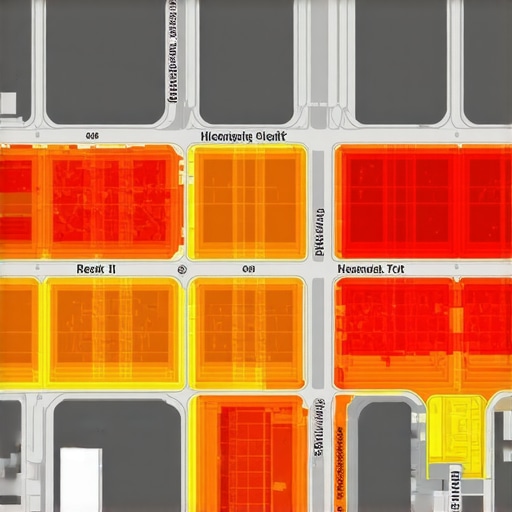
Grid tracking uses API-driven data to pull ranking positions at specific map nodes, creating a heatmap visualization of your local visibility. This forensic mapping identifies ranking gaps and competitor strongholds, allowing for targeted GMB optimization and citation correction in underperforming neighborhoods. When you look at a grid of 13×13 nodes across your city, you will see red dots where you are invisible and green dots where you dominate. The goal is to turn the red dots green. This often happens by fixing small errors. Sometimes why your map position drops when you change categories is because you moved into a more competitive vertical where your proximity is filtered more aggressively. You should always use the best GMB software tools for real time rank tracking to keep an eye on these shifts. If you see a sudden wall of red dots, it might be a core update or a new competitor using spam tactics. In those cases, you need to know how to remove spam competitors from the 3-pack naturally by reporting their TOS violations. Don’t let them steal your space with fake names. The grid is a representation of the competitive landscape. If you see your rankings drop at the exact border of a city, it means your citation profile lacks local relevancy for that neighboring town. You might need how to use local citations to broaden your map ranking radius to push your visibility across those artificial boundaries. The map does not care about city limits; it cares about the signal strength of your business in that specific plot of land.
“Proximity remains the single most powerful ranking factor in the local pack, often overriding traditional SEO signals like backlink authority or content length.” – Local Search Intelligence Report
Forensic steps for trust recovery
Trust recovery in local SEO involves removing toxic backlinks, cleaning up legacy black hat footprints, and verifying listing data to restore map rankings after a penalty. This emergency SEO process requires manual audits of duplicate citations and GMB interaction signals to rebuild algorithmic trust. If you are dealing with the aftermath of a bad agency, you need the real cost of hiring a GMB profile SEO expert to guide the cleanup. It is a slow process. You have to undo the damage of years of bad data. Start by checking why your NAP consistency still matters more than you think. Every mismatched phone number on an old directory is a splinter in your ranking. You need a clean, unified front. If your reviews were nuked, you need to understand why your Google Maps local ranking depends on review recency. You cannot just rely on old glory. You need a constant stream of new, verified interactions. This is the only way to prove to the algorithm that you are still alive and still relevant. Sometimes, a simple fix is all it takes, like how to fix map pins that show up in the wrong location. A pin that is twenty feet off can put you in the wrong building, which confuses the GPS signals of visiting customers. Accuracy is the foundation of trust. Without it, the heatmap will always stay red. You must treat your GMB profile like a living entity. It needs fresh photos, weekly updates, and constant monitoring. Learn the benefit of uploading weekly videos to your business profile to give Google more visual data to process. This creates a rich, multifaceted profile that is harder for competitors to displace. The journey from red to green on a heatmap is a journey of a thousand small, precise adjustments. It is about proving your worth to the algorithm, one GPS coordinate at a time. The city is waiting for you to show up on the map. Stop being a ghost and start being a beacon.