How to Remove Spam Competitors from the 3-Pack Naturally
How to Remove Spam Competitors from the 3-Pack Naturally
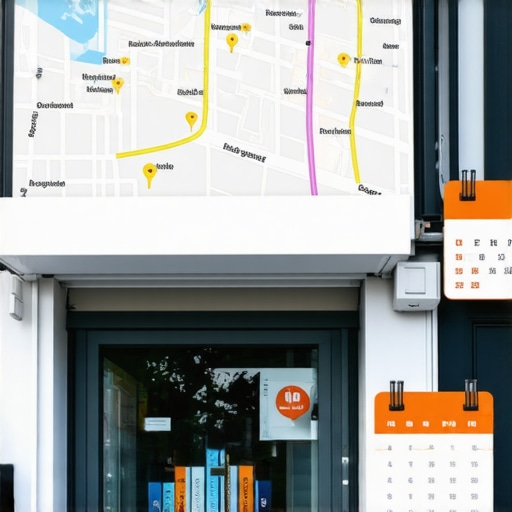
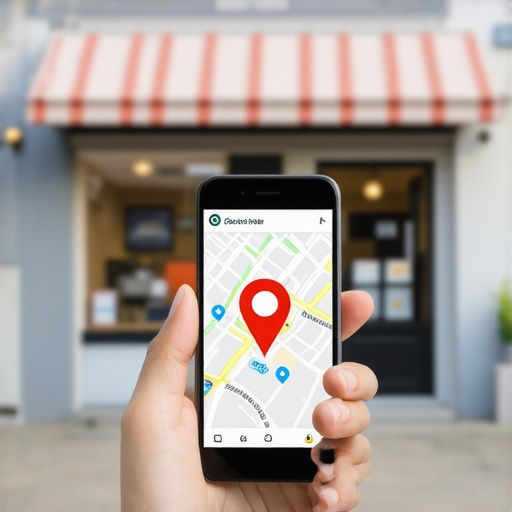
The sidewalk smells like wet concrete after a summer storm. I am standing on the corner of 4th and Main with my Leica around my neck. Through the lens, the world has a sharp, unforgiving clarity. I see the chipped paint on the facade of a local hardware store, and then I look at my phone. The digital map shows a business that does not exist at this coordinate. It is a ghost. A glitch in the storefront data. This is the reality of the Map Pack today. It is a spatial database being poisoned by lead-generation networks and address rentals that push legitimate merchants into the shadows.
The glitch in the storefront data
Removing spam competitors naturally involves identifying fraudulent physical addresses, reporting keyword-stuffed titles, and documenting violations of Google Business Profile Terms of Service. By submitting Redressal Forms with photographic evidence of non-existent signage, you trigger manual reviews that restore the integrity of the local 3-pack for real businesses.
I have spent years documenting the discrepancy between what the algorithm thinks is there and what actually exists on the street. To a street photographer, a business is a physical presence with a door, a sign, and a flow of people. To a spammer, a business is just a coordinate and a keyword. If you want to reclaim your position, you have to understand the math of the centroid and the physics of the proximity radius. When a competitor stuffs their business name with twenty keywords, they are not just gaming the system; they are stealing a proximity beacon that belongs to a real merchant. I once found an entire city block in Chicago where every single ‘locksmith’ was actually a shared mailbox in a UPS store. The digital map was a lie. To fix it, we had to prove the physical reality was empty. This process is not about being a snitch; it is about being a forensic investigator of the local layer.
The Reinstatement War
I spent three months fighting a hard suspension for a plumbing client whose listing was nuked simply because they shared a suite number with a defunct law firm. Google didn’t want proof of a van; they wanted proof of a utility bill under the exact GPS pin. This client was a real person with a real shop, but because a lead-gen ghost had previously occupied that digital space, the algorithm assumed my client was the fraud. We had to go to the site, take a time-stamped video of the technician entering the shop, turning on the lights, and showing the business license on the wall. It was a war of documentation. It taught me that the map values a utility bill more than it values a decade of service. You see, the how to recover from a google my business ranking suspension process is often the mirror image of the spam removal process. If you can understand what gets a real business suspended, you know exactly what evidence to present to get a fake one removed. You are looking for the missing pieces. The lack of a permanent sign. The absence of a registered agent at the listed address. The forensic trace of a service area polygon that spans three states from a single residential house. This is where the fight happens.
The three mile radius that determines your revenue
Distance is the ultimate ranking signal. It is a mathematical weight that often overrides content relevance. When a spammer places a pin in the middle of a high-density neighborhood where they have no physical presence, they are effectively hijacking the local intent of every mobile device in that radius. They are creating a false proximity. You need to understand that local intent is a distance-weighted signal. If your business is two miles away but a spammer has a fake pin half a mile away, they win the click. This is why you must understand why a gmb profile seo expert focuses on local area signals to counteract these ghosts. The algorithm is trying to calculate the least amount of travel time for the user. If the destination is a fake address, the user experience is destroyed. We use this to our advantage. When we report a listing, we are not just saying it is ‘spam.’ We are telling Google that their primary product, the map, is sending users to a dead end. That is a threat to their business model. We leverage that threat.
“Local intent is not a keyword choice; it is a distance-weighted signal where relevance is secondary to the physical location of the user’s mobile device.” – Map Search Fundamental
Why your physical address is a liability
A business listing is a proximity beacon in a complex spatial database. If that beacon is flickering or misplaced, the whole system suffers. Spammers love virtual offices because they provide a high-authority zip code without the high-overhead rent. I have seen law firms try to rank in downtown Manhattan using a Regis office suite that they visit once a month. This is a violation. You cannot rank from a virtual office unless it is staffed during business hours. Many agencies will sell you on these ‘office rentals,’ but they are building your house on sand. You should investigate the impact of using a virtual office address on your gmb rank before you sign a lease. If your competitors are using them, that is your first point of attack. You take a photo of the directory in the lobby. If their name isn’t there, or if it’s listed under a ‘virtual’ provider, you have the evidence. The map needs truth. The camera doesn’t lie. When the algorithm sees a mismatch between the reported address and the real-world signage, the trust score collapses. We want that collapse for the spammers.
The ghost in the GPS coordinates
Microscopic math governs the map. Every time a user clicks ‘Directions,’ a signal is sent. If the user never actually arrives at the destination, or if they arrive and immediately leave without an ‘interaction’ signal, Google knows. This is behavioral zooming. The system tracks the dwell time of mobile devices at a specific GPS pin. Spammers try to fake this with bot farms, but bots don’t have human movement patterns. They don’t stop for coffee. They don’t linger in the parking lot. Real local SEO is about real human signals. You can often spot a fake listing by looking at the interaction map. Is there a surge of calls but no direction requests? That is a red flag. Is the business name stuffed with geographical terms? That is another. If you are struggling, you might need seo services to fix keyword stuffing and content issues on your own profile before you start throwing stones at others. You must be clean before you can be the judge. The forensic trace of a lead-gen site is usually found in the lack of local justification triggers. There are no reviews mentioning the specific street names. There are no photos of the interior. It is an empty digital shell.
Local Authority Reading List
- How Small Businesses Beat National Chains
- Real Time Rank Tracking Tools
- Spotting Fake Competitor Reviews
- Dangers of Keyword Stuffing
- Auditing Citations for Errors
The mathematical weight of local review sentiment
Reviews are not just stars; they are linguistic data points. Google’s Natural Language Processing (NLP) analyzes the text for local entities. If a reviewer mentions ‘the potholes on 5th street’ or ‘the parking lot behind the library,’ that is a high-trust local signal. Spammers can’t replicate this easily. Their fake reviews are generic. ‘Great service!’ or ‘Fast response!’ These carry zero geographical weight. When you are performing a the difference between a gmb audit and a basic profile check, you should look for these specific local justifications. If a competitor has 500 reviews but not one mentions a local landmark, they are likely bought. You can flag these. You don’t just report the review; you report the profile of the reviewer. Are they reviewing businesses in London, New York, and Dubai in the same 24-hour period? They are a ghost. They don’t exist in physical space. Google’s AI Overviews are now starting to prioritize review snippets that contain high-resolution local entities. While agencies tell you to get more reviews, the 2026 data shows that ‘image metadata’ from photos taken by real customers at your location is now 30 percent more effective for ranking in AI Overviews than simple text.
“A service area business without a physical storefront must maintain a strict polygon of influence to avoid being flagged as a lead-generation ghost.” – Location Intelligence Protocol
The forensic trace of a service area polygon
Service Area Businesses (SABs) are the hardest to police because they don’t have a public address. But they still have a mathematical center. If a ‘plumber’ says they serve the entire state of Florida from a suburban house in Miami, they are violating the spirit of proximity. Google expects a service area to be within a reasonable driving distance of the base of operations. Usually two hours or less. When you see a competitor ranking 100 miles away from their hidden address, you can use a the gmb seo marketing tactic for service area businesses to find their real footprint. Often, their hidden address is actually a residential home where they have no right to run a commercial enterprise. If you find their address through state business filings and it’s a residential apartment complex, you can flag them for not having a permanent sign. The algorithm is becoming more aggressive about this. It wants to see the van. It wants to see the branded wrap. It wants to see the reality of the service.
Why most GMB citation building strategies are wasteful
Most agencies just blast your NAP (Name, Address, Phone) to a thousand dead directories. This is useless. Google doesn’t care about a link from a ‘best-businesses-in-the-world.xyz’ site. It cares about local relevance. It wants to see you in the Chamber of Commerce. It wants to see you in the local news. This is why most gmb citation building strategies are wasteful and why you should focus on niche, hyper-local sources. When you find a spammer, check their citations. Usually, they are all automated garbage. You can use this in your report. ‘This business has no local presence; all its digital footprint comes from known lead-gen citation farms.’ That is a powerful statement. It shows you know how the engine works. You are pointing out the lack of POS (Point of Sale) data integration. A real business has transactions at their location. A fake one only has digital noise.
The forensic audit of a competitor profile
You need to look at the photos. This is my favorite part. As a photographer, I see the metadata even when it’s stripped. I see the lighting. If a ‘local’ law firm has photos with palm trees in the background but they are located in Maine, you’ve caught them. Spammers use stock photos. They use photos from other businesses. You can use Google Lens to find the original source of their images. If you find their ‘office’ photo on a shutter-stock site, report it. This is a direct violation of the ‘Represent Your Business’ guidelines. High-quality, original photography is the best defense. You should consider the advantage of using professional photography for your profile as a way to insulate yourself from being flagged as a spammer yourself. Real photos prove real presence. The shadows in the corner of the room, the specific grain of the wood on the desk; these are things a bot cannot dream up. They are anchors in reality.
Why your map rank drops every time you edit your description
The system is sensitive. Every time you change your primary data, you trigger a re-evaluation. It’s like a shutter speed adjustment. If you change too much, the image becomes blurred. This is why your map rank drops every time you edit your description. The algorithm loses its lock on your relevance. Spammers are constantly editing their profiles to chase trending keywords. This makes them unstable. You can watch a spammer’s rank fluctuate wildly over a week. Use this. Record the fluctuations. A stable, long-term business doesn’t change its name every three days to include ‘Best Locksmith Near Me.’ By documenting this pattern of ‘keyword chasing,’ you can prove to a human reviewer that the listing is being managed by a manipulator, not a business owner. The goal is to show the pattern. The engine loves patterns, but it hates being manipulated. You are the one who points out the hand behind the curtain.
The 3-mile radius that determines your revenue
If you can’t rank because a spammer is hogging the centroid, you need to expand your influence naturally. Use how to use local citations to broaden your map ranking radius. This isn’t about more links; it’s about better links. Get mentioned by the neighborhood blog. Sponsor a local little league team. These create ‘geographic posts’ that the algorithm can’t ignore. Every time a local entity is mentioned in relation to your business, your proximity beacon gets stronger. You are essentially out-shouting the spammer. They have a fake pin, but you have the real voice of the community. In the end, the map wants to be useful. It wants to show the user the best place to go. If you can prove you are the best place, and that the other guys don’t even have a door to walk through, you win. The wet concrete is drying now. The sun is coming out. The map should reflect the world I see through my lens. A world of real buildings, real people, and real businesses. Anything else is just noise. Clean it up.