Why GMB rank fast techniques fail during the verification stage
Why GMB rank fast techniques fail during the verification stage
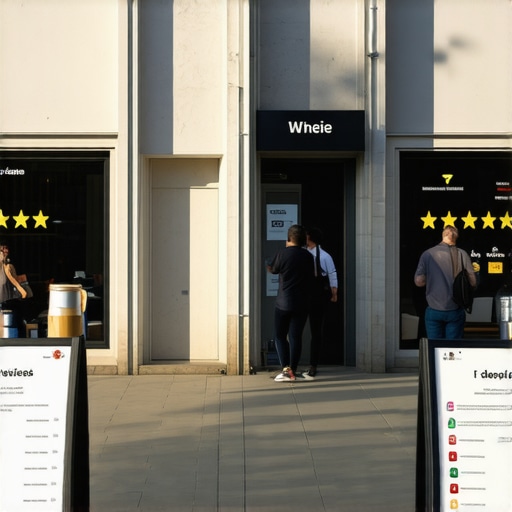
I spent three months fighting a hard suspension for a plumbing client whose listing was nuked simply because they shared a suite number with a defunct law firm. Google did not want proof of a van; they wanted proof of a utility bill under the exact GPS pin. The air in that client’s office smelled like wet concrete and stale coffee. I remember looking at the storefront through my lens, noticing the slight glitch where the vinyl lettering on the door did not match the digital footprint exactly. That tiny visual discrepancy was a signal of the deeper rot in their local data. In the world of hyper-local search, the camera never lies, but the database often does. If you try to force a ranking through shortcuts, the verification process acts as a high-resolution filter that catches every grain of sand in your gears.
The ghost in the GPS coordinates
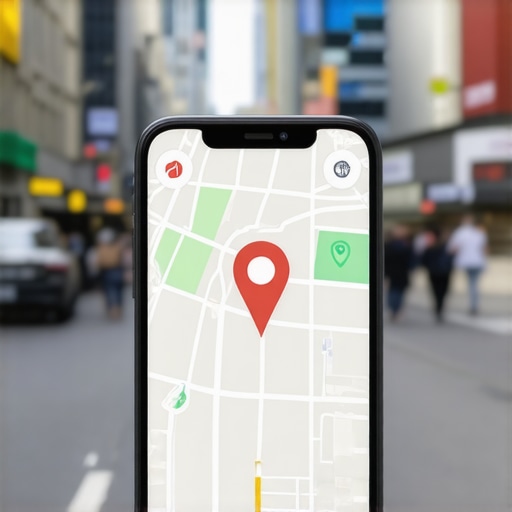
GMB rank fast techniques fail during verification because they rely on artificial location signals that do not align with physical GPS data. Google uses mobile device pings, Wi-Fi triangulation, and street-level imagery to confirm a business exists. Discrepancies between these layers trigger immediate manual reviews or hard suspensions.
When you attempt to trick the algorithm, you are fighting against a spatial database that knows exactly where every registered mobile device sits at noon on a Tuesday. The math of proximity is unforgiving. If your service area business claims to be in a downtown high-rise but the metadata from your uploaded photos shows a suburban garage, the system flags the conflict. This is why most GMB rank fast promises usually lead to a permanent map suspension because they cannot bridge the gap between a digital lie and a physical truth. I have walked through alleys where the Google car missed a turn; I have seen the digital artifacts of abandoned businesses still haunting the map pack. These ghosts create noise, and Google’s latest verification loops are designed to exorcise them. The verification stage is not just a checkbox; it is a forensic audit of your physical reality.
“Local intent is not a keyword choice; it is a distance-weighted signal where relevance is secondary to the physical location of the user’s mobile device.” – Map Search Fundamental
Why your physical address is a liability
Physical addresses become liabilities when they are associated with virtual offices, shared workspaces, or residential zones that lack proper signage. Verification fails when the video walkthrough reveals a lack of permanent branding or dedicated entrances. Google requires evidence of a localized, unique operation to maintain map integrity.
The era of the UPS Store address is dead. If you are trying to use a mailbox as a beacon, you are already flagged. I see businesses all the time that try to hide their residential status, but then they wonder how to fix a broken gmb proximity signal for service areas after the map hides their pin. The proximity radius shifts based on the density of your competition. In a crowded city, your three-mile reach might shrink to six blocks if your address verification is weak. The logistics are simple. Google wants to see a desk, a sign, and a human being. When you hire an agency, you should ask how to tell if your gmb local seo agency is lying about results because many will use temporary leases to get you verified, only for the listing to vanish sixty days later. It is a house of cards built on a foundation of sand.
The three mile radius that determines your revenue
The three mile radius is the primary battleground for local visibility where proximity outweighs traditional SEO factors like backlinks. Rankings drop off sharply as a user moves away from the business centroid. Verification ensures that the business is actually located at the center of this high-conversion zone.
I have tracked the movement of service vans across zip codes to see how the map pack reacts in real-time. It is a living, breathing organism. If your verification data is slightly off, your signal strength wanes. You might show up for someone standing in your lobby but vanish for the person two blocks away. This is what your gmb optimization service isnt telling you about proximity; they cannot manufacture distance. The verification process often fails because the business tries to claim a central city location while operating from the outskirts. Google detects this through behavioral zooming. They look at where the owner’s phone spends its nights. If the owner is never at the verified location, the trust score plummets. This is why you need the only gmb software that tracks proximity like a human to see the reality of your reach.
The digital forensic trail of fake locations
Fake locations leave a forensic trail through inconsistent NAP data, recycled IP addresses, and stock photography that lacks geolocation metadata. Google’s AI scanners identify these patterns during the verification stage to prevent map spam. Genuine businesses provide unique, high-resolution imagery and consistent utility documentation.
I have seen the messy reality of the street where agencies try to use AI-generated storefronts. They look perfect in a thumbnail, but they lack the grime of reality. Google looks for the “glitch” in the data. If your photos don’t have the correct EXIF data from a local cell tower, you are done. This is the reason why your gmb click through rate service is failing; it is being fed to a listing that Google already suspects is a ghost. You cannot fake the behavioral history of a real building. Real customers leave a trail of GPS breadcrumbs. When an agency tells you they can rank you in a week, they are ignoring the fact that the dangerous truth about cheap gmb interaction services is that they use bot patterns that Google identified years ago. Verification is the moment the machine looks you in the eye. If you blink, you lose.
How to spot a bad GMB SEO package before you buy
Spot a bad GMB SEO package by checking for promises of guaranteed rankings, use of automated citation builders, and a lack of focus on physical verification. High-quality services emphasize data accuracy, review management, and local engagement. Avoid any package that treats a business listing like a standard website.
Most salespeople in this industry have never actually stood on a street corner and tried to verify a listing. They sell templates. You need to know how to spot a bad gmb seo package in under five minutes by looking at their citation strategy. If they are still selling thousands of directory links, they are living in 2012. Today, why buying local citations is a waste of time today is because Google cares more about the accuracy of your power-citations like Yelp or Apple Maps than a hundred dead directories. A real service will audit your profile for hidden category conflicts and ensure your service list is optimized for long-tail searches. They won’t just stuff keywords into your business name, which is a fast track to a suspension. Instead, they will show you the profile tweaks that improve your map conversion rate without breaking the rules.
“Local search verification is a trust-building exercise where the burden of proof lies entirely on the business owner to demonstrate physical permanence.” – Map Search Fundamental
The truth about rank tracking accuracy in 2025
Rank tracking accuracy depends on hyper-local data points collected from specific GPS coordinates rather than general zip code averages. Real-world rankings fluctuate block-by-block based on user movement and local competition. Accurate tools simulate actual mobile device pings from multiple locations to provide a true proximity map.
I once saw a listing that looked like it was winning the whole city on a standard tracker, but when I actually drove to the north side, it was nowhere to be found. This happens because most tools lie to you. You need the local rank tracker that doesnt lie to you to see the real holes in your coverage. If you are not tracking phone calls or clicks, you are just looking at vanity metrics. Many agencies will tell you that you are ranking, but stop paying for map services that dont track phone calls because rank doesn’t pay the bills; leads do. The verification stage often reveals that your “rankings” were just a temporary bubble caused by an unverified listing that Google hadn’t caught yet. Once the verification hammer drops, the truth comes out.
Cleaning up the mess left by AI spam
Cleaning up AI spam involves removing low-quality generated content, fixing keyword-stuffed titles, and restoring original business metadata. Recovering from a penalty requires a manual audit of all posts and reviews to ensure they meet Google’s helpful content standards. This process rebuilds the trust score necessary for ranking.
The internet is becoming a landfill of AI-generated junk. I see business descriptions that look like they were written by a robot with a thesaurus. If your profile is full of this, you need gmb seo hacks 2025 using ai driven responses to fix low engagement carefully. Use AI to assist, not to replace the human touch. If your site was deranked, you need why your map rank dropped after the latest core update to understand that Google is punishing thin content. They want to see real customer stories. They want to see the review strategy that builds massive local authority through genuine feedback, not just five-star ratings with no text. If you’ve been hit by a negative SEO attack, you have to document every anomaly and present it to the spam team. It is a slow, grueling process of reclamation.
The secret to scaling without a ban
Scaling multiple GMB locations without a ban requires unique physical addresses, distinct phone numbers, and localized content for each profile. Avoid using a single central account for too many listings to prevent a chain suspension. Each location must operate as an independent entity with its own verification footprint.
I have worked with franchises that tried to manage fifty locations from one dashboard using the same template for every post. It is a disaster waiting to happen. You have to learn the secret to scaling gmb profiles for multiple locations by giving each shop its own personality. Use local photos of the staff at that specific branch. Talk about local events in your posts. If you are just copy-pasting, the reason your gmb posts arent getting any engagement is that people can smell the corporate robot. Verification for a second or third location is even stricter than the first. Google will look for any sign that you are just a lead-gen site pretending to be a local shop. You must prove that there is a light on and a door open at every single address you claim.
Fixing broken redirects and technical local debt
Technical local debt includes broken redirects, 404 errors on location pages, and mismatched schema markup that confuses search crawlers. Fixing these issues involves a full audit of the website’s URL structure to ensure every local signal points to a live, optimized page. Technical health is a prerequisite for map pack stability.
You can have the best looking listing in the world, but if your website is a mess, your rank will suffer. I have found cases where how we fixed a gmb optimization service error that blocked local leads was as simple as fixing a broken link in the primary category. The bot hits a 404 and decides your business is unreliable. You need to how to audit your profile for hidden category conflicts to ensure your website and your GMB are speaking the same language. If you hide your address but don’t update your service area polygons, you create a disconnect. This is why some businesses need the citation fix that recovered a lost ranking overnight; they finally aligned their digital data with their physical service area. Technical debt is a silent killer of local leads.
A checklist for surviving a manual action
Surviving a manual action requires immediate removal of all TOS-violating content, a thorough audit of the business name, and the submission of a detailed reinstatement appeal. Success depends on providing undeniable proof of business operation such as tax licenses and on-site video evidence. Most appeals fail because they lack specific, localized documentation.
If you get the dreaded email, do not panic. First, how to recover your gmb profile after a manual action starts with honesty. If you keyword stuffed your name, change it back. If you used fake reviews, stop. You have to show Google that you have cleaned house. Look for the real reason your gmb listing is suspended and how to fix it because it is usually something small, like a mismatched phone number on an old directory. Once you have the proof, present it clearly. No excuses; just facts. The verification stage is the final gate. If you have done the work to build a real business in a real location, you will pass. If you tried to shortcut the system, the map pack will remain a closed door. Take a photo of your storefront today; make sure it looks like a place people actually want to visit. That is the ultimate SEO hack.