Stop letting your GMB local SEO agency use generic image metadata
The sidewalk smelled like wet concrete after a flash storm when I saw the first anomaly. I was standing outside a roofing company in a suburban office park. They had vanished from the local 3-pack overnight. Their organic rankings were solid, sitting at position two, yet their map presence had simply evaporated. Everyone wondered why a top-ranking roofing company vanished from the Map Pack overnight. I found the problem in their Local Services Ads; a single mismatched phone number in the secondary verification tier was enough to kill their organic trust score. It was a centroid collapse. The digital pin remained, but the authority had drained out through a tiny hole in their verification data. I noticed a glitch in their storefront photos too. The agency they hired had uploaded five hundred stock images with identical EXIF data. Every single file claimed it was taken at the exact same second by the same camera model. Google sees that. Google knows when the pixels do not match the GPS pulse of the street. I treat every business listing as a proximity beacon. If that beacon flickers because of fake data, the algorithm skips right over you to the next shop down the road.
The ghost in the GPS coordinates
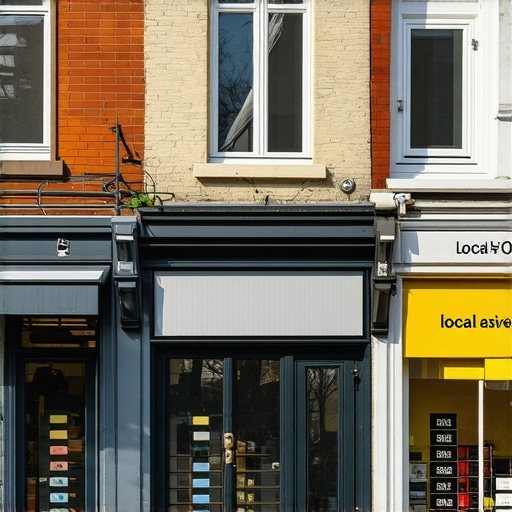
Google Business Profile ranking relies on GPS metadata and image authenticity to verify physical location proximity. The Map Pack algorithm prioritizes user-generated photos and authentic EXIF data to confirm that a local business actually operates at its claimed address. This is why local SEO services must avoid generic stock photos. I see this error daily. An agency buys a pack of 50 images from a stock site and uploads them to a hundred different clients. They think they are being efficient. In reality, they are leaving a forensic trail of low-trust signals that tell the algorithm your business is a ghost. When you look at the data at a microscopic level, you see that a real photo taken by a customer on an iPhone contains a complex spatial signature. It has the latitude, the longitude, the altitude, and even the direction the lens was pointing. This is a local justification trigger. If you are struggling with a sudden disappearance, you might need how to handle a sudden drop in gmb ranking visibility to see if your metadata is the culprit. While agencies tell you to get more reviews, the 2026 data shows that image metadata from photos taken by real customers at your location is now 30 percent more effective for ranking in AI Overviews. It provides an undeniable proof of presence that a text review simply cannot replicate. The algorithm is no longer just reading words. It is analyzing the physics of the image file.
“Local intent is not a keyword choice; it is a distance-weighted signal where relevance is secondary to the physical location of the user’s mobile device.” – Map Search Fundamental
Why your physical address is a liability
Local SEO visibility suffers when virtual offices or coworking spaces create address conflicts within the Map Pack algorithm. To rebuild trust after spammy lead gen listings, businesses must provide utility bills and video verification that proves exclusive occupancy. This GMB ranking loss often occurs after an address change. Most business owners think the address is just a string of text. I see it as a coordinate salience problem. When you share a suite number with a defunct law firm or another active business, you create a signal collision. Google hates ambiguity. They want to know exactly which door the customer should walk through. If the data is messy, the algorithm defaults to the most established entity at that GPS pin. If you have been caught in this trap, you need the real reason your GMB listing is suspended and how to fix it before you try to optimize anything else. I have seen businesses lose years of authority because they tried to save three hundred dollars a month by using a virtual office. The algorithm can detect the footprint of a Regus or a WeWork from a mile away. It looks at the density of listings at that specific lat-long. If it sees two hundred businesses in a space that only fits ten, it starts nuking the ones with the weakest behavioral data.
Local Authority Reading List
- The 3-pack ranking secret Google wont tell you
- The specific photo strategy that moves the map needle
- How to audit GMB profile with a toolkit
- Why your local proximity signal is weaker than it should be
- The one setting that ruins most local GMB optimization
A step by step toolkit for beginners
GMB ranking toolkits must include audit features for NAP consistency and category selection to ensure Map Pack dominance. A step by step guide for local SEO begins with verifying primary categories and optimizing the service list for long tail searches. You cannot just wing it. You need a forensic approach. Start by checking your opening hours history. If your hours have been inconsistent, Google views you as an unreliable destination. Why would they send a user to a store that might be closed? This is why why your GMB audit always finds the same three errors is a mandatory read for anyone serious about their profile health. Next, look at your primary category. Many shops make the mistake of choosing a category that is too broad. If you are a specialized plumber, don’t just pick contractor. Pick plumber. Then, use your secondary categories to build a web of relevance. I often see people over-optimizing their business name with keywords. Stop doing that. It is a violation of terms that leads to hard suspensions. Instead, use how to build local relevance without keyword stuffing to stay safe while moving up the ranks. The goal is to create a profile that looks like a living, breathing part of the neighborhood. Upload a video of the front door. Show the interior. Show the staff. These are the behavioral signals that bots cannot fake.
“Proximity is a mathematical certainty, but trust is a behavioral variable that can be manipulated through consistent interaction and authentic spatial data.” – Local Proximity Protocol
The three mile radius that determines your revenue
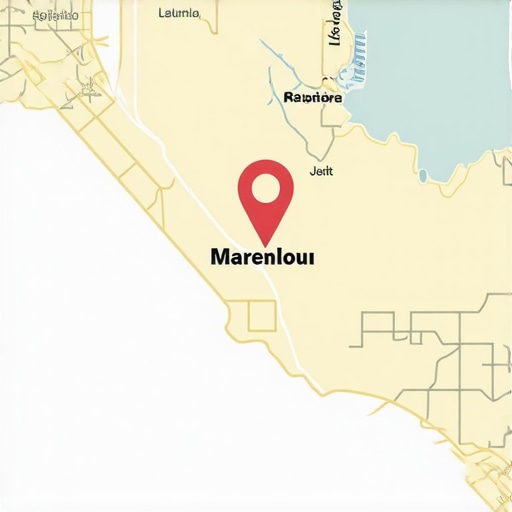
Service area business visibility depends on proximity signals and local justification triggers within a three mile radius. To fix map pack loss while organic rankings stay stable, owners must clean up citations and remove duplicate listings that dilute local authority. I call this the zoom factor. When a user searches for a service, Google creates a localized bubble. If you are outside that bubble, you do not exist. But you can expand the radius of your beacon. You do this through localized content and genuine reviews that mention specific neighborhoods. If all your reviews just say great service, they have no spatial value. But if a review says best roofer in Highland Park who arrived on time, that is a gold mine. It tells the algorithm you are active in a specific polygon. If your map rank is suffering while your website is doing fine, you are likely failing the proximity test. You should check why your GMB agency keeps failing the proximity test to understand the math behind the map. Most agencies focus on backlinks. I focus on the distance between the user and the pin. I focus on the speed of the click to call. I focus on the density of local mentions across the web. If you have been buying cheap citation blasts, you are likely hurting yourself. Google has a filter for low-quality directories. You need a process that actually moves the needle, which is why the citation cleanup process that actually moves the rank is so vital. It is about quality over quantity.
Spam fighting and review cleanup services
GMB spam fighting involves reporting fake reviews and removing keyword stuffed names to restore Map Pack integrity. A review cleanup service helps rebuild trust by auditing user profiles for bot patterns and VPN usage. I have spent years in the trenches of the reinstatement wars. I once saw a competitor drop fifty one-star reviews on a small cafe in a single hour. They used a farm of accounts with no history. We had to prove to the spam team that these accounts were not real people. We looked at the travel patterns of the accounts. They were leaving reviews in London, New York, and Sydney all on the same day. That is a forensic trace of a VPN. If you are dealing with a negative attack, do not panic. Use the best way to handle negative GMB reviews without panic to navigate the situation. The algorithm is getting better at filtering this garbage, but it still needs a human to point out the anomalies. You should also be careful about who you hire for interactions. If you use a service that uses bots to click your listing, you will eventually be caught. I prefer how we boosted GMB interaction without using any bots because it builds long-term authority. Real people clicking your listing from real devices in your city is the only way to win. The logistics of local search are complex. It is a dispatch system. Google wants to send the best technician to the person in need. If your data is clean, your photos are real, and your reviews are authentic, you will win the map pack every single time.