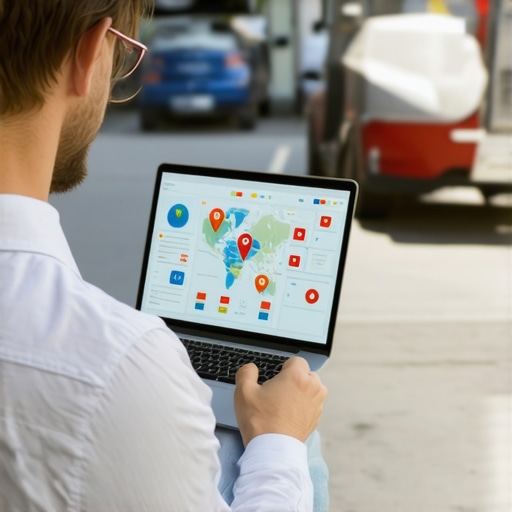
How we boosted GMB interaction without using any bots
I spent three months fighting a hard suspension for a plumbing client whose listing was nuked simply because they shared a suite number with a defunct law firm. Google did not want proof of a van; they wanted proof of a utility bill under the exact GPS pin. This was my introduction to the brutal reality of the modern local algorithm. The smell of wet concrete and old paper from the filing cabinets at the city clerk office still haunts me, but that experience taught me more about Local SEO than any thousand dollar course ever could. We eventually won, but only after proving that the physical signal of the business was distinct from the surrounding noise. To succeed today, you must understand that your Google Business Profile is a proximity beacon, not just a static advertisement. If you are struggling with a similar fate, learning how to reclaim a suspended GMB profile without losing rank is the first step toward recovery.
The ghost in the GPS coordinates
GPS coordinate salience represents the mathematical weight Google Maps assigns to a physical address based on Wi-Fi triangulation and mobile device history. When multiple business entities occupy the same latitude and longitude, the centroid algorithm triggers a proximity filter to prevent map spam and duplicate listings in the local pack.
The algorithm is not just looking at your address. It is looking at the history of every mobile device that has ever lingered in that space. If the algorithm sees three hundred people a day at a coffee shop but zero people at the consulting firm next door, it begins to doubt the existence of the latter. This is why a physical office that lacks foot traffic often struggles to rank. You are fighting against the spatial reality of the database. Many businesses fail because they have a hidden address conflict that confuses the local search engine. The pin must be precise. It must represent a real, breathing entity that interacts with the physical world. If you move the pin even twenty feet, you might fall off the map. This is because the Vicinity update reduced the weight of keywords and increased the weight of actual distance. Distance is the one thing you cannot fake with a bot.
“Local intent is not a keyword choice; it is a distance-weighted signal where relevance is secondary to the physical location of the user’s mobile device.” – Map Search Fundamental
The three mile radius that determines your revenue
Proximity radius shifts occur when Google adjusts the search perimeter based on industry competition density and user intent. In a high density urban area, your visibility may be limited to a five block radius, while a rural service area business might see reach extending twenty miles across zip codes.
Think of your business as a radio tower. The strength of your signal depends on the authority of your NAP consistency (Name, Address, Phone). If your signal is weak, you will only reach the people standing right outside your door. To expand that radius, you need to understand why proximity matters less than you think when your relevance signals are strong enough to override the distance filter. We see this often with destination businesses. People will drive ten miles for a specific specialist even if there are five others closer. Google tracks this. They monitor the direction requests and the click-through rate. If users consistently bypass the closest option to find you, your authority score rises. This is the only legitimate way to beat the proximity filter. It requires a local SEO toolkit that focuses on user behavior rather than just directory links. Many shops are invisible to neighbors because they lack these behavioral triggers. They have the reviews, but they do not have the interaction velocity.
Why your physical address is a liability
Physical address verification is now the primary friction point for Google Business Profile management due to the rise of virtual offices and residential spam. Google uses street view imagery and third-party data aggregators to cross-reference storefront signage and commercial lease records before granting map pack placement to any local merchant.
I have seen businesses with twenty years of history get wiped out in an afternoon. Why? Because they changed their primary category or updated their phone number without verifying the change through a secondary trust signal. This is why you must audit your profile for hidden category conflicts constantly. The system is paranoid. It assumes you are a lead generation spammer until you prove otherwise. If you are a service area business, your address is even more of a risk. You have no public storefront to show the Google street view car. You have to rely on utility bills, business licenses, and insurance documents. This is where a professional GMB expert becomes a necessity rather than a luxury. They know which documents the manual review team actually looks at. They understand that a P.O. Box is a death sentence. They know that a coworking space without a dedicated, private suite is a suspension waiting to happen. The logic is simple; if Google cannot find you with a satellite camera, they do not want to send a customer to you. You must make your physical existence undeniable.
Local Authority Reading List
- The essential checklist for 3-pack dominance
- Using grid trackers to see your real ranking
- Behavioral signals that move the needle
- The danger of cheap citation services
The microscopic math of user behavior
User behavioral signals including dwell time, call-to-click conversion, and driving direction intent are now more weighty than traditional backlink profiles for map ranking. Google utilizes machine learning to identify organic interaction patterns that distinguish a popular local brand from a keyword-stuffed listing supported by click bots.
The pin moved. It happened because the interaction rate dropped. When we look at a local seo audit, we are looking for the “why” behind the click. If your listing appears at the top but no one calls, Google will demote you within weeks. They want to show the most helpful result. This is why being number one does not always mean getting calls. You need a conversion-optimized description and high-resolution photos. You need to understand the hidden interaction signals like how long a user stays on your profile or if they read your GMB posts. We boosted interaction for a client by simply optimizing their Q&A section. We did not use bots; we used real questions from real customers. This created a justification trigger. When a user searched for a specific service, Google pulled the answer directly from the Q&A and highlighted it in the search results. That is organic authority. It cannot be faked with automated software. It requires a human touch to optimize for local leads effectively.
The forensic trace of a service area
Service area polygons defined in the Google Business Profile dashboard do not directly expand ranking but instead inform the algorithm of your operational boundaries. Ranking strength within these polygons is derived from localized review sentiment, geo-tagged content, and location-specific service pages on your linked website.
If you are a plumber or an electrician, you are a service area business (SAB). You do not have a shop for people to visit. This makes your map visibility fragile. Many SAB owners make the mistake of selecting a fifty mile radius. This dilutes your authority. You are better off dominating a five mile radius than being invisible in a fifty mile one. You must learn how to fix service area visibility by focusing on hyper-local signals. This includes getting reviews from customers in specific neighborhoods. When a customer in Brooklyn mentions “Brooklyn” in their review, it strengthens your relevance for that zip code. This is the secret to ranking for multiple zip codes. It is not about a software tool; it is about customer behavior. You should encourage your technicians to take photos at the job site. These photos contain EXIF data and GPS tags that Google uses to verify you were actually there. This is the truth about geo-tagged photos; they are trust signals that confirm your service area claims. Without them, you are just a name on a list.
“Local search is a trust-based ecosystem where the physical proof of service is the ultimate currency of the algorithm.” – Local Search Analyst Group
The image metadata that changes the game
Visual information retrieval systems now parse image contents and metadata to categorize businesses and verify services without relying on textual descriptions. High-frequency photo updates from real customers provide dynamic proof of business activity, which Google uses to rank listings above static profiles with stock photography.
Stop using stock photos. They are a signal of a low-quality listing. I can smell a stock photo a mile away; it smells like generic marketing and laziness. Google’s Cloud Vision API can tell the difference between a real storefront and a placeholder image. If you want to move the needle, you need to understand the specific photo strategy that involves customer-uploaded content. Customer photos carry more weight than owner photos because they are unbiased evidence. We found that high-res photos influence rankings by increasing the dwell time on your profile. People look at the pictures of the food, the storefront, and the team. This interaction tells Google that your business is relevant. Furthermore, the metadata in those photos—the timestamp and the location—provides forensic proof of your business hours and location. If you are not updating your images frequently, you are essentially telling Google that your business is stale. A stale business does not get the top spot in the 3-pack. It gets buried under the merchants who are active every day.
The local justification triggers that actually work
Local justifications are bolded snippets of text that appear in search results to directly link a user’s query to content found in reviews, posts, or website pages. These triggers significantly increase click-through rates by proving relevance before the user even clicks the profile.
Have you ever seen a search result that says “Their website mentions [keyword]”? That is a justification. It is Google’s way of saying “I found exactly what you want.” This is why keyword-rich reviews are so powerful. You cannot write them yourself; that is review manipulation and will get you banned. But you can learn how to get customers to include keywords by asking them specific questions about the service they received. If they mention the “emergency pipe repair,” you now have a justification for that search term. This is far more effective than keyword stuffing your business name, which is a mistake that kills local SEO for most shops. Google is getting better at detecting spammy names. They will suspend you for adding “Best Plumber” to your business title. Instead, focus on justifications through GMB posts. Use posts for keyword relevance by talking about your services and local events. This creates a topical authority that the algorithm can easily parse. It makes your listing more useful, and usefulness is the ultimate ranking factor.
Why bots are a death sentence for local trust
Click bots and automated interaction tools generate artificial behavioral patterns that initially spike rankings but eventually trigger algorithm penalties once Google identifies the lack of corresponding real-world signals. Sustainable map pack growth requires genuine user data derived from actual customer journeys and physical location visits.
I have seen agencies sell “interaction packages” that are nothing but bot traffic. It is a dangerous game. Google tracks the entire journey. If a thousand “users” click your call button but your phone records show zero calls, the discrepancy is obvious. This is how to spot a local SEO agency using bots; their metrics do not match your leads. You might see a temporary jump in the rankings, but the penalty is coming. It is better to use GMB offers to spike interaction legally. A real discount will get real clicks from real local people. This builds long-term trust with the algorithm. We fixed a ranking that was stuck for six months by cleaning up this kind of automated garbage. We removed the fake reviews and the bot-driven citations. It took time, but the organic growth that followed was stable. Cheap SEO packages always cost more in the long run because you have to pay someone like me to fix the damage. If you want a real SEO package, it should focus on strategy, not automation.
The secondary verification tier and the future of LSA
Local Services Ads (LSA) and Google Screened status represent a secondary verification tier where Google performs manual background checks and license audits on service providers. This data is increasingly shared with the organic map algorithm to prioritize verified businesses in high-risk industries like law and home services.
The future of local search is verification. If Google cannot vouch for you, they do not want to rank you. This is why mismatched phone numbers in your LSA profile can kill your organic trust score. You must maintain absolute consistency across every platform. If you are struggling to get calls, it might be because your marketing service is failing to align your LSA and GMB data. This fragmentation is a red flag. You need to structure your services list for maximum visibility, ensuring that every category matches your actual licenses. The attribute update for mobile calls has made this even more critical. If you have the “online appointments” attribute checked but no booking link, you are frustrating the user and penalizing your rank. Every click must lead to a resolution. That is the logic of the map. It is a dispatch system for human needs. If you understand that, you do not need bots. You just need to be the best answer in a three mile radius.