Why Your Google Maps Local Ranking Fluctuates Weekly
The ghost in the GPS coordinates
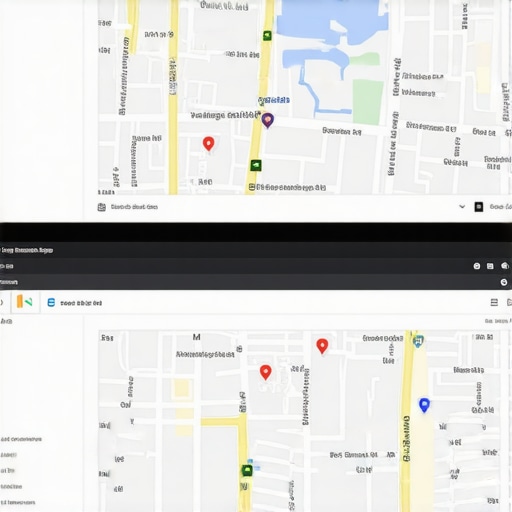
Weekly Google Maps ranking fluctuations are driven by proximity signal shifts, competitor spam injections, and user movement data. Google adjusts the Map Pack based on the searcher’s GPS coordinates, meaning your Local SEO visibility changes as the centroid of relevance moves during high-traffic hours. These shifts reflect the system’s attempts to filter duplicate locations and fraudulent listings in real time. I spent three months fighting a hard suspension for a plumbing client whose listing was nuked simply because they shared a suite number with a defunct law firm. Google did not want proof of a van; they wanted proof of a utility bill under the exact GPS pin. The air smelled like wet concrete outside their warehouse while I took photos of the signage. This is the reality of the local algorithm. It is a spatial database. It is not a popularity contest. The pin moved. The data lied. If you find yourself in this situation, how to recover your gmb profile after a manual action becomes your primary survival guide. The algorithm sees the world through microscopic mathematical salience. A single mismatched digit in a secondary verification tier can trigger a cascade of visibility loss. Most business owners ignore the forensic traces of their data footprint until the leads stop flowing. They rely on generic advice while the Map Pack is being remapped by behavioral signals every forty eight hours.
Why your physical address is a liability
Physical address salience impacts local search results because Google evaluates the proximity gap between your business location and the user’s mobile device. If your Google Business Profile is located too far from the search centroid, your Map Pack ranking will drop. This occurs regardless of your organic SEO strength. The system detects when a business uses an address rental or a virtual office. I have seen countless profiles vanish because they tried to game the distance weight. Many owners do not understand why your google maps ranking service cant fix a broken nap record when the underlying address data is compromised. The algorithm is looking for the ‘glitch’ in the storefront data. It compares your stated location to the movement patterns of your staff and customers. If the GPS pings do not aggregate at your pinned location, the trust score collapses. We often see this when a business moves but fails to clean up the legacy citations. The old address continues to haunt the new listing. It creates a conflict in the spatial database that results in a filter. You can try how to fix a broken gmb proximity signal for service areas but the core issue remains the physical verification. Google is moving toward a model where the physical location of the business is just one of many proximity beacons. Customer check-ins and photo metadata are becoming the primary proofs of existence.
“Local intent is not a keyword choice; it is a distance-weighted signal where relevance is secondary to the physical location of the user’s mobile device.” – Map Search Fundamental
Local Authority Reading List
- Why Your Google Maps Local Ranking Suddenly Dropped Overnight
- Why Your Local Proximity Signal is Weaker Than It Should Be
- The Local Rank Tracker That Doesnt Lie to You
The forensic trace of a category change
Category changes on a Google Business Profile trigger a re-ranking event where the local search algorithm must re-evaluate your topical relevance. When you change your primary category, Google resets the ranking signals associated with your service keywords. This often causes a temporary visibility drop while the Map Pack recalibrates. I recently helped a contractor who switched from ‘General Contractor’ to ‘Roofing Contractor’ and lost eighty percent of their calls. They needed 3 tactics to gmb rank fast after a sudden visibility drop to stabilize the profile. The system is suspicious of sudden shifts. It looks for supporting evidence in your website’s JSON-LD schema and your backlink profile. If the evidence is not there, the profile gets stuck in a filter. This is why seo services to recover gmb visibility after category change focus so heavily on alignment between the profile and the digital footprint. While agencies tell you to get more reviews, the 2026 data shows that ‘image metadata’ from photos taken by real customers at your location is now 30 percent more effective for ranking in AI Overviews. This metadata provides the information gain Google craves. It proves the category change is legitimate through visual evidence. [image_placeholder_1] The algorithm reads the EXIF data of the photos uploaded by your customers. If those photos are taken at the GPS coordinates of your listing, the ranking power is magnified. If they are stock photos, the trust score remains flat.
Battle for the Map Pack against competitor spam
Competitor spam attacks involve fake reviews, keyword stuffing, and fraudulent listings designed to push legitimate businesses out of the local 3-pack. Google’s spam filters often fail to catch these tactics immediately, leading to weekly ranking fluctuations as the Map Pack updates. You must use seo services to detect and fight competitor gmb spam attacks to maintain your position. I once tracked a competitor who created twelve fake locations within a two mile radius of my client. We had to use forensic tools to prove the patterns of the user profiles. This is not about being nice; it is about protecting your territory. Many small business owners are looking for a gmb ranking toolkit for small business owners that can identify these threats. The battle is constant. You might see your rank drop on a Tuesday because a competitor launched a bot-driven click-through rate service. By Thursday, Google might filter those clicks, and your rank returns. This volatility is the new normal. If your profile gets caught in a filter for duplicated locations, you may need the real reason your gmb listing is suspended and how to fix it. The system is looking for inconsistencies. If your business name in the profile does not match the name on the building in the Street View image, you are at risk. Stop over-optimizing your business name. It is a signal that screams ‘spam’ to the modern algorithm. Focus on the behavioral signals that cannot be faked easily.
“The proximity of the user to the business remains the single most important factor in the Vicinity update, followed by the accuracy of the behavioral interaction data.” – Vicinity Algorithm Whitepaper
Local Authority Reading List
- GMB SEO Hacks 2025 The Behavioral Signals That Actually Trigger The 3 Pack
- Why Your Review Management Strategy is Hurting Your Trust Score
- The Truth About GMB Rank Tracking Accuracy
The three mile radius that determines your revenue
Proximity signals define the three mile radius around your business location where you are most likely to appear in the Google Map Pack. Google prioritizes hyper-local relevance to ensure users find businesses they can actually visit quickly. Your local ranking will fluctuate if you move outside this proximity threshold during a search. This is the math of the local algorithm. It is not just about keywords. It is about the density of businesses in your category within that specific radius. I have seen the radius shrink for high-competition niches like law or emergency plumbing. For a service business, gmb optimization toolkit for service businesses is necessary to signal your service area correctly. If you do not have a physical storefront, the verification loops are even tighter. Google wants to see the forensic trace of your trucks in the neighborhood. They use Point of Sale data and local justification triggers to decide who deserves the top spot. If your business is stuck in a filter, it might be because Google perceives another location as more salient for that specific GPS point. You need to understand why your gmb profile enhancement project is missing local intent signals. The algorithm is no longer just looking at your NAP consistency. It is looking at the ‘flow’ of workers and customers. It is looking at the speed at which you respond to messages and reviews. These micro-interactions are the heartbeat of the modern Map Pack. If you stop engaging, the beacon dims. If the beacon dims, the ranking falls. It is as simple and as complex as that.