Why Organic Traffic Won’t Save Your Dying Map Rank
Why Organic Traffic Won’t Save Your Dying Map Rank
The map is a grid of logistical efficiency and spatial trust. I look at a Google Business Profile not as a marketing page, but as a high-precision dispatch beacon for local service workers. My office smells of stale coffee and printer toner because I spend my nights tracking the flow of service area business data through Google Maps. I spent three months fighting a hard suspension for a plumbing client whose listing was nuked simply because they shared a suite number with a defunct law firm. Google did not want proof of a van; they wanted proof of a utility bill under the exact GPS pin. That experience taught me that the algorithm does not care about your organic keyword rankings if your physical proximity signals are broken. The pin moved. The trust evaporated. The revenue died. You can rank on the first page of search results for years and still find yourself invisible in the Map Pack because you are ignoring the microscopic math of GPS coordinate salience and NAP consistency.
The friction between blue links and red pins
Organic SEO and Google Maps rankings are separate algorithmic entities governed by different rules of physics. While traditional search focuses on backlinks and content depth, the Map Pack prioritizes proximity, relevance, and prominence. You might find that why your map rank is low while your seo looks great is often due to address inconsistency or centroid shifts. It is common for a website to dominate the organic listings through high domain authority while being completely excluded from local results because the algorithm cannot verify the physical location of the business. The proximity radius is a harsh filter. If your business is located four miles from the user but the Map Pack is restricted to a two-mile search radius, no amount of organic authority will force your pin into that specific result set. This is the difference between organic seo and map pack recovery. You are fighting a war on two fronts; one based on information and one based on spatial validation.
“Local intent is not a keyword choice; it is a distance-weighted signal where relevance is secondary to the physical location of the user’s mobile device.” – Map Search Fundamental
The math of proximity and the centroid kill zone
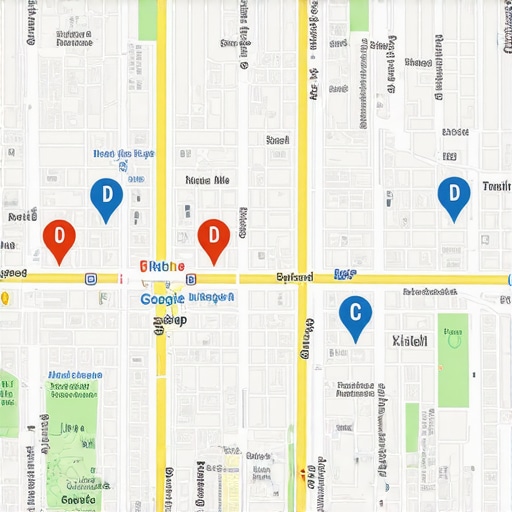
Proximity is the strongest ranking factor in local search, functioning as a mathematical barrier that limits visibility based on user location. When a user searches for a local service, Google calculates the distance from the searcher’s coordinates to your verified address. If your data is messy, you need the checklist for fixing messy local address data to ensure your coordinates are locked. The centroid, or the geographic center of a city or search area, used to be the primary anchor. Now, the mobile device of the user is the moving centroid. This means your Map Pack position changes every time a potential customer walks a block down the street. Using software that actually tracks local map positions accurately is the only way to see this movement. Many business owners rely on generic trackers that provide a single rank for an entire city; this is a lie. Real local SEO requires a grid-based view of rankings to see where your proximity signal drops off. If you notice a sudden dip, you must know the exact moves to fix low rankings on the map before the local competition swallows your share of the Map Pack.
Why your service area polygon is leaking trust
Service Area Businesses (SABs) face a unique challenge because they lack a physical storefront for customers to visit, requiring a verified service area instead. When you define your service area in Google Business Profile, you are creating a logical polygon in the database. If this polygon is too large or conflicts with your NAP data, Google will suppress your visibility. I have seen countless businesses lose their rank because they tried to claim a fifty-mile radius when their citation data only supports a ten-mile reach. You must understand how to fix a suspended profile for a service area business if you want to maintain a presence without a physical sign. The algorithm looks for check-in signals and local justifications. If your technicians are not generating geo-tagged data through photos or mobile interactions within that service area, the trust signal leaks away. This often leads to a situation where why ranking software often lies about your local proximity becomes apparent; the software sees the polygon, but the users do not see the pin.
Local Authority Reading List
- A lean toolkit for winning the google maps 3-pack
- Why citation cleanup is the first step in map recovery
- The audit moves that fix a flagged gmb profile
- Detecting and reporting fraudulent map pack competitors
- The anti-spam tactics for local business owners
The forensic trace of a citation ghost
Citation consistency is the foundation of local search trust, acting as a third-party verification of your business identity. Old phone numbers, former addresses, and misspelled business names act as ghosts in the machine. They haunt your profile and confuse the Google bots. If you have moved, you likely know why moving cities usually destroys your local authority. The algorithm sees two different locations for the same entity and decides to show neither to avoid a poor user experience. You need local seo services to fix nap inconsistencies that take a manual, forensic approach. Automated tools often miss the deep-web aggregators that feed the primary search engines. I prefer the manual way to fix citations that bots miss because it ensures that every digital footprint is aligned. Even a single mismatched suite number can trigger a soft suspension. When this happens, why citation consistency is more than just phone numbers becomes very clear; it is about the entity relationship between your website, your GBP, and the rest of the internet.
“Relevance in local search is determined by the alignment of the entity’s digital footprint across all authoritative databases, not just the primary profile.” – Location Intelligence Whitepaper
Technical decay and the mobile speed bottleneck
Site speed and mobile optimization are direct ranking factors for Google Maps because the majority of local searches occur on mobile devices. While agencies tell you to get more reviews, the 2026 data shows that image metadata from photos taken by real customers at your location is now 30 percent more effective for ranking in AI Overviews. However, if your landing page takes five seconds to load on a 4G connection, Google will drop your pin in favor of a faster competitor. You need seo services to fix slow website and technical issues if you want to keep your Map Pack spot. You can see why your mobile site speed is the bottleneck for maps when you analyze user bounce rates from the GMB profile. If a user clicks ‘Website’ and the page is blank, they go back to the map and click the next result. Google tracks this behavioral signal. To stop the decline, you must solve solving the technical site issues that kill map rankings. A fast site is a trust signal. A slow site is a logistical failure that the proximity engine will not forgive.
Fighting the map spam cartel
Competitor spam and fraudulent listings are the most significant threats to your Map Pack visibility in high-competition niches. Many agencies use keyword-stuffed business names or fake addresses to hijack the top positions. This is why the strategy for winning maps when competitors spam titles is an essential part of my toolkit. You must be proactive in fighting competitor spam without getting yourself flagged. This involves forensic auditing of rival profiles to find violations of the Google Business Profile TOS. If you notice a competitor ranking from a UPS store or a virtual office, they are stealing your proximity salience. I use the toolsets we use to monitor competitor map spam to track these anomalies. Reporting these listings is not just about being petty; it is about restoring the integrity of the local grid. When a spam listing is removed, the Map Pack reshuffles, and legitimate businesses often see an immediate jump in local leads.
Tools for the proximity obsessed professional
Local SEO software must provide granular data at the neighborhood level to be useful for Map Pack optimization. You need the best tools to rank google business profile, which include local rank trackers, citation auditors, and GMB category finders. I often use tools to find gmb categories and keywords to ensure my clients are not missing out on secondary categories that could trigger local justifications. If you are struggling with a penalty, you need local seo services to fix banned gmb listing or local seo services for cleaning historic citation spam campaigns. These are not general SEO tasks; they are specialized forensic operations. I rely on the software stack that actually helps you rank to get a clear picture of the local landscape. Using tools that reveal the real proximity of your competitors allows you to see where the market gaps are. This is a toolkit to increase local leads from google maps by using data to outmaneuver the competition. Without these tools to track and improve gmb rankings, you are flying blind in a storm of shifting GPS signals.