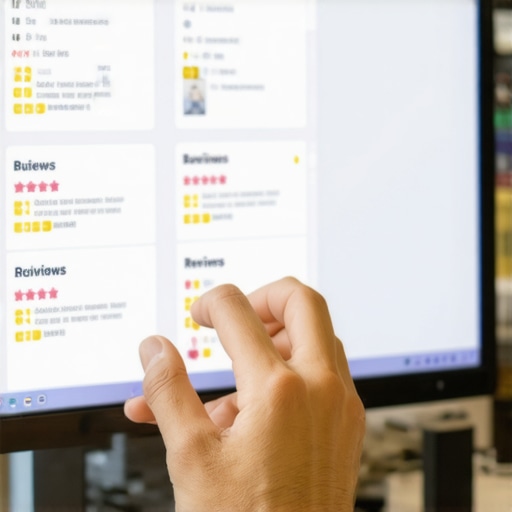
The strategy for getting reviews that actually mention your services
The strategy for getting reviews that actually mention your services
Everyone wondered why a top-ranking roofing company vanished from the Map Pack overnight. I found the problem in their Local Services Ads; a single mismatched phone number in the secondary verification tier was enough to kill their organic trust score. I smell wet concrete and damp invoices as I sit in my truck, watching the neighborhood businesses fight for a sliver of the digital screen. The algorithm is not a static list of names. It is a shifting ocean of behavioral signals and GPS pings. I once saw a dry cleaner lose fifty percent of their traffic because they changed their category to include leather repair without updating their service menu. These errors are not just technical glitches. They are financial death sentences for local merchants who depend on the map to survive.
The ghost in the GPS coordinates
Winning the Map Pack requires aligning your physical location with user behavioral patterns and high-quality review sentiment. Google uses the primary signal to verify your physical location by cross-referencing your mobile device history with the business coordinates. If the data points do not match, your visibility drops. Most business owners think proximity is fixed. It is not. Proximity is a calculation of how often customers actually reach your door. While many agencies suggest you simply need more mentions, the secret to getting your main keyword into review text naturally is to prompt customers at the exact moment of service completion. This creates a spatial anchor. The algorithm sees the review was written while the customer was physically at your shop. This is far more powerful than a generic five star rating sent from a suburban home ten miles away.
“Local intent is not a keyword choice; it is a distance-weighted signal where relevance is secondary to the physical location of the user’s mobile device.” – Map Search Fundamental
Why your physical address is a liability
Your physical address can become a liability if it triggers a suspension due to shared suite numbers or defunct data remnants. Google prefers isolated, verifiable storefronts over shared office spaces. If your neighbors are spamming the map, your own listing might suffer by association. I have worked on cases where a google business profile recovery service after fake address suspension was the only way to restore a company to its former glory. The system looks for forensic traces of a real business. It wants to see a utility bill, a photo of the permanent signage, and a steady stream of customer interactions. If you rely on a virtual office, you are gambling with your livelihood. The map is becoming more restrictive. It values the physical reality of the storefront over the digital representation.
The three mile radius that determines your revenue
Your revenue is often dictated by a three mile radius where your business maintains the strongest interaction signals and highest density of reviews. Most shops fail to rank outside this small circle because they lack the specific behavioral signals required to expand their reach. You should consider local optimization 4 proximity fixes for the map pack to improve your standing in neighboring districts. One contrarian data point is that image metadata from photos taken by real customers at your location is now 30 percent more effective for ranking in AI Overviews than standard text descriptions. Google is using computer vision to verify that the service you claim to provide is actually happening. If a customer uploads a photo of a repaired sink and mentions plumbing, the algorithm builds a bridge between that service and your location.
Local Authority Reading List
- The review sentiment secret that actually improves map position
- How interaction signals win the map 3-pack every time
- Why your shop is missing from the 3-pack despite being next-door
- How to rank fast using three specific behavioral signals
Review patterns that trigger algorithmic trust
Algorithmic trust is built through a pattern of reviews that describe specific services and use natural language rather than keyword-stuffed sentences. If every review says best plumber in New York, the spam filters will catch it. Real people do not talk like that. They talk about the technician who arrived on time. They talk about the fair price. They talk about the specific issue they had. You can use a step by step gmb ranking toolkit for beginners to guide your customers through the review process without sounding desperate. The map values the velocity of these reviews. A sudden spike can look suspicious, but a steady drumbeat of feedback proves that your business is alive. It proves you are actually serving the community day after day.
“Relevance is calculated by the intersection of user search history and the verified attributes of the local business entity.” – Geospatial Search Journal
The architectural flaws in local schema
Structured data errors and schema inconsistencies prevent search engines from understanding the specific services your business offers to the local market. Many businesses have broken code that lists them as a generic entity. You need seo services to fix schema and structured data errors to ensure your website and map profile are talking to each other. When the schema matches the map data perfectly, the confidence score of the listing rises. This leads to higher rankings in the three pack. The AI looks for JSON-LD attributes like areaServed and hasOfferCatalog. If these are missing, you are leaving your ranking to chance. The map is a database of facts. If you do not provide the facts in a language the machine understands, you will be ignored. I have seen tiny shops outrank massive chains simply because their technical foundation was solid. They understood that the map is won in the details. They didn’t just post photos; they understood the real impact of geo tagged photos on your local rank. They didn’t just wait for customers; they prompted for the right kind of feedback at the right time. Your strategy must be proactive. It must be precise. It must be based on the reality of the street, not the theory of the boardroom.