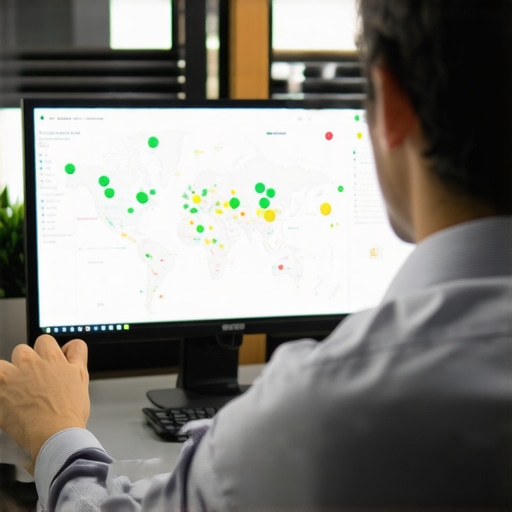
The steps to fix a suspension for a residential address
The strategy to fix a Google Business Profile suspension for a residential address
I spent three months fighting a hard suspension for a plumbing client whose listing was nuked simply because they shared a suite number with a defunct law firm. Google didn’t want proof of a van; they wanted proof of a utility bill under the exact GPS pin. The air in that neighborhood smelled like wet concrete and diesel exhaust as I stood on the sidewalk taking photos of their home office. I had to prove that this residential address was the legitimate headquarters for a service area business. This was not about keywords. This was about spatial data and the forensic trace of a business that exists in the physical world but remains hidden from the street view camera.
The forensic reality of a residential listing suspension
To fix a Google Business Profile suspension for a residential address, you must first toggle the address to hidden and verify your Service Area Business (SAB) status. Submit a reinstatement request with a utility bill, business license, and proof of branded equipment. Ensure your NAP data matches your official registration exactly.
When the pin drops, the revenue stops. The algorithmic trigger for a residential suspension often involves a proximity conflict or a mismatch in the secondary data layer. Google views every residential pin with suspicion because of the historic volume of lead generation spam. If you are running a business from your house, you are a Service Area Business. You do not have a physical storefront where customers arrive. The mistake most owners make is trying to show their address to gain trust. In reality, showing a residential address is a violation of the terms of service that leads directly to a hard suspension. You must understand how to fix a suspended profile for a service area business before you touch a single setting in your dashboard. The digital footprint must be scrubbed of any contradictory signals. This includes hunting down old directory listings that still show your home address to the public.
“Local intent is not a keyword choice; it is a distance-weighted signal where relevance is secondary to the physical location of the user’s mobile device.” – Map Search Fundamental
The math of the map pack is cold. It calculates the distance between the user and your verified centroid. If that centroid is a house in a suburb, Google needs to see that you are actually traveling to clients. I often find that listings disappear because the owner changed their service area radius too aggressively. This triggers a fraud alert. You need to use the toolkit for tracking micro local ranking changes to see if your suspension was preceded by a proximity shift. Sometimes, a competitor will report your residential address as “non-existent” to trigger a manual review. If you haven’t hidden your address, you are an easy target for these malicious edits.
Why your physical location becomes a digital liability
A residential address becomes a liability when it creates NAP inconsistencies across the web or overlaps with other registered entities. Google’s Vicinity algorithm de-values profiles that cannot prove physical presence through official documentation. Resolving this requires a manual audit of all historic citations and business registration documents.
The Street Photographer sees the glitch in the storefront data long before the owner does. I look at the pixels. I look at the metadata. If you are using a residential address, your documentation must be flawless. One of the most common reasons for a permanent ban is a mismatched phone number on an old Yelp page from five years ago. This creates a trust gap. You might need local seo services to fix nap inconsistencies to ensure that every mention of your business across the internet points to the same truth. Google’s bots are constantly crawling third-party data to verify your legitimacy. If your business license is at 123 Main St but your GMB says 123 Main Street, that tiny variation can be enough to keep you suspended.
The algorithm also looks at the behavioral zooming of your service vehicles. Are you actually moving? If your phone’s GPS data, which Google tracks, doesn’t show you leaving that residential address to go to job sites, they will flag the listing as inactive. This is the microscopic math of modern SEO. You are no longer just a profile; you are a beacon. If that beacon stays stationary at a house while claiming to serve a fifty-mile radius, the trust score collapses. We often have to use restoring the trust signal after a manual spam penalty tactics to convince the webspam team that the business is mobile and active. It is a grind. It requires patience and a total ban on shortcuts.
Local Authority Reading List
- The checklist for fixing messy local address data
- How to recover a banned gmb listing without losing your mind
- The specific toolkit for finding why your local rank is stuck
- Fixing incorrect business information that ruins your local trust
The specific steps to restore trust after a primary listing disappears
To restore trust, you must gather a digital proof-bundle including a scanned business license, a utility bill in the business name, and photos of your branded vehicle parked at the residential address. Upload these to the reinstatement portal while citing specific Google guidelines you have now met.
The reinstatement war is won in the details. You cannot just ask for your listing back. You have to prove that you deserve it. I always start by hunting down old address data causing search confusion. If you had an office three years ago and that address is still floating around, the residential listing will never be trusted. You must purge the ghost of old business listings. This involves a manual citation cleanup that most agencies refuse to do because it is tedious. They want to sell you a blast. I want to find the one incorrect phone number on a local chamber of commerce site that is killing your rank. That is the difference between a technician and a strategist.
Once the data is clean, you look at your website. Does your contact page match your Google Business Profile exactly? If your website is slow or has technical errors, Google assumes you are a low-quality lead gen site. I have seen rankings return just by solving the technical site issues that kill map rankings. While most people focus on the GMB dashboard, the local algorithm is looking at your entire digital ecosystem. This includes your site speed on mobile devices, as that is where most map searches happen. A fast site sends a signal of professional stability. A slow site smells like a scam.
“A service area business must not display its address to the public if it does not have permanent on-site signage and staff during stated hours.” – Google Business Profile Guidelines
If you are struggling with a complex penalty, you might need seo consulting services for complex penalty cases. These cases often involve more than just a hidden address. They involve history. If the previous owner of your domain used black hat tactics, you are inheriting that baggage. You have to scrub the digital stains of previous spammy listings before Google will let you back into the 3-pack. It is like cleaning oil off a driveway. It takes time, the right chemicals, and a lot of scrubbing.
How to handle the reinstatement request when your appeal is rejected
When an appeal is rejected, do not open a new ticket. Instead, respond to the existing email thread with additional evidence such as a video walk-through of your home office and equipment. Request a specialized review if you can prove the suspension was triggered by a competitor’s malicious edit.
The rejection email feels like a punch in the gut. It is usually a generic template. This is where most people give up and try to create a new listing. That is a fatal mistake. Creating a second listing for the same business will result in a permanent ban for both. You have to stay in the fight on the original thread. You need to know how to recover from a gmb suspension when the appeal is rejected by providing data they didn’t ask for the first time. Take a video. Start at the street, show the house number, walk into your office, show the computer, show the business registration on the screen, and then walk to your garage to show your tools. This physical proof is impossible to fake with a VPN or a bot.
Residential listings are often hit with “limited features” before a full suspension. If you notice you can’t respond to reviews or post updates, you are in the danger zone. You should immediately look into how to restore limited features after a partial gmb suspension. This is usually a warning shot. Google is telling you that something in your data doesn’t add up. It might be a review bot attack or a sudden influx of fake reviews from a competitor. If you don’t act, the hard suspension is next. I have seen businesses lose 80 percent of their lead flow in twenty-four hours because they ignored a limited features warning.
The toolkit for detecting and fighting competitor spam attacks
Use specialized software like BrightLocal or Whitespark to monitor for sudden spikes in one-star reviews or unauthorized edits to your service area. Report these through the Business Redressal Complaint Form rather than the standard GMB support channel to reach the spam investigations team directly.
The local search environment is a battlefield. Competitors will use fake review bots to tank your reputation and trigger an automated suspension. They know that residential addresses are vulnerable. You need to be proactive. I use a specific gmb review and reputation management toolkit to monitor for these patterns. If twenty reviews come in at 3 AM from accounts that have only ever reviewed businesses in India, that is a clear signal of an attack. You must document this and report it immediately.
Reporting competitor spam is an art form. You don’t just click the “report” button. You build a case. You show the patterns. You show the GPS contradictions. If a competitor is ranking in the map pack but using a virtual office address, they are stealing your traffic. You should be detecting and reporting fraudulent map pack competitors as part of your weekly maintenance. This cleans up the neighborhood. It makes room for legitimate local merchants to thrive. When the spam is removed, the proximity radius for everyone else expands. It is the only way to win back the 3-pack in a saturated market.
Restoring the proximity signal after a ranking drop
To restore proximity ranking, optimize your local landing pages with Geo-specific H2 headers and embed a Google Map of your service area. Ensure your mobile site speed is under two seconds to satisfy the technical requirements of the Vicinity update. High-quality, geo-tagged photos uploaded weekly also help.
After you get your listing back, you will likely see a drop in rank. The suspension has broken the trust loop. You need to re-prime the engine. This is where local seo services to recover from proximity based ranking drop come into play. You need to prove to the algorithm that you are still the most relevant choice for the local user. The 2026 data shows that customer-uploaded photos with embedded GPS metadata are now a massive ranking signal. Encourage your clients to take a photo of the finished work at their house and upload it to your profile. This tethers your business to real locations in the physical world.
You also need to look at your site speed. I cannot stress this enough. If your mobile site is slow, you are invisible on maps. We use technical site speed fixes for the local mobile user to ensure that when someone clicks your profile, the page loads instantly. Google knows that map users are often in a hurry. They are looking for a plumber or a locksmith right now. If your site doesn’t load, they bounce. That bounce is a signal to Google that your business is a bad result. The rank falls further. It is a spiral that you must stop with clean code and fast servers. Your residential business might be small, but your digital infrastructure must look like a national brand.
![Audit Your Google Business Profile Optimization Service [2026]](https://gmb4you.com/wp-content/uploads/2026/04/Audit-Your-Google-Business-Profile-Optimization-Service-2026.jpeg)