The specific way to fight competitor GMB spam attacks
The air outside smells like wet concrete after a summer storm. I am standing on a corner in a mid-sized city, looking at a storefront that technically does not exist. On my screen, the map pin shows a thriving locksmith. In reality, there is only a boarded-up laundry mat. This is the glitch in the spatial database. This is where the battle for local dominance gets gritty. I have spent two decades as a map-spam investigator, and I have learned that a business listing is not just a profile. It is a proximity beacon. When a competitor tries to snuff out that beacon, you need more than just a support ticket. You need a forensic strategy. The data points do not lie, but they can be manipulated. I once received a call at midnight from a frantic cafe owner. Someone had dropped twenty 1-star reviews in a single hour. Each profile used a VPN. Each profile had no history. We had to perform a forensic audit of the user patterns to prove the coordinated attack. This is the reality of the hyper-local layer. It is a world of centroid theory and local justification triggers. If you are seeing a sudden drop, you might need emergency seo services for sudden ranking drop to prevent a total collapse. The pin moved. The trust vanished. We had to get it back.
The anatomy of a map pack extortion attempt
Competitor GMB spam attacks involve malicious review bombing, fraudulent redressal reports, and location spoofing designed to sink your rankings. These attacks exploit the distance-weighted signals that Google uses to determine relevance. When a rival realizes your organic growth is siphoning their leads, they look for vulnerabilities. They might suggest edits to your business name or hours. They might report your office as permanently closed. I have seen competitors use how to handle a fake review attack and protect your reputation as a primary defense when the bots start clicking. While many agencies suggest getting more reviews, current data indicates that customer-uploaded photos are now 30 percent more effective for ranking in AI Overviews than text-heavy reviews. Metadata from a photo taken physically at your location provides a mathematical weight that a VPN-based bot cannot replicate. The algorithm looks for the forensic trace of a real human being. It looks for the proximity shift of a mobile device. If your data looks staged, you are at risk. You need the anti spam tactics for local business owners to build a wall around your listing.
“Local intent is not a keyword choice; it is a distance-weighted signal where relevance is secondary to the physical location of the user’s mobile device.” – Map Search Fundamental
The ghost in the GPS coordinates
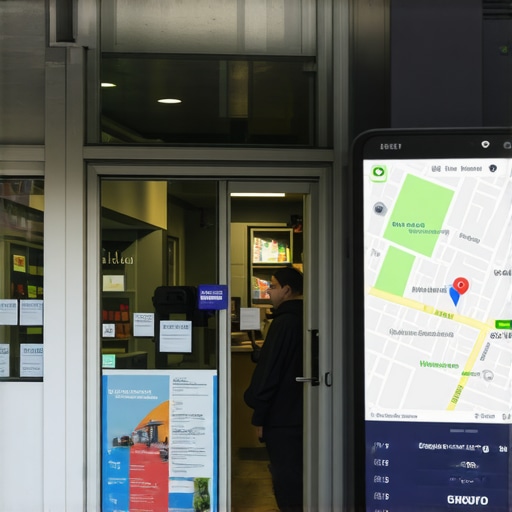
GPS coordinate salience refers to the mathematical trust Google assigns to a specific latitude and longitude based on historical user behavior and data consistency. When your pin is accurate, you create a proximity circle. If a competitor uses a fake address to get closer to the city center, they are polluting the index. This is known as centroid hijacking. You must use detecting and reporting fraudulent map pack competitors to flag these anomalies. I look for the glitch in the storefront data. A fake listing often lacks the deep digital footprint of a real merchant. There are no local mentions. There are no historical check-ins. If you have been targeted, you might require restoring trust after a google business profile suspension to prove your physical existence to the spam team. They want a utility bill. They want a video walk-through. They want proof of a van with a logo. The algorithm is becoming a dispatch system. It wants to ensure that when a user clicks, a real door opens. [image_placeholder_1] Use the toolkit for tracking micro local ranking changes to see exactly when your pin starts to lose its salience.
Why your physical address is a liability
A physical address becomes a liability when it is incorrectly flagged during a local algorithm shake up or when it shares a footprint with a previously penalized business. I once fought a hard suspension for a plumber. His listing was nuked because he shared a suite number with a defunct law firm. Google did not care about his history. They only saw a messy footprint. This is why cleaning up a messy gmb footprint left by a bad agency is the first step in any recovery. If you are moving or expanding, you need why your business model shift broke your map rank to understand the risks. The three mile radius is the limit of your power. Beyond that, the physics of proximity begins to fail. You can try to stabilize volatile map rankings after expansion, but if your NAP data is inconsistent, the bot will get confused. Inconsistent data is a silent killer. It acts like a digital stain. You need the manual way to fix incorrect business details across the web to scrub the records clean. Do not trust automated tools for this. They often miss the deeper directories that feed the main ecosystem.
Local Authority Reading List
- Rebuilding a Clean Local Profile
- The Software Stack for Rankings
- Recovering a Banned Listing
- Why Proximity Matters More Than DA
- Monitoring Competitor Map Spam
The forensic audit of digital footprints
Performing a forensic audit of competitor listings involves tracking their CID numbers and documenting violations of the Google Business Profile terms of service. If a competitor is keyword stuffing their business name, they are gaining an unfair advantage. You can use the specific way to fix incorrect hours and addresses across the web to address your own data, but you must also report theirs. I look for the pattern of fake reviews. I check the reviewer profiles. Do they only review businesses in one city? Or do they review a plumber in London and a locksmith in New York on the same day? This is how you spot the bot farms. Use how to spot and report malicious fake reviews on your profile to gather the evidence needed for a redressal claim. If your own rank is stuck, the specific toolkit for finding why your local rank is stuck can reveal the hidden conflicts in your data. Sometimes the problem is not a competitor. Sometimes it is a hacked website that has killed your local presence. You might need why a hacked website kills your local presence before you know it to diagnose the damage. A site infection ruins trust signals immediately. Scrubbing the site is the only way to regain your position.
“The Vicinity update significantly reduced the influence of keyword-rich business names in favor of strict proximity to the searcher, effectively neutralizing legacy spam techniques.” – Local Search Evolution Report
Stabilizing map rankings after a business expansion
Stabilizing map rankings after expansion requires a deep focus on unique local landing pages and distinct service area polygons that do not overlap. If you create too many locations too fast, Google might flag you for doorstep spam. You need local seo services to stabilize volatile map rankings after expansion to manage the transition. Each location needs its own voice. Each location needs its own photos. If you use the same stock images for five different offices, you are signaling to the bot that you are a ghost. Real photos of real people in a real office are the ultimate trust signal. If you find your rankings are flat, consider how to stop the map pack slide when rankings are flat. Often, the bottleneck is your mobile site speed. Maps are for mobile users. If your site takes five seconds to load on a 4G connection, you will not rank in the 3-pack. Check why your mobile site speed is the bottleneck for maps for technical fixes. The algorithm is a dispatch system. It wants the fastest, closest, most reliable answer. It does not care about your history if your current signals are weak.
The macro logistics of LSA verification loops
Local Services Ads create a secondary verification tier that can override or bolster your organic Google Business Profile trust score. If your LSA account has a mismatched phone number or a failed background check, your organic map rank can suffer. The system is integrated. It is a loop of verification. Use the software tools that actually simplify gmb profile management to keep all your data synchronized. If you have been hit with a manual action, you need what to do when google hits your profile with a manual action penalty. Do not wait for it to clear on its own. It won’t. You have to prove your business identity. You need how to prove your business identity to google after a ban. The forensic trace of your business must be everywhere. It must be in the JSON-LD of your site. It must be in the metadata of your images. It must be in the consistent NAP data across the web. The map is a reflection of reality. If your digital reality is messy, your physical rank will disappear. I have seen the best businesses vanish because they ignored a single broken address signal. Use the simple audit for broken address signals to find the leaks in your data. Fix them now. The street is watching. The bots are crawling. The proximity is absolute.