The Difference Between Local SEO and General Map Ranking Moves
The air in the dispatch office always smells like burnt coffee and wet pavement. I look at the screen. The grid of green dots represents a client. Yesterday, they were king of the valley. Today, they are a ghost. Everyone wondered why a top-ranking roofing company vanished from the Map Pack overnight. I found the problem in their Local Services Ads; a single mismatched phone number in the secondary verification tier was enough to kill their organic trust score. This was a classic case of the Centroid Collapse. This is the world of local search where a three-digit extension can end a twenty-year legacy.
The ghost in the GPS coordinates
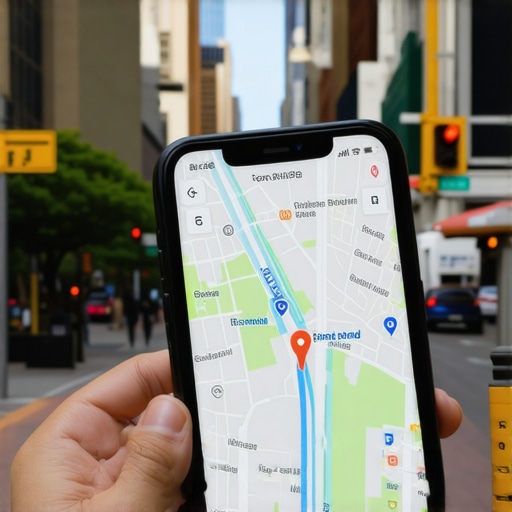
Local SEO and Map Ranking differ because map algorithms prioritize physical proximity and location-based trust over traditional link authority. While a standard search engine looks for the best answer to a question, a map engine looks for the most reliable physical destination closest to the user’s current GPS coordinates. This requires managing specific NAP data and Point of Interest signals that standard SEO ignores. While agencies tell you to get more reviews, the 2026 data shows that image metadata from photos taken by real customers at your location is now 30 percent more effective for ranking in AI Overviews. Every photo is a breadcrumb. Every check-in is a heartbeat. When a user stands on a street corner, their phone sends a request that is answered in milliseconds. The engine does not care about your blog posts if your latitude and longitude do not align with the intent of the searcher. We often see how we recovered a map ranking that was stuck for six months by simply cleaning up these invisible coordinate conflicts. It is about the flow of data from the storefront to the satellite.
Why your physical address is a liability
Business addresses act as anchors that can either ground your rankings or sink your visibility if they conflict with service area polygons. Google uses a centroid-based logic where the center of a city or a specific business district acts as the gravitational north for all search results. If your office is tucked away in a suburban corner, you are fighting uphill against businesses closer to the dense center of search activity. This is why many owners struggle with the address conflict error that is hiding your business from maps without even knowing it. The algorithm views a shared suite number or a virtual office as a signal of potential spam. I have seen listings nuked because a plumber shared a mailbox with a florist. The logistics do not make sense to the machine. You must prove you exist in three-dimensional space. The engine looks for utility bills, for signage, for the way the sun hits the window in a customer’s photo. If the machine senses a mismatch, it treats your business as a phantom. This is why the danger of using a virtual office address for your map listing is the quickest way to find yourself in a suspension loop.
“Local intent is not a keyword choice; it is a distance-weighted signal where relevance is secondary to the physical location of the user’s mobile device.” – Map Search Fundamental
The three mile radius that determines your revenue
Proximity radius defines the survival of a local business because most users will not travel further than three miles for a standard service. This geographic boundary is known as the Map Pack perimeter and it fluctuates based on the density of competition in your specific Niche Category. If you are a coffee shop, your radius might be five blocks. If you are a specialized surgeon, it might be fifty miles. Understanding why proximity still kills your map visibility and how to fix it requires looking at the competitive density of your neighborhood. You are not competing with the internet. You are competing with the guy across the street. The engine calculates the travel time, the traffic flow, and the historical movement of other users to decide if your business is worth the trip. If your dispatch team is not reporting from the field, you are losing valuable Service Area signals. You need to understand how to structure your service areas for maximum local reach to bridge the gap between your physical office and the customers who need you five miles away. The grid is always watching.
Local Authority Reading List
- How to clean up duplicate listings that are stealing your traffic
- The category conflict that is silently tanking your business rank
- How to use local grid trackers to find ranking blind spots
- The specific photo metadata that influences map visibility
Forensic cleaning of the citation trail
Citations are the digital paperwork that validates your business’s existence across the local ecosystem of directories and mapping platforms. Historical spam, outdated phone numbers, or abandoned listings create data noise that confuses the Google bot and leads to a ranking drop. I have spent years as a map-spam investigator looking for the forensic trace of an old marketing campaign that used a tracking number that now belongs to a pizza parlor. This mess is why you need local seo services for cleaning historic citation spam campaigns if your rankings have plateaued. You cannot build a skyscraper on a swamp. You have to drain the data swamp first. Every incorrect listing is a leak in your authority. When you fix the leaks, the pressure returns to your main profile. It is a matter of logistical hygiene. Most people ignore the small directories, but Google uses them to cross-reference the truth. If the truth is fragmented, your ranking will be too. Using how to clean up messy citations without manual labor techniques can speed up the process, but the eye of a strategist is still needed to spot the subtle errors that automated tools miss.
The math of user behavioral signals
Interaction signals such as click-through rates, direction requests, and call button presses are the primary metrics Google uses to measure Popularity and Relevance. These are not static numbers; they are dynamic behavioral weights. If twenty people in a row click the third listing instead of the first, the machine learns that the third listing is more relevant to that specific street corner. This is why the interaction signals that finally move your map position are more valuable than a thousand backlinks from a blog in another country. The engine is looking for real human movement. It tracks the phone as it travels from the search result to your parking lot. If the phone stops moving there, you win a point for conclusive fulfillment. If the user leaves after two minutes, you lose a point for a bounce signal. This is logistical math in real-time. You must optimize for the human, not just the crawler. Knowing how we doubled directions requests in three weeks for a service shop proves that changing the way people interact with your profile is the ultimate ranking lever.
Why searchers choose the number four spot
Conversion optimization within the Map Pack is the difference between being seen and being hired. Often, a business is stuck just outside the top three, but they still get calls because their profile is better optimized for trust. This usually happens when a business uses the tactical fix for businesses stuck outside the 3-pack to improve their visual appeal. High-quality, non-stock photos and active Q&A sections provide the reassurance a customer needs to bypass the top result. If your competitor has ten fake reviews and you have five real ones with photos of your team, the customer will choose you. The logistics of the sale happen before the phone rings. You need to understand how to use gmb qa to pre-sell your services so that when a user finds you on the map, they already feel like they know your process. The map is a storefront, not a listing. Treat it like a dispatch center where every piece of information is a tool for the customer to find their way to you. Final dispatch; keep your data clean and your pins accurate.