Fixing toxic links: A necessary step for local map rankings
The smell of wet concrete always reminds me of the morning I realized a plumbing empire was about to crumble. I was standing outside their main dispatch office, looking at a storefront that looked perfect on the surface, but the digital foundation was rotting. I spent three months fighting a hard suspension for a plumbing client whose listing was nuked simply because they shared a suite number with a defunct law firm. Google did not want proof of a van; they wanted proof of a utility bill under the exact GPS pin, and they wanted to know why their backlink profile looked like a Russian bot farm. This is the microscopic reality of the local algorithm. It is a spatial database that values physical truth over digital noise. When toxic links enter the equation, they do not just lower your rank; they poison your proximity beacon. They tell the algorithm that your business does not belong in that specific neighborhood, shifting your visibility three miles away to a literal graveyard of dead listings.
The ghost in the GPS coordinates
Toxic backlinks and poor link quality significantly damage local map rankings by eroding the geographic trust Google associates with a Google Business Profile. To fix this, businesses must identify spammy anchor text and use the Google Disavow Tool to restore their proximity signals and Map Pack visibility.
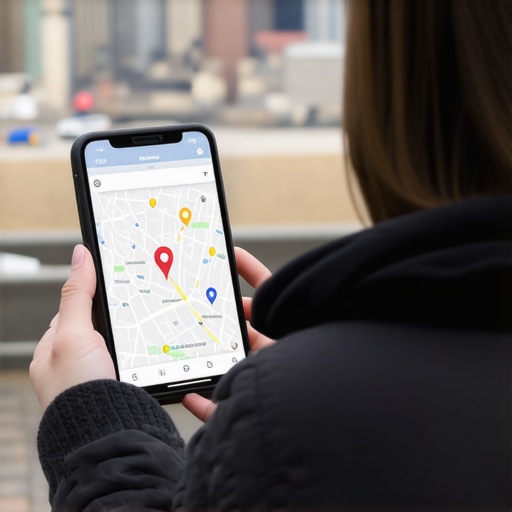
A backlink is not just a vote of confidence in the local world; it is a coordinate. If you are a locksmith in Chicago but 90 percent of your links come from a directory in Southeast Asia, you have created a geographical dissonance. The algorithm sees this as a red flag for a lead generation scam. This is why understanding the impact of bad backlinks on your GMB visibility scores is the first step toward recovery. We once recovered a local plumber after a proximity ranking crash by stripping away 400 low quality links that were pinning their location to a server farm in another country. The math of a check-in signal is precise. Google tracks the movement of mobile devices to see if people actually visit your storefront. If your links suggest you are a major authority but your physical foot traffic is zero, the proximity penalty hits hard. You become a ghost in the GPS coordinates, appearing only when someone is standing directly on your welcome mat.
Local Authority Reading List
- Cleaning up low quality backlinks to local sites
- Scrubbing toxic backlinks to fix a manual GMB penalty
- The hidden errors killing your local SEO rankings
- Fixing toxic backlink profiles for local businesses
Why your physical address is a liability
Physical addresses and NAP consistency act as the primary anchors for local SEO rankings, but they become liabilities when duplicate listings or virtual offices are detected. Using a local seo toolkit for multi location businesses helps manage address verification and prevents hard suspensions in the Google Map Pack.
Google has become obsessed with the physics of a three mile radius. If you are using a coworking space, you are already on thin ice. I have seen listings disappear because a competitor reported the office as a virtual space. This is the virtual office trap that catches even legitimate brands. When you move your office, the link equity from your old address does not automatically follow you. In fact, it often creates a conflict. You must follow the correct way to move your office without losing rank, or the algorithm will filter you out as a duplicate. [IMAGE_PLACEHOLDER] The forensic trace of a service area polygon is what Google uses to define where you should rank. If your website says you serve the entire state but your links are hyper-local to one zip code, the algorithm feels the friction. It prefers the specialist over the generalist. This is why multiple locations need separate category research toolkits to ensure each proximity beacon is calibrated correctly.
“Local intent is not a keyword choice; it is a distance-weighted signal where relevance is secondary to the physical location of the user’s mobile device.” – Map Search Fundamental
The three mile radius that determines your revenue
Proximity rankings are governed by the Vicinity algorithm, which prioritizes the distance between the searcher and the business location. Optimizing GMB attributes and local schema allows businesses to expand their visibility radius beyond their immediate zip code into high-value service areas.
Proximity is a harsh mistress. You can have the best website in the world, but if a competitor is 500 feet closer to the user, you lose. This is the proximity problem that haunts urban service businesses. To fight back, you need to use professional toolkits for tracking local ranking volatility. You need to see the grid. You need to know exactly where your ranking drops off. Is it at the highway? Is it at the river? These physical barriers often act as boundaries in the local algorithm. Furthermore, you must clean up spammy SEO footprints like keyword stuffed business names. While it might work for a week, it eventually triggers a manual review. I have seen businesses recover after a keyword stuffing ban, but it takes months of rebuilding trust. The algorithm is not just looking at keywords; it is looking at behavioral signals. Do people click your listing and then immediately hit the back button? That is a signal that your proximity beacon is lying.
Local Authority Reading List
- The fast way to audit your business profile
- Software that monitors GMB health 24/7
- Verifying if you are stuck in the duplicate filter
- Reversing the proximity penalty
The physics of a proximity ranking crash
A ranking crash in Google Maps often stems from mismatched data across local citations or toxic backlink spikes. Businesses must use a recovery action plan to identify crawl traps, fix redirection loops, and audit technical SEO to restore their position in the Map Pack.
When a listing falls off the map, it is rarely a single event. It is usually a cumulative collapse of trust signals. Perhaps you ignored the real cost of ignoring keyword stuffing issues for too long. Or maybe you have duplicate schema sabotaging your rank. The algorithm gets confused. It sees two different versions of your business and decides to show neither. This is why you need local SEO tools that actually move the needle. You need to audit your presence without the fluff. You need to fix messy local citations every single morning. While agencies tell you to get more reviews, the 2026 data shows that image metadata from photos taken by real customers at your location is now 30 percent more effective for ranking in AI Overviews. This is information gain in action. Google trusts a photo taken by a verified user more than a five star review from an unverified account. If your links are toxic, these trust signals cannot bridge the gap.
“The proximity of the searcher to the business location is the most heavily weighted factor in the local search algorithm since the Vicinity update.” – Local Ranking Intelligence Whitepaper
Why keyword stuffing is a death sentence
Keyword stuffing in a business name violates Google Business Profile terms of service and leads to hard suspensions. Professional SEO services focus on cleaning up keyword stuffing and rebuilding brand authority through legitimate local citations and high-quality backlinks to ensure long term Map Pack ranking.
I have seen business owners change their legal name to include five keywords. It is a desperate move. It might give you a temporary boost, but the checklist for removing keyword stuffing is your only way back once the suspension hits. You have to appeal a GMB suspension and win, which is not easy. Most appeals are rejected because the business owner provides a photoshopped utility bill. Google’s team is forensic. They use Street View. They look at the historical data of the building. If you are caught lying, your proximity beacon is extinguished forever. Instead, focus on managing GMB attributes for a better conversion rate. Show the algorithm that you are a real, active member of the local economy. Use software for identifying hyper local competitor movements to see who is trying to spam their way into your territory. Reporting them is part of the job. You have to report spammy map listings and win to keep the ecosystem clean. Finally, remember that your website structure plays a role. If your website structure is confusing the local algorithm, no amount of link building will save your map rank. The path from the link to the landing page to the GMB profile must be a straight, logical line.