Tracking Multi-Unit Performance Without Confusion
The ghost in the GPS coordinates
Everyone wondered why a top-ranking roofing company vanished from the Map Pack overnight. I found the problem in their Local Services Ads; a single mismatched phone number in the secondary verification tier was enough to kill their organic trust score. In my twenty years of auditing the hyper-local layer, I have learned that the map is a jealous master. It does not forgive a single digit of error. This roofing client had built a fortress of local authority over a decade, yet their entire empire collapsed because their dispatch team used a tracking number that was not mirrored on their main utility bill. The algorithm saw the friction, detected a lack of spatial transparency, and nuked the pin. I spent six weeks in the trenches of the verification loop before we restored their proximity beacon. It was a brutal reminder that local search is not about keywords. It is about the logistics of trust. If you are struggling with a similar sudden disappearance, you need to look at restoring trust signals after your local visibility vanishes to understand how deeply these technical triggers go.
“Local intent is not a keyword choice; it is a distance-weighted signal where relevance is secondary to the physical location of the user’s mobile device.” – Map Search Fundamental
The three mile radius that determines your revenue
Proximity remains the strongest ranking factor in the local search algorithm because Google prioritizes the user experience of physical distance above all else. By analyzing the three mile radius around each business centroid, managers can determine where their visibility peaks and where the competition begins to filter out their listing from the 3-pack. The physics of the local algorithm are unforgiving. You can have ten thousand reviews, but if a competitor is two blocks closer to the user, you might still lose the primary slot. This is where the software we trust for grid-based ranking reports becomes an essential part of the logistics toolkit. You need to see the visibility heatmaps to understand where your signal is fading. If you notice your pin is showing up in the middle of a lake or just off the mark, you might be suffering from a geographic error described in our guide on why your business pin is showing up in the middle of a lake. The logistics of your physical placement are paramount. We often see businesses fail because they ignore the microscopic math of their GPS coordinates. They assume that being in the right zip code is enough. It is not. The algorithm calculates distance in meters, not miles. If your building is set back from the main road, your proximity signal might be weaker than the guy with the storefront right on the curb.
Tracking success across fifty pins
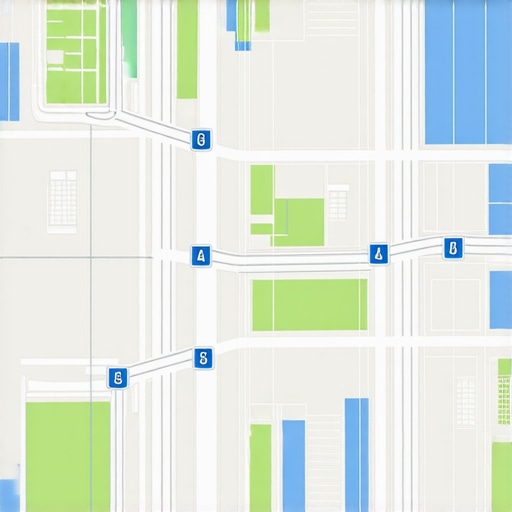
Tracking multi-unit performance requires isolated data streams for each physical location to avoid attribution overlap and data pollution. By using unique tracking numbers and specific landing pages, brands can measure the exact foot traffic and call volume generated by individual profiles without confusing the aggregate corporate metrics. For those managing a large portfolio, essential software for managing multiple gmb profiles is the only way to keep the chaos at bay. You cannot manage fifty pins with a spreadsheet and a prayer. You need a system that alerts you the moment a competitor suggests a map edit or your hours are changed by a random user. This is particularly vital when managing your brand identity across several different locations. Friction in the data leads to friction in the rank. I have seen multi-unit brands lose 40 percent of their call volume because they tried to use a single call center number for every location. Google hates that. They want to see a local area code that matches the physical GPS pin. If you are seeing a decline, you should follow the steps to resolve a sudden decline in map views to isolate the specific location that is dragging down your national average. It is often a single bad actor or a single data mismatch that triggers a sitewide penalty.
Local Authority Reading List
- Software features for small map listings
- Fixing GMB issues without an agency
- Tools for monitoring the 3-pack
- Mapping software for local pros
- Long-term map authority checklist
- Toolkit for cracking the map pack
Why your physical address is a liability
Shared office spaces and virtual addresses have become significant liabilities in local search because the algorithm now filters for physical presence and utility evidence. Businesses sharing a suite number often find themselves filtered out of the map results due to the ‘Opossum’ algorithm update, which hides similar businesses in the same building to provide variety. This is a nightmare for lawyers, accountants, and therapists. If you share a floor with three other firms in your category, only one of you will likely show up in the top results. You have to fight for that spot with superior interaction signals. If you have been flagged for this, read about how we fixed a hard suspension caused by a shared office address. You also need to be careful with your digital footprint. Using a P.O. Box is a death sentence for your rankings; see why you should never use a p.o. box for your business location. The algorithm is looking for signs of life. It wants to see photos of your team, your signage, and your vehicles. It is looking for the logistics of a real business. If you just bought a company, you must start by cleaning up the digital footprint of a business you just bought. Old citations with old addresses will act like an anchor on your new location. You must scrub the web of every outdated mention to ensure your new centroid is the only one the algorithm sees.
The forensic trace of a service area polygon
Defining your service area using specific zip codes rather than a broad radius provides a stronger signal to the local search engine regarding your actual operational boundaries. This prevents the algorithm from diluting your proximity weight across areas you do not actually serve, which can lead to better rankings in your primary territory. Many service area businesses make the mistake of claiming a 50 mile radius. This is a mistake. It makes you a generalist in a world that rewards specialists. You are better off targeting five specific zip codes where you have the most customer data. For those in this position, finding the right gmb keywords for service area businesses is a different game than for storefronts. You are ranking for ‘intent plus area’ rather than just ‘intent.’ If your reach is falling, you might need to look into the correct way to update your service area for better reach. The algorithm also looks at your website for clues. If you have 404 errors on your landing page, your map rank will suffer. The engine sees a broken link as a sign of a broken business. It would rather send a user to a competitor with a working website than risk a bad user experience. This is why technical SEO and local SEO are inseparable. You cannot have one without the other.
“A business is not a static entity in the local index but a variable in a proximity-based equation where every user move triggers a re-calculation of the 3-pack.” – Spatial Search Logic
A reliable way to detect competitor map spam attacks
Identifying sudden spikes in negative reviews or weird address edits from anonymous accounts is the most reliable way to detect a targeted map spam attack. By monitoring your profile with specialized toolkits, you can flag these anomalies to Google before they result in a hard suspension or a massive ranking drop. I have seen competitors hire click farms to report a business as ‘permanently closed’ on a Friday evening. If you don’t catch it, you lose the entire weekend of leads. You need a reliable way to detect competitor map spam attacks. If you do get hit with a ‘closed’ label, here is how to remove the permanently closed label from your active shop. Beyond malicious edits, you have to worry about review spam. If you get a cluster of fake 1-star ratings, you need to know how to handle a cluster of spammy reviews from abroad. Don’t just reply in anger. You have to audit the profiles and present a forensic case to Google. Use the best ways to fight back against fake competitor reviews to protect your reputation. A clean profile is a high-ranking profile. If your name and address aren’t perfect, you’re giving the spam bots an opening. Read up on why your business name and address must be perfectly consistent. Consistency is the shield that protects you from the algorithm’s suspicion.
The math of local review sentiment
Review sentiment analysis is now a primary ranking factor because the algorithm can parse the actual text of reviews to determine if you are a high-quality service provider. Simply having a high volume of reviews is no longer sufficient; the engine looks for specific keywords related to your services and the emotional tone of the customer feedback. This is why your business needs to respond to every single review. It creates a feedback loop of engagement. If you are stuck with a few bad ones, you can try strategies for burying negative reviews with authentic customer feedback. Never buy reviews. The AI detection for review fraud is better than you think. Instead, focus on the right way to respond to positive reviews to boost interaction. Use the customer’s name. Mention the specific service you provided. This feeds the local justification engine. If you’ve been hit by a wave of junk, cleaning up fake reviews that are tanking your trust should be your first priority. A single 1-star review with a ‘spammy’ profile history can be more damaging than ten 5-star reviews are helpful. The algorithm is weighted toward negativity to protect users. You have to be proactive. Use a gmb review and reputation management toolkit to stay ahead of the curve. Your reputation is your most valuable asset in the map pack. Don’t let it sit idle.
Why your current seo package isnt touching the 3 pack
Most standard SEO packages focus on global keyword rankings and backlink profiles while ignoring the specific spatial data triggers required to rank in the Local 3-Pack. To win in maps, you need a hyper-local approach that includes citation cleanup, geo-tagged image uploads, and neighborhood-specific content that establishes your business as a local authority. If you find your organic ranks are fine but your maps are dead, read why your current seo package isnt touching the 3 pack. It is often a technical disconnect. For example, the technical reason why your website speed affects your map rank is often overlooked. If your site takes five seconds to load on a mobile device, Google won’t show your pin to a person standing right outside your door. They assume the user will be frustrated. You also need to look at your link strategy. Traditional links are great, but for maps, you need the link building strategy that actually helps map rankings, which involves local directories and niche blogs. If you’ve recently migrated your site and lost everything, check how to recover from a map ranking drop after a site migration. A single broken redirect can sever the connection between your website’s authority and your GMB listing. It is a fragile ecosystem. You need a clear path to fixing your local search visibility that treats your map profile as the primary lead generator, not an afterthought. Stop chasing global metrics when your revenue is local. Fix the pin. Fix the data. Fix the rank.