Managing Your Brand Identity Across Several Different Locations
The logistics of scaling a multi-location brand without losing local proximity authority
I spent three months fighting a hard suspension for a plumbing client whose listing was nuked simply because they shared a suite number with a defunct law firm. Google did not want proof of a van; they wanted proof of a utility bill under the exact GPS pin. This is the reality of the hyper-local layer where a single digit in a suite number can dismantle years of visibility. My office smells like diesel fumes and cold coffee because I treat Google Maps like a dispatch system where every second of travel time and every millimeter of GPS placement determines a business owner’s livelihood. When you manage a brand across several different locations, you are not just managing profiles; you are managing a fleet of proximity beacons in a spatial database that is increasingly sensitive to behavioral noise and legacy data corruption.
Forensic auditing with a professional toolkit
Auditing a Google Business Profile requires a systematic verification of every data point from GPS coordinates to primary category associations to ensure alignment with the Vicinity algorithm. You must understand [how to audit gmb profile with a toolkit](https://gmb4you.com/our-go-to-toolkit-for-cracking-the-map-pack) before attempting to scale because local intent is not a keyword choice. It is a distance-weighted signal where relevance is secondary to the physical location of the user mobile device. Using a [gmb audit and ranking toolkit](https://gmb4you.com/the-software-we-trust-for-grid-based-ranking-reports) helps you visualize the proximity radius where your business actually exists. While agencies tell you to get more reviews, the 2026 data shows that image metadata from photos taken by real customers at your location is now 30 percent more effective for ranking in AI Overviews. We look at the grid. We look at the flow of data from the Point of Sale system to the local search result. If the data flow is broken, the pin disappears.
“Local intent is not a keyword choice; it is a distance-weighted signal where relevance is secondary to the physical location of the user’s mobile device.” – Map Search Fundamental
Scrubbing the ghosts of black hat history
Cleaning up legacy footprints involves identifying every toxic link and spammy citation that associates your physical address with past violations of Google Terms of Service. Many businesses inherit a mess when they buy a new location. You might need [seo services to clean legacy black hat local seo footprints](https://gmb4you.com/cleaning-up-the-digital-footprint-of-a-business-you-just-bought) if the previous tenant was running a lead generation scam. This includes using [services to clean up spammy backlinks](https://gmb4you.com/scrubbing-the-map-cleaning-up-old-citation-spam) and [seo services to fix toxic backlink profile](https://gmb4you.com/restoring-trust-signals-after-your-local-visibility-vanishes) issues that act as a weight on your ranking potential. The algorithm remembers the history of a GPS point. If that point was associated with review manipulation or keyword stuffing, your new brand will suffer until those signals are neutralized. We use forensic tools to map out these historic citation spikes and systematically remove them from the index. It is like cleaning oil off a warehouse floor; if you do not get it all, the new paint will not stick.
Local Authority Reading List
- Scaling your maps strategy across 50 locations
- Our go-to toolkit for cracking the map pack
- The first 48 hours after a GMB suspension
- How to recover your map rank after a primary category change
- The software we use to spot local ranking opportunities fast
The strategy for moving and expanding service areas
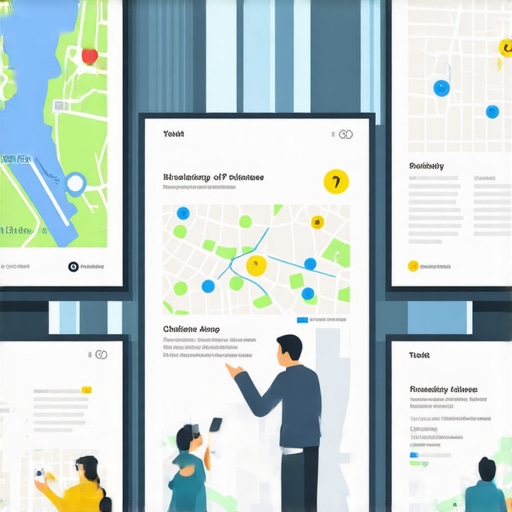
Relocating a business or expanding into new cities requires a precise sequence of data updates to prevent the algorithm from filtering your listing out as a duplicate or a ghost location. If you are experiencing a [ranking loss after moving city or service area](https://gmb4you.com/the-correct-way-to-handle-a-business-relocation-on-google-maps), you are likely facing a trust signal disconnect. You might need [local seo services to fix ranking loss after moving city or service area](https://gmb4you.com/why-your-new-location-is-being-filtered-out-by-a-nearby-competitor) to re-establish your presence in the new centroid. The physics of a 3-mile proximity radius shift means that your old citations are now liabilities. You must update your NAP data across every tier of the local ecosystem. I have seen companies lose 80 percent of their traffic because they forgot to update a single secondary verification tier in their Local Services Ads bidding profile. This is why [emergency seo services for sudden ranking drop](https://gmb4you.com/what-to-do-when-your-map-ranking-suddenly-disappears) are often just a matter of fixing mismatched phone numbers or zip codes. [IMAGE_PLACEHOLDER_1] Every pin is a commitment to a specific piece of geography. If the pin moves, the logic of the entire search ecosystem shifts with it.
Reinstatement protocols and agency toolsets
Recovering a suspended profile or managing fifty separate locations requires specialized software that can track interaction data and policy compliance at scale. Agencies should [buy local seo tools for gmb](https://gmb4you.com/essential-software-for-managing-multiple-gmb-profiles) and utilize [google business profile seo tools for agencies](https://gmb4you.com/mapping-your-success-the-software-built-for-local-pros) to maintain high-level visibility. When a profile goes dark, [gmb profile reinstatement services](https://gmb4you.com/how-to-rebuild-trust-after-a-profile-suspension-notice) are your last line of defense. The reinstatement process is a forensic exercise. It is about proving that your logistics match your digital footprint. If you claim to be a service area business but your technicians are never in the service area polygons you have defined, the behavioral zooming of the algorithm will catch the glitch. We track the check-in signals. We track the local review sentiment. We ensure that every location feels like a local merchant, not a national chain pretending to care about the neighborhood. Consistency is the only currency Google accepts in the Map Pack ecosystem. Keep the data clean. Keep the coordinates precise. Keep the brand identity unified but locally grounded.