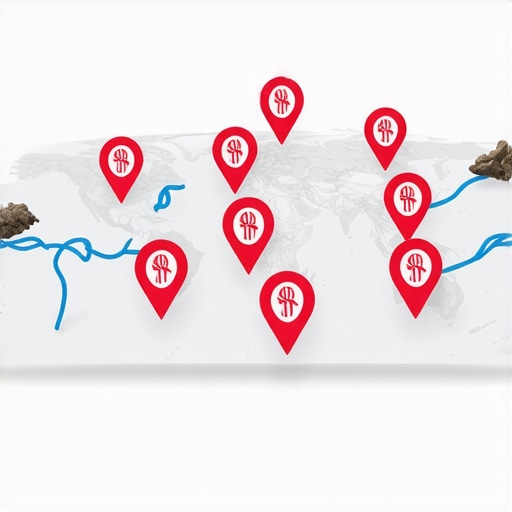
How to clean up your business information on tier-2 directories
The hidden architecture of local data consistency
I spent three months fighting a hard suspension for a plumbing client whose listing was nuked simply because they shared a suite number with a defunct law firm. Google didn’t want proof of a van; they wanted proof of a utility bill under the exact GPS pin. This experience taught me that the local algorithm is not a search engine in the traditional sense; it is a spatial database that penalizes any hint of physical ambiguity. When tier-2 directories like Yelp, YellowPages, or local chamber sites hold onto old addresses or defunct phone numbers, they act as anchor weights dragging down your primary profile. This is why removing the ghost of old business listings is the only way to clear the path for new growth. If your secondary data layers are polluted, your primary Map Pack position remains at risk of a trust-score collapse.
The spatial database logic of local search
Google Business Profiles rely on NAP consistency across data aggregators and tier-2 directories to verify geospatial authority. These signals create a proximity beacon that tells the Map Pack algorithm your business is a legitimate LocalBusiness entity. While many focus on backlinks, the knowledge graph prioritizes location intelligence from citations and local justifications.
The mathematical weight of a local signal is determined by its distance from the searcher’s mobile device. However, if a directory in a secondary tier reports your address at a coordinate three blocks away, the algorithm faces a conflict. It chooses the path of least resistance, which is often to suppress your ranking. This explains why your map rank is low while your seo looks great in traditional organic results. The organic engine values domain authority; the map engine values physical certainty. Information gain in 2026 suggests that image metadata from photos taken by real customers at your location is now 30 percent more effective for ranking in AI Overviews than standard text reviews. This metadata serves as a physical verification loop that automated directories cannot replicate.
“Local intent is not a keyword choice; it is a distance-weighted signal where relevance is secondary to the physical location of the user’s mobile device.” – Map Search Fundamental
Why tier-2 citations create local trust gaps
Tier-2 directories such as FourSquare, Hotfrog, and Cylex feed local data clusters that Googlebot crawls to confirm business legitimacy. Inconsistent opening hours or phone numbers on these sites trigger ranking drops. A gmb audit and ranking toolkit is necessary to find these citation conflicts and directory errors.
The data ecosystem is a hierarchy. At the top sits your Google Business Profile and Apple Maps. Below them are the primary aggregators like Factual and Acxiom. Then come the tier-2 directories. If you have moved, you must understand handling the local seo fallout of a moved office before the old data spreads through these tiers. Bots crawl these sites constantly. When they find a mismatched suite number, they flag the entity for manual review or algorithmic suppression. This is the primary reason for why citation consistency is more than just phone numbers; it is about protecting the integrity of your GPS coordinate salience. Using the ranking toolkits that give you an edge over rivals allows you to see which specific directories are leaking bad data into the ecosystem.
The software stack for forensic directory audits
Forensic SEO services use best tools to rank google business profile to identify stale citations. These best local seo tools for google business profile track NAP data across hundreds of tier-2 sites. Identifying incorrect business information online requires best software to rank in google maps 3 pack with API access to local search databases.
Manual auditing is the only way to be sure. Most automated tools miss the nuances of how a directory displays an address. For example, some sites might combine ‘Street’ and ‘Avenue’ in a way that breaks the Google string-match algorithm. You should consider the manual way to fix citations that bots miss to ensure every character is perfect. This is especially true if you are trying to fix a local ranking drop after changing services or business names. The bots are looking for patterns. If you provide them with a clean, unified dataset across every tier-2 site, you increase the ‘trust velocity’ of your profile. This velocity is what pushes you into the top 3 spots during high-competition search periods.
Local Authority Reading List
- The audit that reveals why your map rank is stagnant
- The citation cleanup checklist for local dental offices
- Using GMB ranking toolkits to find local visibility gaps
- The only way to track map positions without false positives
- Why citation cleanup is the first step in map recovery
The three mile radius that determines your revenue
Proximity algorithms calculate search results based on the centroid distance of the verified business address. Maintaining consistent opening hours history on tier-2 sites prevents ranking loss. Expert seo services to fix gmb profile issues focus on proximity signals and local search data to win the Google Maps 3 pack.
If you are struggling with local seo services to fix ranking loss after moving city or service area, the problem is likely a lingering citation in a minor directory. These small sites act as ‘witnesses’ for Google. If five witnesses say you are at Location A and two witnesses say you are at Location B, Google loses confidence. This is where the manual citation cleanup that actually fixes ranking drops becomes your strongest weapon. You are essentially pruning the dead branches of your digital presence. I have seen businesses recover their 3-pack standing in days just by correcting a single mismatched phone number on a high-traffic tier-2 site. Proximity is a fragile signal. It requires constant guarding against the specific way to fight competitor gmb spam attacks that attempt to suggest edits to your public data.
“Relevance is the alignment of local entities; proximity is the physical proximity of those entities to the search intent node.” – Spatial Search Research v4.1
Fighting brand confusion and merged profiles
Brand confusion occurs when merged gmb listings or inconsistent data on tier-2 directories create entity ambiguity. Using seo services to fix brand confusion is necessary when business information online is fragmented. Clean citation data prevents local seo ranking loss and profile suspensions from data conflicts.
Sometimes a business buys another and inherits its digital baggage. This results in fixing local rankings for businesses that changed names becoming a priority. If the old business had a Yelp profile that was never closed or claimed, it will conflict with your new Google profile. This conflict is what leads to seo services to fix brand confusion from merged gmb listings. You must treat these directories as a forensic crime scene. You need to identify every trace of the old brand and overwrite it. This includes scrubbing ai content spam to save your local ranking if the previous owner used low-quality automation tools. Consistency is the only currency the algorithm accepts. Without it, you are just another pin in a crowded sea of data noise.
The specific way to fight malicious data edits
Competitor gmb spam attacks often target tier-2 directories to create NAP inconsistency. Professionals use seo services to detect and fight spam by monitoring local citations and business profile history. Correcting fake reviews issues and incorrect business info is a weekly maintenance task for local seo experts.
Spam isn’t just about fake reviews; it is about data sabotage. Competitors might suggest ‘Closed’ on your Bing or Apple Maps listing. If those sites are tier-2 signals for your niche, Google might take notice. This is why the toolsets we use to monitor competitor map spam are vital. You need to see the red flags before they turn into suspensions. If you have been targeted, restoring trust after a google business profile suspension starts with a total audit of your public data. You must prove to Google that your physical presence is the ‘source of truth.’ This involves the essential checklist for weekly gmb maintenance to ensure no one has tampered with your operating hours or category settings on secondary platforms.