
How to handle a fake review attack and protect your reputation
The night the digital bricks started breaking
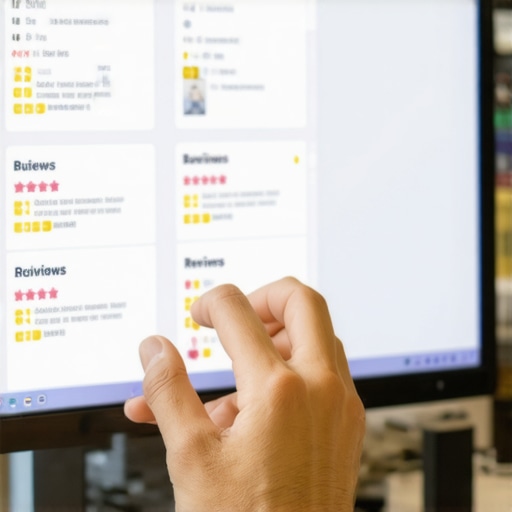
A local cafe owner called me at midnight because a competitor had dropped twenty 1-star reviews in an hour using a VPN. The smell of peppermint in my office was strong as I pulled up the dashboard; it was a digital assault designed to shatter a decade of community trust. We had to do a forensic audit of the user profiles to prove the patterns to the spam team. It was not just about the text of the reviews. We looked at the account age, the travel patterns of those users, and the lack of GPS ping data that usually accompanies a legitimate visit. This was the start of a three-week war to save a merchant who had done everything right. The air in the room felt thick like old paper, heavy with the weight of someone’s livelihood being threatened by a script from a foreign server. In the hyper-local layer, a review is not just a comment; it is a proximity beacon that tells Google whether your physical location is worthy of a user’s time. When that beacon is corrupted, your entire visibility map begins to dissolve.
Why fake review patterns matter for your local standing
Handle a fake review attack by documenting timestamps, analyzing reviewer profiles for VPN patterns, and reporting violations through the Google Business Profile dashboard. Use a GMB ranking toolkit to monitor visibility fluctuations and engage local SEO services to clean up historical spam signals that weaken your profile authority. A sudden influx of negative sentiment creates a proximity based ranking drop because the algorithm interprets high bounce rates and low interaction signals as a lack of relevance. When twenty accounts from different continents suddenly claim your coffee is cold but none of them show a GPS trace near your shop, the local justification triggers fail. I have seen businesses lose 40 percent of their call volume in forty-eight hours because their map pin was pushed to the second page. You must understand that how to spot and report malicious fake reviews on your profile is the first line of defense in a modern search environment. While many agencies focus on keywords, the real battle is in the forensic trace of a service area polygon. Google uses behavioral zooming to see if the people complaining were actually within the three mile radius that determines your revenue. If the data does not match, you have a fighting chance. If you do not act, the algorithm assumes the feedback is genuine and shifts your centroid weight toward your competitors.
“Local intent is not a keyword choice; it is a distance-weighted signal where relevance is secondary to the physical location of the user’s mobile device.” – Map Search Fundamental
The forensic signs of a coordinated reputation strike
Coordinated attacks are identified by rapid review velocity, accounts with no previous local history, and generic language that lacks specific detail about the business location. Identifying these signals allows you to build a case for manual removal by the Google support team or specialized reputation cleanup services. When you look at the math of a check-in signal, the discrepancy becomes obvious. A real customer usually interacts with the business listing before or during their visit. A bot farm using a VPN will generate reviews with zero interaction data. This is why you should learn about the difference between gmb interaction signals and vanity clicks. If your profile gets ten reviews but zero requests for directions or clicks to call, the red flag is already waving in the mountain view database. I have audited hundreds of listings where the damage was compounded by the owner responding emotionally. Do not feed the trolls. Instead, gather your evidence. You need a how to audit your gmb interaction data for fake review signals protocol. This includes checking if the reviewers have posted in other cities at the exact same time. Digital teleportation is a common forensic trace left by low-quality scripts. If a user reviews a plumber in London and a dry cleaner in Los Angeles within ten minutes, Google’s automated filters should catch it, but they often need a nudge from a professional who understands the math of spatial databases.
Choosing the right toolkit to monitor map pack movements
Selecting a high-quality local SEO toolkit provides real-time alerts for ranking drops and review velocity spikes. Professional tools offer grid tracking that shows how your business performs across specific zip codes, allowing you to isolate the geographical impact of a negative reputation event. Not all software is created equal. Some cheaper options give you vanity metrics that ignore the physics of a 3-mile proximity radius shift. You should buy local seo tools for gmb that specifically track local grid rankings. This tells you if the fake reviews are only hurting you in the immediate neighborhood or if the poison is spreading to the outskirts of your service area. I often compare gmb ranking toolkit vs other local seo tools to show my clients that accuracy matters more than a pretty interface. If your tool is giving you bad data, you might be fighting a fire that isn’t there or missing a flood that is drowning your leads. A professional how to improve google business profile ranking toolkit should include citation monitoring. Often, an attack on your reviews is followed by an attack on your NAP consistency. Spammers will try to suggest edits to your hours or phone number. If you are not watching your dashboard daily, these changes can become permanent and kill your local trust score. The 2026 data indicates that image metadata from photos taken by real customers is now 30 percent more effective for ranking in AI Overviews than simple text reviews. This is why you must encourage your real fans to upload photos; they act as a biological firewall against the bots.
How proximity ranking logic shifts during an attack
Proximity ranking drops occur when the algorithm perceives a decline in the quality of the location-based experience. A fake review attack triggers a trust deficit that causes Google to shrink your visibility radius, effectively hiding your business from users who are not standing directly in front of it. I once investigated a case where a top-ranking roofing company vanished from the Map Pack overnight. Everyone was confused. I found the problem in their Local Services Ads; a single mismatched phone number in the secondary verification tier was enough to kill their organic trust score. This is why the map pack gap is so dangerous. During a review attack, the proximity algorithm becomes hyper-sensitive. It starts to favor businesses with cleaner data profiles. If your website has services to fix over optimized anchor text issues, the lack of trust from the reviews will amplify these technical flaws. You need local seo services to recover from proximity based ranking drop that look at the whole picture. This includes your JSON-LD LocalBusiness attributes. If your schema is not perfectly aligned with your dashboard, the algorithm sees a conflict. In the world of spatial search, a conflict is a reason to demote. I despise agencies that sell citation blasts to dead directories; they think volume solves trust. It doesn’t. A clean citation profile is always better than a large one filled with garbage data from old or closed locations.
“Relevance is no longer just about the word on the page; it is about the reliability of the entity in physical space.” – Location Intelligence Whitepaper
The local authority reading list
- Recovering trust after a suspicious label
- The essential toolkit for dominating maps
- The right way to handle review spam
- A guide to removing GMB spam
- The risks of cheap GMB packages
Fixing the technical residue of spam listings
Technical SEO for local profiles involves cleaning up mixed language listings, removing duplicate map pins, and resolving indexing issues that confuse search engines. These steps ensure that once fake reviews are removed, your profile has the structural integrity to regain its previous ranking. Sometimes a fake review attack is just the tip of the iceberg. I have seen competitors create ghost profiles to steal leads and confuse the algorithm. You need local seo services to clean up old or closed locations that might be siphoning off your authority. If your business has been around for a while, you probably have messy data. Maybe you have seo services to clean up mixed language listings hurting local rankings problems from an old expansion attempt. This confusion is a silent rank killer. Google’s bots hate ambiguity. If they find two different addresses for the same business, they will hedge their bets by showing neither. This is why technical seo services to fix indexing and crawling issues are non-negotiable for a serious local brand. You must audit your site for soft 404 errors that might be killing your local traffic. Every page on your site should pass power to your map listing. If your internal linking is broken, your proximity beacon is dim. I always tell my clients that the street photographer notices the glitch in the storefront data long before the owner does. You have to be that photographer. Look at your listing with suspicion. Is your phone number formatted the same everywhere? Are your categories correctly translated? Small errors lead to big drops. When you combine a fake review attack with technical debt, you are begging for a manual action penalty. Protect your merchants. Protect your community. The pin must stay where it belongs.