The First Move a GMB Profile SEO Expert Makes During a Crisis Audit
I spent three months fighting a hard suspension for a plumbing client whose listing was nuked simply because they shared a suite number with a defunct law firm. Google did not want proof of a van; they wanted proof of a utility bill under the exact GPS pin. I remember the smell of wet concrete outside their warehouse while I took the verification photos. The ‘glitch’ in the storefront data was obvious to me, but the algorithm saw a conflicting signal that suggested the business did not exist. This is the reality of the hyper-local layer. You are not managing a profile; you are maintaining a proximity beacon in a spatial database that is increasingly hostile to any hint of data inconsistency. When the Map Pack drops you, it is rarely about your keywords. It is about the physics of the local algorithm and the forensic trace of your physical presence.
The ghost in the GPS coordinates
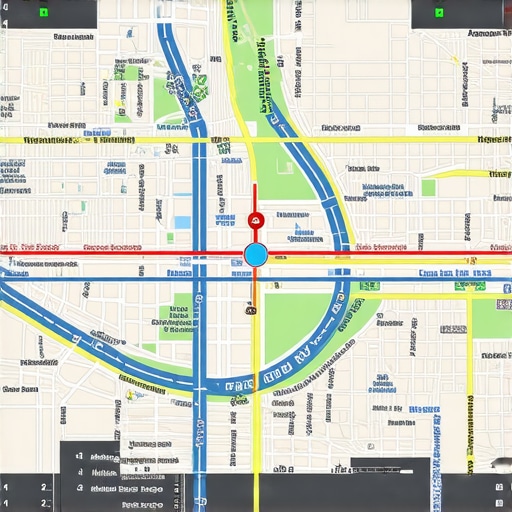
A GMB profile SEO expert begins a crisis audit by verifying the raw latitude and longitude data against the physical footprint of the business. This process identifies address conflicts and GPS salience errors that cause ranking drops. We look for mismatched coordinates in the underlying LocalBusiness Schema and the Google Maps API to ensure the pin is not drifting into a non-commercial zone.
The algorithm treats distance as a weighted signal. If your pin is even twenty feet off the actual entrance of your building, you might be losing the proximity fight to a competitor who has their data aligned. I often find that businesses suffer because they do not understand how to fix an address conflict hiding your profile before the automated filters flag them for suspension. The technical reality of 2025 is that the algorithm uses mobile device pings from real customers to verify if you are actually located where you say you are. If the pings do not match the pin, the trust score collapses. You might think your ranking dropped because of a competitor, but it is actually because your GPS coordinates are a ghost of a location that the system no longer trusts.
“Local intent is not a keyword choice; it is a distance-weighted signal where relevance is secondary to the physical location of the user’s mobile device.” – Map Search Fundamental
I have seen cases where why your map ranking drops every time you leave the office is tied directly to the geofencing of the owner’s phone. If the primary user of the account is never at the physical location, Google starts to doubt the legitimacy of the storefront. This is part of the behavioral zooming I perform during an audit. We analyze the movement patterns of the ‘manager’ devices associated with the profile. If those devices are always in another city, the profile loses its local authority. This is why a the simple checklist for gmb profile optimization must include local behavioral signals.
Why your physical address is a liability
Using a virtual office or a shared suite number creates a massive risk for a google business profile recovery service after fake address suspension. Google uses Street View data and third-party real estate databases to verify the physicality of a business. If multiple businesses claim the same centroid, the system triggers a partial suspension or a filtering event that hides your listing from the 3-pack.
The street photographer in me sees the storefront as a set of visual data points. When I perform an audit, I look at the signage. Is it permanent? Is it visible from the street? If you are using a virtual office, you are fighting a losing war. You need a the danger of using a virtual office address for your map listing awareness to survive. The algorithm is now smart enough to cross-reference your lease with local tax records. If there is a mismatch, your visibility vanishes. I often recommend how to handle duplicate gmb listings without losing ranking power by consolidating the data into one verified, high-trust physical point. This is the only way to recover positions after a local algorithm shake up that targets thin location data.
Local Authority Reading List
- The blueprint for automated citation cleanup
- Why geotagging is failing your profile
- The hard truth about profile descriptions
- Optimizing service area polygons
The three mile radius that determines your revenue
Proximity remains the most dominant ranking factor in the Map Pack, often overriding review count and keyword relevance. The algorithm calculates User-to-Business distance in real-time. Within a three-mile radius, your interconnected signals like Local Services Ads (LSA) verification and NAP consistency must be flawless to maintain dominance.
When I see a client’s ranking drop, I immediately pull a heat map. If they are ranking at the shop but nowhere else, it is a proximity kill. You have to understand why proximity still kills your map visibility and how to fix it through local entity building. We look at the ‘Map Pack’ as a fluid grid. If you are stuck at the four spot, you need the tactical fix for businesses stuck outside the 3-pack which usually involves improving your interaction signals. These signals tell Google that people are willing to travel past a closer competitor to get to you. This is the only way to break the proximity lock. Without these behavioral signals, you are just a dot on a map that nobody visits.
Recovering from the local algorithm shake up
Recovery requires a total technical audit of GMB categories and hidden keyword associations. A GMB ranking toolkit buy might provide software, but it does not provide the forensic analysis needed to identify secondary category conflicts. We use specialized tools to find gmb categories and keywords that are actually triggering the 3-pack for your specific niche.
The algorithm shake ups are usually a correction of ‘over-optimized’ profiles. If you have been keyword stuffing your business name, you are a target. I prefer to see how to handle a competitor using fake keyword stuffed names by reporting them through the redressal form rather than joining them in the spam pool. A how to verify your gmb seo expert isnt using black hat tactics audit is the first step in ensuring your recovery is permanent. If your agency is using bots to click your listing, your ranking will fade after one month. You need real interaction from real local devices. This is the secret to why most google maps ranking service results fade after one month and how to avoid that trap.
“A Google Business Profile is a proximity beacon, not a static advertisement, requiring constant alignment between digital signals and physical reality.” – GMB Audit Standards
The toolkit for agency level GMB monitoring
A professional gmb ranking toolkit includes heat map tracking, sentiment analysis, and real-time suspension alerts. Agencies must use services to monitor and prevent future gmb suspensions by tracking suggested edits from competitors. The technical seo services to fix indexing and crawling issues often start with the website URL linked to the profile.
I have seen many businesses fail because they used their main homepage for every location. You must understand why you shouldnt use your main website url for every location to avoid internal competition. A proper gmb ranking toolkit will show you the local grid rankings for specific zip codes. If you are not using the software that actually tracks local grid rankings, you are flying blind. We also look at how to use local grid trackers to find ranking blind spots. These blind spots are where your competitors are stealing your phone calls. In the world of high-stakes local search, if you do not see the data, you do not own the market.
Fixing the partial suspension and limited features
Partial suspensions often occur when the primary category choice determines 80 percent of your rank but conflicts with your service list. To fix limited gmb features, you must perform a category conflict audit. This involves stripping back the profile to the primary business entity and re-verifying the service area polygons.
If your profile says ‘Your business is not visible to customers,’ you are in a trust deficit. You need how to fix the your business is not visible to customers error by providing the exact documents Google wants. This is not about being clever; it is about being compliant. I often find the issue lies in the category conflict that is silently tanking your business rank. If you are a plumber but you have ‘General Contractor’ as your primary, you are confusing the algorithm. You need to know the primary category choice that determines 80 percent of your rank and stick to it. Over-categorization is a fast track to a partial suspension.
Technical services to fix indexing and crawling
Indexing issues for local profiles are usually tied to the linked landing page’s mobile click-through rate and technical health. A technical seo service should optimize the LocalBusiness JSON-LD and ensure the NAP data on the page matches the GMB profile exactly. If the Googlebot finds a mismatched phone number on your footer, it will devalue your map ranking.
The data shows that the profile tweak that improves your mobile click-through rate is often just fixing the page load speed of the linked URL. We also look at the specific photo metadata that actually influences your map position. While some claim geotagging is dead, the EXIF data from photos taken by customers at your location is a massive trust signal. If your professional photos have no location data but your customer photos do, Google trusts the customers more. This is the impact of user uploaded photos versus your professional ones in action. Real images of real work are the currency of the modern map algorithm.
Consulting for complex penalty cases
Complex penalty cases require a forensic audit of review sentiment and interaction signals. We analyze the review response time and the keywords inside customer reviews to see if the profile has been filtered for unnatural growth patterns. If you bought cheap gmb packages, you are likely suffering from link farm contamination.
I always tell people to stop buying cheap gmb packages that use link farms because the long-term damage is catastrophic. A how to recover a suspended profile without losing reviews strategy must be careful and methodical. We look for the review sentiment secret that most seos ignore. If all your reviews use the same five keywords, the algorithm knows they are fake. You need how to get keywords inside your customer reviews naturally by prompting customers to mention specific services. This is the difference between a profile that ranks and one that is penalized. Local search is a game of authenticity, and the algorithm is getting very good at spotting the fakes. When the pin moves, you better be there to catch it. The smell of wet concrete is better than the smell of a dying business listing any day.