The Minimalist Guide to Local GMB Optimization for New Businesses
The Minimalist Guide to Local GMB Optimization for New Businesses
The air outside the corner cafe smelled of wet concrete and exhaust. I was standing there, camera around my neck, watching the owner pace behind the glass. A local cafe owner called me at midnight because a ‘competitor’ had dropped twenty 1-star reviews in an hour using a VPN. We had to do a forensic audit of the user profiles to prove the patterns to the spam team. It was not about the words in the reviews. It was about the lack of movement data. The profiles had no GPS history of visiting the shop. They were ghosts. This is the reality of the local search ecosystem today. It is a spatial battlefield where digital footprints must match physical reality. If you are a new business, you do not need a complex agency plan. You need a proximity beacon that Google trusts.
The three mile radius that determines your revenue
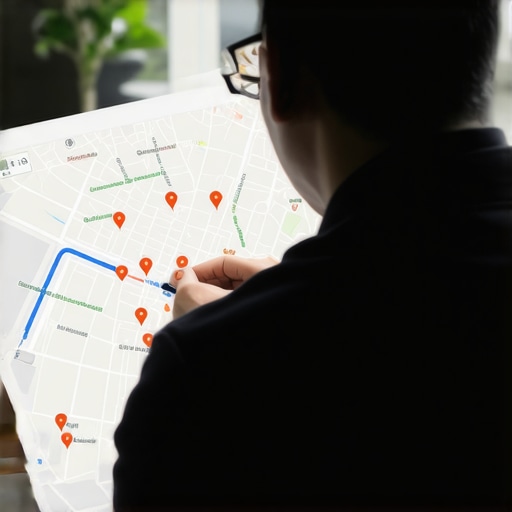
Local proximity signals are the primary drivers of Google Map Pack visibility where the physical distance between a mobile user and a Google Business Profile pin dictates ranking priority over traditional keyword density. Most new owners ignore the math of the centroid. They think keywords in a description will save them. They are wrong. Google looks at the density of your competition within a tight radius. This is why proximity still kills your map visibility and how to fix it if you are positioned in a crowded sector. The algorithm weighs the distance of the user from your front door more heavily than your website authority. You must understand that your listing is a coordinate in a coordinate system. If your address has a history of spam, you are starting behind the line. The physical location of your business is your greatest asset or your heaviest liability. The three-mile radius is not a suggestion; it is a hard boundary for most service-based queries. You can push this boundary with interaction signals, but the baseline is always distance. If you want to expand your reach, you must learn how to structure your service areas for maximum local reach without triggering a suspension for service area overlap.
“Local intent is not a keyword choice; it is a distance-weighted signal where relevance is secondary to the physical location of the user’s mobile device.” – Map Search Fundamental
The ghost in the GPS coordinates
GPS coordinate salience refers to the mathematical trust score assigned to a business location based on the historical movement of mobile devices into and out of that specific latitudinal and longitudinal point. Every time a customer walks into your shop with a phone in their pocket, they are voting for your business validity. Google tracks these pings. This is why the interaction signals that finally move your map position are often more valuable than a backlink. If your business is at a virtual office, there are no pings. The algorithm sees a dead zone. It sees a fake pin. This is the danger of using a virtual office address for your map listing in an era of behavioral tracking. The system knows if a building is an office park or a residential home. It knows if the foot traffic matches the reported business hours. I have seen listings vanish because the ‘interaction volume’ was zero for six months. You cannot fake physical presence. You can, however, optimize the signals you do have. Make sure your customers are using their maps to find you. Encourage the ‘Directions’ click. Every direction request is a high-intent signal that verifies your location is a destination, not just a line of text on a screen.
The visual evidence of a real storefront
Visual entity verification involves using unprocessed storefront photography and user-generated content to prove the physical existence of a business to Google Maps AI vision systems. As a photographer, I see the glitches in the data. A stock photo is a signal of laziness. A grainy, candid shot of your lobby taken on a Tuesday afternoon is a signal of life. Google uses computer vision to read your signage. If the name on your sign does not match your GMB name, you are a target for suspension. This is why your business photos are being rejected by google if they look too much like advertisements. They want proof of life, not a flyer. Use the the specific photo metadata that influences map visibility to your advantage. When a customer uploads a photo, it contains a header with GPS data. That is the gold standard of local trust. You should also consider the impact of video content on your local map click-through rate because a short walk-through video proves your interior is real. It stops the ‘spam investigator’ in their tracks. They cannot argue with a video of a working office or a bustling kitchen.
The logic of a local review signal
Review sentiment analysis is the process where Google’s Natural Language Processing extracts specific service entities and local keywords from customer feedback to rank a profile for niche queries. Stop asking for five stars. Start asking for descriptions. If a client says ‘the best plumber in Chicago,’ you win. If they say ‘great service,’ you get nothing. This is the review sentiment secret that actually improves your map position by feeding the algorithm nouns. You need to know how to get keywords inside your customer reviews naturally without sounding like a robot. The response matters too. Never use a template. I once saw a business owner copy-paste the same ‘Thank you for your business’ to fifty people. Their ranking dropped. Google saw it as a low-effort signal. Read the danger of responding to reviews with the same canned template and realize that your responses are for the algorithm as much as the customer. Address the service provided. Mention the neighborhood. This anchors your listing to a specific geography and a specific skill set.
“Local search is becoming a behavioral verification engine where the actions of the user at the physical location outweigh the optimization of the listing itself.” – Location Intelligence Whitepaper
Why your business description is a distraction
GMB description optimization has zero direct ranking weight in the Google Maps algorithm, serving instead as a conversion tool for users rather than a primary keyword signal for the 3-pack. Many agencies charge thousands for ‘keyword-rich descriptions.’ They are selling you smoke. This is why your business description is not helping your rank and why you should focus on your ‘Services’ list instead. The Services tab is a database. The Description is a story. Use the story to sell the click. Use the Services tab to tell the algorithm what you do. If you want to dominate, you must understand the secondary category trick for dominating local niche searches because categories are the strongest relevance signal you have. If your category is ‘Plumber’ but you do not have ‘Water Heater Repair’ in your service list, you will not show up for that specific search. It is a logic gate. You either have the service checked, or you do not. It is binary.
The forensic trace of citation consistency
NAP consistency is the alignment of Name, Address, and Phone Number across the local data ecosystem to eliminate entity ambiguity in the Google knowledge graph. If your address says ‘Suite 100’ on your website and ‘#100’ on Yelp, you have a problem. The algorithm hates ambiguity. It will hide your profile if it is not 100 percent sure where you are. This is why local citation consistency is no longer enough to rank but is still a requirement to avoid being filtered. You need to perform a clean-up. Do not use automated tools that create more mess. Learn how to clean up messy citations without manual labor by targeting the primary data aggregators. If the aggregators are right, the rest follows. I have seen businesses recover their 3-pack spot in days just by fixing a mismatched phone number. It is not magic. It is just the system finally trusting the data again. The pin becomes solid.
The local SEO toolkit for 2025
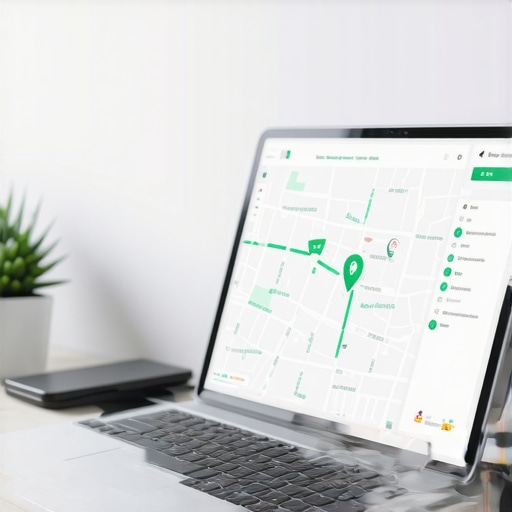
Advanced local search toolkits must include grid tracking software and interaction audit tools to visualize ranking fluctuations across specific GPS coordinates in real-time. You cannot rely on a single search from your office. You will always rank first at your own desk. You need to see the grid. Use the software that actually tracks local grid rankings to see where your visibility falls off. Is it one mile away? Two? This tells you where your ‘authority’ ends. If you see a sudden drop, you might be a victim of a core update. Learn how to win back your 3-pack spot after a core update by analyzing the winners. Usually, they have more user-generated photos and faster review response times. It is a game of marginal gains. You do not need a big budget. You need a better lens. You need to see the glitches before the algorithm does. The 3-pack is for those who prove they are the most relevant and most real option in the immediate vicinity. The pin stays. The ghosts disappear. The concrete stays wet. The business grows.