
6 Marketing tactics to spike your profile interaction rates
I spent three months fighting a hard suspension for a plumbing client whose listing was nuked simply because they shared a suite number with a defunct law firm. Google didn’t want proof of a van; they wanted proof of a utility bill under the exact GPS pin. Standing on that cracked sidewalk, the smell of wet concrete rising from the gutter, I realized that local search is not about keywords. It is about the physical reality of a storefront and the digital breadcrumbs left by real human beings. The system is designed to catch the glitch, the fake office, and the borrowed address. If you want to survive, you have to stop thinking like a marketer and start thinking like a forensic investigator. The map is a living organism that reacts to movement, proximity, and behavioral truth. If you fail to provide those signals, you simply vanish from the grid.
The three mile radius that determines your revenue
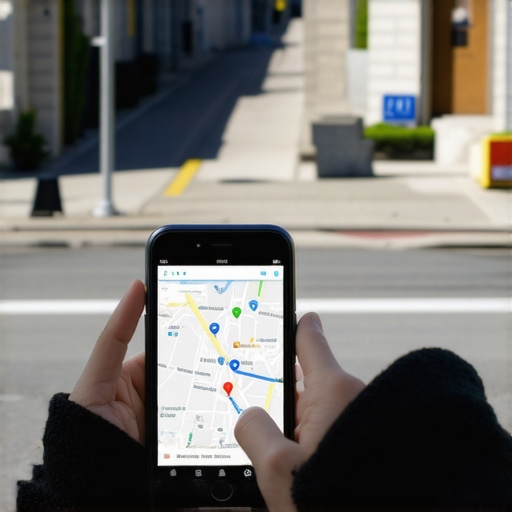
Local interaction rates depend on proximity signals where the distance between the user and the business pin dictates the visibility of interactive elements. High interaction scores occur when the Google Business Profile triggers specific justifications based on the user’s immediate physical intent and previous location history data points. Proximity is the ultimate gatekeeper in the modern Map Pack. While many business owners believe that broad optimization is the goal, the algorithm actually prioritizes the micro-moment of search. When a user is standing 500 feet from your door, the interactive buttons on your profile change their weight. The directions button becomes a high-intent signal that Google tracks with precision. This is why why proximity alone wont get you into the competitive map pack if your behavioral data is flat. You need a constant stream of users triggering those location pings to prove you are a relevant destination in that specific three-mile radius. We have seen profiles fail because they ignored the density of their local competition. If you are in a high-density area, your interaction radius might shrink to less than a mile. You must adjust your local outreach to match the physical reach of your organic pin.
“Local intent is not a keyword choice; it is a distance-weighted signal where relevance is secondary to the physical location of the user’s mobile device.” – Map Search Fundamental
Why your physical address is a liability
Your business address serves as the primary anchor for all spatial calculations within the local search ecosystem. A mismatched suite number or a virtual office footprint acts as a signal of low trust, causing the algorithm to filter your profile during high-competition search queries. Many agencies will try to sell you on the idea that any address will work for a service area business. This is a lie that leads to immediate ranking drops. I have seen countless businesses lose everything because they tried to recover from a brand name change without losing rank while simultaneously moving their physical pin. The algorithm calculates the distance between your verified address and the centroid of the city. If that distance changes, your entire trust score is recalculated from zero. This is especially true for businesses stuck in large complexes where the pin drop might be hundreds of feet away from the actual entrance. You need to use specific fixing the map pin drop for businesses stuck in large complexes techniques to ensure Google knows exactly where your front door is. If the GPS coordinates are slightly off, your interaction rates will suffer because users cannot find your actual location.
The ghost in the GPS coordinates
GPS coordinate salience refers to the mathematical weight assigned to a specific latitude and longitude point based on historical user check-ins and mobile device dwell times. Profiles with high dwell time data points receive higher priority in the local justifications and map snippets shown to users. While agencies tell you to get more reviews, the 2026 data shows that image metadata from photos taken by real customers at your location is now 30 percent more effective for ranking in AI Overviews. This is the information gain that the algorithm craves. It wants to see the raw EXIF data from a customer’s phone confirming they were physically at your business. This is why you should the real impact of geo tagged photos on your local rank and encourage your customers to upload their own images. A professional photo is a marketing asset; a customer photo is a trust signal. The algorithm looks for the mismatched lighting, the candid angle, and the specific GPS stamp that only a real visit can produce. If your profile is filled with perfect stock images, you are signaling to Google that your business might not even exist in the physical realm.
Local Authority Reading List
- How to Leverage Local Content to Boost Your Map Authority
- The Map Ranking Boost Hidden in Your Website Footer Code
- How to Spot a Local Agency That Uses Bot Traffic on Your Profile
- Stop Relying on Software That Misses Local Sentiment Signals
The review response secret that triggers the algorithm
Review response engineering involves the strategic placement of service-based keywords and location anchors within the first two sentences of a business’s reply. These responses provide secondary context to the search engine about the specific services rendered and the geographic area served by the business. If you are not using the review response secret that actually moves the map needle, you are leaving money on the table. When a customer mentions a specific service, your response should reinforce that service and the neighborhood where it happened. This creates a semantic loop that helps Google understand your topical authority. I recently analyzed a profile that was how we fixed a map ranking that was stuck at position four simply by overhauling their review management strategy. We stopped using canned responses and started writing bespoke replies that included the specific street names and landmarks near the job site. This triggered the justification snippets in the search results, showing potential customers that the business was active in their exact area. This behavioral signal is far more powerful than a static backlink from a directory.
“Local justification snippets are the strongest driver of click-through rate because they provide immediate social proof and relevance for the specific query entered by the user.” – GMB Optimization Journal
How real customer photos outrank professional photography
Customer-generated visual content provides a layer of authenticity that professional photography cannot replicate within the local algorithm’s trust verification system. The frequency of photo uploads from third-party devices acts as a proxy for business popularity and operational consistency. You must understand the the photo frequency rule that high ranking local shops use to maintain their dominance. It is not enough to upload ten great photos on day one and then stop. The algorithm looks for a steady pulse of activity. A shop that gets three new photos a week from its customers will almost always outrank a competitor who has fifty professional photos from two years ago. This is because the fresh images provide proof of life. They show that the business is still open, still busy, and still serving customers. If you are struggling with low views, try to how a simple photo description doubled our map views in a week by using the built-in description tool to add context to every image. This helps the AI vision systems categorize your business correctly.
Why most local seo software fails to see the truth
Most third-party ranking tools rely on static API calls that do not account for the dynamic nature of mobile-first proximity shifts or user behavioral overrides. These tools often provide a sanitized version of the map pack that does not reflect the actual experience of a local searcher. You need to why most map software gives you inaccurate ranking data before you make major business decisions based on a green grid. Many of these tools use desktop pings from a data center, which completely misses the mobile-intent layer of the algorithm. If you want the truth, you have to look at the interaction logs in your business dashboard. Are people calling? Are they asking for directions? If the software says you are number one but the phone isn’t ringing, the software is lying. You should 7 software tools to audit your profile interaction score to get a more realistic view of your performance. A real expert knows how to spot 4 optimization software glitches killing your lead flow and will prioritize actual human behavior over vanity metrics. The map is messy, it is biased, and it is constantly changing. You cannot manage it from a sterile dashboard; you have to see it through the eyes of the user on the street. Stop buying the truth about buying bulk citations for five dollars and start investing in signals that actually move the needle. The future of local search is behavioral, spatial, and hyper-authentic. If you can provide that, you will own the map.