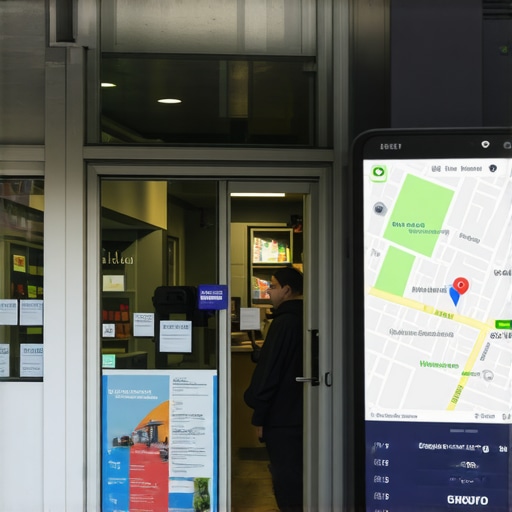
Why your service-based business is missing from nearby maps
I remember the moment vividly — I was standing outside a bustling café in my neighborhood, watching potential customers walk right past, oblivious to the place’s existence. Despite having a glowing reputation and dozens of five-star reviews, my Google Business Profile was invisible on the map. It felt like I was shouting into the void. That realization hit me hard: local visibility isn’t just about having a good product; it’s about mastering Google Maps SEO.
Breaking Through the Map Mask: Why Local Visibility Matters
For service-based businesses, especially small ones, being found on Google Maps isn’t optional — it’s essential. According to recent studies, over 60% of customers use local search to find nearby businesses, and 78% of local mobile searches result in an offline purchase (source: Think with Google). Yet, many entrepreneurs are blindsided when their business doesn’t appear in that coveted 3-pack, despite being perfectly set up offline.
So, why is this happening? The truth is, Google’s local algorithm is complex and constantly evolving. Factors like citation consistency, review management, and profile optimization play pivotal roles — and missing just one can keep you off the map. Early in my journey, I made a critical mistake: I believed that creating a Google Business Profile was enough. I didn’t realize that ongoing GMB SEO tweaks, like optimizing questions & answers and managing interaction signals, could make or break my visibility.
If you’ve faced this frustration, you’re not alone. The good news? There are proven strategies that can push your business into the map’s spotlight. Starting with understanding and fixing your foundational issues is key — and I’ll walk you through those steps shortly. Before diving into solutions, I want to address a common concern about GMB SEO hacks.
Is GMB Optimization Actually Worth the Hype?
When I first heard about quick fixes and shortcuts, I was skeptical. Honestly, I’d tried some dubious tactics — like faking interaction signals or buying fake reviews — only to see my ranking tank later. One mistake I made early on was neglecting citation consistency, which is a silent killer for local rankings (more on citations here). The key is sustainable, white-hat SEO practices that build authentic trust with Google.
Are you still doubtful about whether dedicated GMB SEO work is actually effective? It’s a fair question. But from my experience — and countless case studies — authentic optimization that focuses on user signals, correct profile setup, and engagement makes a real difference. And the best part? You don’t have to rely on shady practices. Instead, smart, targeted local SEO is the way to go.
Next, let’s explore exactly how to identify and fix the gaps that keep your business invisible on the map, so you can attract the local customers ready to buy from you.
Claim Your Spot with a Solid Profile Foundation
Start by verifying all your business details accurately—name, address, phone number, and categories matching your services. Think of your Google Business Profile as a digital storefront; incomplete or inconsistent info is like a sign missing crucial details—customers will pass by. Pay special attention to your primary category; selecting the right one is akin to choosing the right fishing bait—fish (customers) bite only if you attract the right flavor. Avoid category conflicts that can quietly hide your business from rank in the 3-pack; here’s how to spot and fix conflicts. Ensure your business name aligns perfectly with your local citations to prevent any confusion or suppression in listings.
Optimize Your Profile for Engagement and Relevance
Enhance your profile with detailed descriptions filled with relevant keywords, avoiding keyword stuffing. Use your core keywords naturally in your services and description, akin to seasoning a meal—just enough to flavor, not overpower. Regularly update your post content; these are your signals to Google that your profile is active and relevant. For local keyword relevance, leverage strategies such as publishing GMB posts targeting specific zip codes, which acts like knocking on neighbors’ doors—more neighbors (local customers) will know you’re open. Optimize your posts now to boost visibility and local relevance.
Build and Maintain Trust with Consistent Citations
Local citations are the street signs guiding customers to your storefront. Maintain citation consistency across directories—misaligned signs can lead customers astray and hurt your rank. Use high-quality citations—focusing on local, relevant sources rather than mass directories that resemble clutter—because Google views authority, not just volume. Avoid cheap, paid citation packages that only deliver fake links; these are like counterfeit signs that Google quickly discards. Instead, focus on building quality citations that pass authority directly to your profile.
Leverage Reviews to Signal Trust
Reviews are your digital word-of-mouth; they influence local rankings and customer decisions. Encourage happy clients to leave thoughtful reviews, especially highlighting local relevance and services. Respond promptly to reviews—positive or negative—showing active engagement. Remember, fake reviews harm your credibility; focus on genuine feedback. Managing reviews effectively enhances your trust signals, pushing your business higher in the 3-pack. For handling fake negative reviews, follow these best practices.
Fine-Tune Behavioral Signals and Engagement
Google values user interactions—directions requests, website visits, calls, and clicks. Make your profile ‘sticky’—add compelling photos, menus, and offers to encourage engagement. Use geo-tagged images and upload high-quality visuals that tell a story about your business; here’s how to optimize images. Respond promptly to questions and answers, turning curious prospects into loyal customers. Never fake interaction signals; Google can detect bogus activity, as seen in these behind-the-scenes dangers.
Regularly Audit and Adjust for Optimal Performance
Perform routine audits of your GMB and local citations to identify inconsistencies or errors—fix name, address, or phone conflicts swiftly, with these step-by-step guides. Use local rank tracking tools to spot blind spots and measure adjustments’ impact. Keep an eye on your profile insights—click-through rates, now improved by strategic attribute updates, reveal what resonates. Don’t rely solely on software that may give inaccurate data; manual oversight ensures you’re steering in the right direction.
Many entrepreneurs assume that straightforward, cookie-cutter strategies will suffice for ranking high in Google Maps, but the truth runs much deeper. A common myth is that focusing solely on backlinks or citations guarantees dominance in the local pack. While these elements are important, they often mask a more nuanced aspect: user behavioral signals. Recent studies, such as those highlighted in Google’s own guidelines, demonstrate that signals like click-through rates, real engagement, and review sentiment genuinely influence map rankings—yet many overlook these factors in their optimization efforts. Relying excessively on cheap GMB SEO packages can lead to a false sense of security, as they often emphasize quantity over quality, with fake citations and robotic engagement that Google detects and penalizes. Instead, a sophisticated approach involves optimizing your Google Business Profile to foster genuine interactions—promptly responding to reviews, updating high-quality photos with geo-tagging, and crafting engaging posts that encourage users to take meaningful actions. This deepens the authenticity of your profile and signals to Google that your business offers real value to the local community. A crucial mistake businesses make is neglecting the dynamic nature of local algorithms, which are continuously tuned to surface businesses with active, engaged profiles. If you’re still buying into outdated hacks or shortcuts, you’re likely missing out on sustainable rankings. Focus instead on creating an ecosystem of authentic, behavioral engagement that demonstrates your local relevance—this is the ultimate secret to climbing the ranks in 2025 and beyond. Want to go further? Consider consulting an experienced GMB SEO expert who understands these subtleties and can help you craft a personalized strategy. Remember, in local SEO, the devil is in the details—mastering behavioral signals could be what finally pushes your business into the coveted 3-pack. Have you ever fallen into this trap? Let me know in the comments.
Keeping Your Map Rankings Sharp Over Time
Maintaining your Google Business Profile’s visibility isn’t a set-it-and-forget-it task; it requires consistent effort and the right tools. One of my go-to strategies is leveraging specialized software like BrightLocal and Whitespark for citation tracking and audit automation. These tools help me identify and fix inconsistencies in real-time, ensuring my local citations remain authoritative and up-to-date. Learn how citation consistency impacts your rankings. Additionally, tools like GMBSpy allow me to monitor competitor rankings daily, giving insights into shifts caused by algorithm tweaks or new local competitors.
Content freshness plays a significant role, so I routinely update my GMB posts with strategic keywords, especially targeting near zip codes. To streamline this, I use GMB’s native scheduling feature combined with Zapier automation, ensuring regular activity even during busy periods. Automating responses to FAQs and reviews with AI chatbots can save time but must be handled carefully—always review generated content to avoid unnatural interactions or spammy signals. Remember, fake interaction signals will backfire, so focus on authentic engagement (here’s why).
How do I keep my profile optimized over time?
Consistent audits are crucial. I schedule quarterly checks of my citations, NAP consistency, and review sentiment analysis. Manual audits complement automated reports, preventing reliance on inaccurate data, which many software tools give—so always double-check with tools like Google My Business Inspector. I also keep an eye on Google Maps algorithm updates through authoritative blogs and niche forums, adapting my strategies proactively.
Looking ahead, the trend points towards even smarter automation integrated with AI-driven behavioral signal analysis. Future tools will likely analyze review sentiment and user engagement patterns more accurately, enabling hyper-targeted local SEO. Stay ahead by adopting an integrated toolkit that combines automation with personal oversight. For a more advanced tactic, I recommend implementing geo-tagged multimedia content, which can dramatically boost engagement signals and rankings and is often overlooked by typical packages.
Final tip: Regularly review your Google Analytics and profile insights. By tracking call volume, click-through rates, and directions requests, you can identify and act on emerging opportunities or issues before they impact your rankings. Remember, sustainable success in GMB SEO hinges on persistent, detail-oriented maintenance paired with the right tools. Ready to elevate your local visibility? Start by optimizing your citation consistency and watching your profile’s engagement grow!

Through my journey, I’ve uncovered that the real magic lies in understanding what Google truly rewards. The biggest lesson I learned? Authentic, human engagement signals—like genuine reviews, regular profile updates, and meaningful interactions—are what push your business into the coveted Google Maps 3-pack. Relying solely on shortcuts or fake tactics might seem tempting initially, but they often backfire, damaging your long-term visibility. To succeed, focus on building a trustworthy digital presence that resonates with your local community, continually optimizing your profile, and nurturing your customer relationships with sincerity. These insights transformed my approach and can do the same for you, turning your map invisibility into prominence.
Are you ready to implement these insider tips and elevate your local SEO game? Let’s grow together.