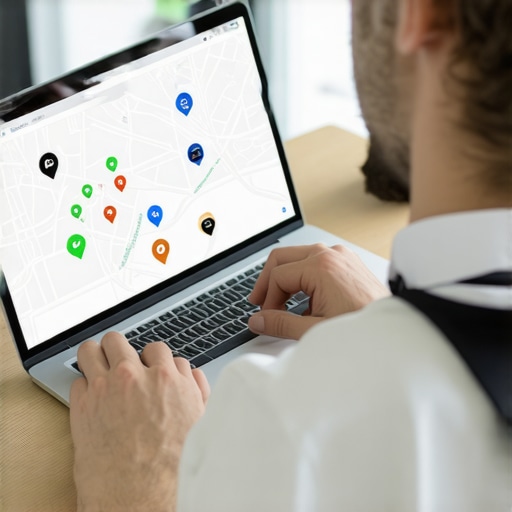
How to get more directions requests from your GMB profile
I remember the exact moment I realized I had been banging my head against the wall with my Google My Business (GMB) profile, hoping for a flood of directions requests. Despite countless hours optimizing, posting, and encouraging reviews, the calls just weren’t coming in the way I envisioned. It was frustrating—like shouting into the void, hoping someone would finally shout back. That lightbulb moment hit me hard: I was missing a crucial piece of the local SEO puzzle, and I wasn’t alone in this.
Why Getting More Directions Requests Matters More Than Ever
In today’s hyper-competitive local landscape, merely appearing in the map pack isn’t enough. Your GMB profile has to *be* the beacon that guides potential customers right to your door. Directions requests are a gold mine—they show genuine intent and often lead to real visits and sales. Yet, many small businesses overlook how to optimize for this specific action, leaving potential customers to find competitors who capitalize on it better.
From my personal experience, I know how easy it is to fall into the trap of just hoping that traffic will come naturally. But according to a recent report, local search visibility directly correlates with increased foot traffic. That’s right—improving your rankings can significantly boost those crucial directions requests, turning online visibility into tangible footfalls.
Have You Faced This Exact Problem?
If you’ve been pouring effort into your GMB but notices little to no increase in directions requests, believe me, you’re not alone. I’ve been there, and what I’ll share today is what finally made the difference for my business—and can for yours too.
In the next sections, I’ll walk you through tested strategies and ‘hacks’ that aren’t just fluff. These are actionable tactics rooted in real-world results, designed to help you stand out in local searches and finally see those coveted directions requests flow in. Ready to shift your local visibility into high gear? Let’s get started!
Optimize Your Profile for Maximum Visibility
Begin by claiming and verifying your GMB listing to ensure you’re in control. Use consistent NAP (Name, Address, Phone) information across all directories to avoid address conflicts, which can hide your profile—check out this guide. Incorporate relevant keywords naturally into your business description and choose primary and secondary categories carefully; avoid the main one being too broad, as this limits local relevance. Regularly update your profile with fresh photos and posts, emphasizing local keywords to enhance visibility in search results.
Leverage Reviews to Drive Engagement
Actively solicit reviews from satisfied customers, guiding them to include specific keywords related to your services. Respond promptly with personalized replies that include those keywords—faking interactions can backfire, so genuine engagement is key. Use tools that adhere to ethical standards, like this approach. Monitoring review sentiments helps identify negative feedback early so you can address concerns and prevent the suppression of your profile due to sentiment filters. Incorporate reviews into your local SEO strategy to improve rankings and attract more directions requests.
Enhance Local Signaling Factors
Optimize your photos’ metadata, including geotags and descriptive keywords, because Google’s algorithm considers image signals. Use the photo metadata tips to boost your local relevance. Additionally, build high-quality citations with consistent information that pass authority—avoid wasting money on junk links. Regularly audit your citations using free or affordable tools and correct discrepancies to align with Google’s standards. This solidifies your profile’s trustworthiness and improves your position in the map pack.
Strengthen Engagement Signals for Better Rankings
Interaction signals like clicks, calls, and visits are crucial. Use practical tactics such as strategic posting and review responses to encourage these actions. Implement a targeted review response strategy to increase keyword usage in reviews and affirm your expertise. Avoid aggressive tactics like buying fake interaction services, which harm your credibility and cause ranking drops. Instead, focus on genuine customer engagement—consider your audience’s preferences and provide value with each interaction.
Monitor and Adjust Your Strategy Continuously
Track your local rankings using reliable trackers to spot blind spots and opportunities. Regular audits help identify issues like duplicate listings or incorrect categories. Use audit tips to ensure your SEO efforts are genuine. Respond to ranking fluctuations promptly by adjusting your local signals—whether it’s updating photos, refining categories, or enhancing reviews. Consistent monitoring and tuning is your best bet for maintaining and improving your position, thereby increasing directions requests over time.
Implement Technical and Local Hacks for Rapid Gains
Employ tactical adjustments such as optimizing your business name, address, and phone number for proximity and relevance. If your profile isn’t ranking well, consider technical fixes like resolving address conflicts or removing duplicate listings—these subtle tweaks often yield quick improvements, as shown here. You can also boost your rank by leveraging lesser-known signals, like the secondary category or attribute updates, to diversify your profile’s relevance. Combining these tactics with ongoing local SEO efforts accelerates your climb into the 3-pack and enhances directions requests.
 Many local SEO practitioners emphasize keyword stuffing, citation building, and review quantity, but what often goes unnoticed are the subtle yet critical nuances that determine genuine rankings. One common myth is that proximity alone locks a business in the top spots; however, recent studies indicate behavioral signals like click-through rates and prolonged engagement are increasingly influential—see this deep dive. An advanced mistake is neglecting the importance of review sentiment analysis; businesses focus solely on review count but fail to understand that negative or fake reviews can harm your local visibility, especially as Google evolves its sentiment filters—highlighted well in this resource. People often believe that simply hiring an “SEO hack” or using generic GMB optimization services will guarantee a jump into the coveted 3-pack, but the truth is that without aligning local signals, managing verified local behavioral data, and preventing address conflicts, such efforts are superficial—consider this guide for detailed fixes.
Now, a critical question many advanced marketers ask is: How do I reliably manipulate Google’s complex ranking system without risking penalties? The answer lies in understanding Google’s evolving E-E-A-T principles—Expertise, Experience, Authority, and Trust—which are increasingly reflected in local signals and customer engagement metrics. As this study suggests, optimizing local behavioral factors like click-through rate and review engagement shows tangible improvements when approached ethically.
Avoid falling into the trap of superficial optimization tactics that ignore behavioral data or violate Google’s guidelines. Instead, focus on creating a well-rounded, authentic profile that encourages real customer interaction, curated review management, and meticulous handling of local signals. Regularly auditing your citation consistency, refining your secondary categories, and leveraging less obvious signals like photo geotags can position your business for steady growth—see this article for photo optimization insights.
Finally, challenge the misconception that proximity is the sole ranking factor. Recent experiments demonstrate that even businesses slightly farther from a target area can rank higher if they excel in behavioral signals and review sentiment—highlighted in this case study. Mastering these nuances can be the difference between obscurity and dominance in local search results.
Have you ever fallen into this trap? Let me know in the comments.
Keep Your GMB Profile Running Smoothly: Essential Tools and Methods
Maintaining a high-ranking Google My Business (GMB) profile requires not just initial optimization but ongoing care using precise tools and strategic methods. I personally rely on advanced citation audits like citation auditing tools that go beyond basic checks—these help identify discrepancies that could silently hinder your local ranking, especially as Google increasingly emphasizes local behavioral signals in its algorithms. Leveraging such detailed audits allows me to correct issues proactively, ensuring my profile stays visible and competitive over time.
Another critical aspect is tracking your local rankings accurately. I recommend tools like Local Grid Trackers, which visualize your position across multiple zip codes and highlight blind spots that traditional tools often overlook. This approach aligns with recent insights from local tracking methods, which prove invaluable in refining your local SEO strategy.
Staying ahead also involves maintaining a solid review management process. I utilize software that not only collates reviews but also analyzes sentiment trends, a crucial feature since Google’s sentiment filters are becoming more sophisticated in detecting fake or negative feedback. This real-time oversight ensures I respond promptly and avoid penalties, preserving my profile’s integrity.
Prediction-wise, the trend is clear: Google’s local algorithm will continue prioritizing authentic behavioral signals, review sentiment, and profile consistency. As experts, we must equip ourselves with software capable of deep analysis—not just surface metrics—to stay at the top of the pack in 2025 and beyond.
How do I keep my GMB SEO efforts effective over the long haul?
Consistency is key. Commit to regular citation audits—the process isn’t one-and-done. Use this type of auditing to uncover hidden conflicts or outdated info, then correct them. Additionally, employ local rank trackers to monitor fluctuations, ensuring swift adjustments when needed. Over time, this disciplined approach compounds, leading to sustained high rankings and improved click-through rates. Try integrating these fine-tuned tools into your routine, and observe how your profile’s stability and visibility solidify even further.
Over the years, I’ve realized that many businesses overlook the subtle yet impactful elements that truly influence Google My Business rankings. The lightbulb moments often come from personal experience—seeing how small tweaks can lead to significant changes in visibility and customer engagement. One lesson I’ve learned is that understanding and leveraging behavioral signals, such as click-through rates and review sentiment, can turn your GMB profile from mediocre to dominating your local area.
Another key insight is that technical finesse matters just as much as content quality. Address conflicts, citation inconsistencies, and photo metadata—these behind-the-scenes elements often determine whether your profile climbs the rankings or stalls. It’s a delicate balance of optimizing for Google’s evolving algorithm while maintaining authentic customer interactions. This holistic approach has consistently yielded better results than superficial tactics like keyword stuffing or buying fake reviews.
Most importantly, I’ve seen firsthand that continuous monitoring and adaptation are crucial. No single fix lasts forever; your local SEO strategy must evolve alongside Google’s updates and consumer behavior shifts. Using reliable tools and regular audits prevents setbacks and ensures your profile remains a powerful local digital asset. These lessons have been transformative in my journey to master GMB marketing, and I hope they help you avoid common pitfalls and discover new opportunities for growth.
My Secret Weapon: Curated Resources to Boost Your GMB Game
For those serious about taking their local SEO to the next level, I rely on a few trusted resources. First, I recommend citation auditing tools because they uncover hidden inconsistencies that can silently sabotage your rankings. Second, local grid trackers give a comprehensive view of your rankings across multiple zip codes, revealing opportunities you might have missed. Lastly, I turn to interaction signal analysis software that helps me fine-tune my engagement strategies. These tools combined have been instrumental in my success and can do the same for you.
Investing in these resources feels like arming yourself with a secret map—one that reveals the hidden pathways to local dominance. Remember, the key is consistent application and being open to refining your approach as Google’s algorithm evolves.
Your Next Step: Elevate Your Local Presence Today
Mastering Google Maps local ranking isn’t about quick tricks; it’s about persistent, smart adjustments backed by data and genuine customer engagement. Every minor improvement compounds over time, leading to increased directions requests, calls, and ultimately, more customers walking through your door. Embrace the complexity, stay curious, and keep pushing your boundaries—your local business’s success depends on it. Are you ready to unlock the full potential of your GMB profile and stand out in your community? Let’s do this together.
What’s been your biggest challenge in optimizing your GMB for local rankings? Share your experiences below—I’d love to hear your story.