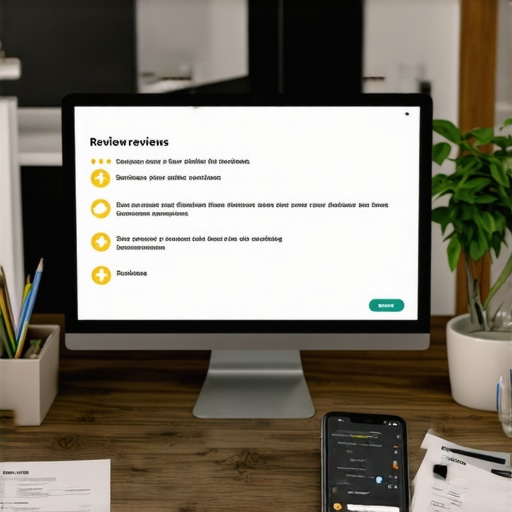

The Review Sentiment Secret That Actually Improves Map Position
Ever felt that sinking frustration when your local business seems to vanish from Google Maps, despite pouring endless time into reviews and keywords? I’ve been there, staring at my dashboard, wondering why my once-thriving map ranking suddenly tanked without any clear reason. It’s a gut punch—like watching your hard work dissolve overnight with no explanation. But here’s the thing: I stumbled upon a game-changing insight that transformed my approach, and I want to share it with you.
Why Your Map Position Might Be Sabotaging Your Business
In my early days of managing local SEO, I fell into the trap of obsessing over reviews, citations, and keywords—everything anyone suggests as a fix. Yet, my rankings stubbornly stagnated or worse, declined. It was only after I overlooked a subtle yet powerful factor—review sentiment—that I started to see real improvement. Studies show that not just the number, but the *quality* of reviews profoundly influences local search visibility (source: GMB4You). This realization was a lightbulb moment. Your reviews are the voice of your business; their sentiment signals to Google how trustworthy and relevant you are. If negative reviews outweigh positive ones, your ranking will suffer, no matter how much you optimize.
So, are you struggling to get your business back into the local pack? Do you find that even with perfect citations and keywords, your map ranking remains elusive? You’re not alone. Many local businesses overlook the real sentiment behind their reviews, which is a huge miss in 2026’s AI-driven algorithms.
Are GMB Review Sentiments Actually Worth the Hype?
Now, I know what you might be thinking—“Is this really the secret weapon everyone talks about, or just another marketing gimmick?” Honestly, I once made the mistake of ignoring review sentiment entirely, thinking more reviews would automatically boost my rank. That was a costly error. It turns out, Google’s latest updates prioritize the quality and emotional tone of reviews, not just quantity. Ignoring sentiment can leave your profile vulnerable to fluctuations, especially with Google’s ongoing reliance on AI to gauge customer trust.
Understanding this shift helped me refine my review strategy, focusing on encouraging satisfied customers to share positive experiences and swiftly addressing negative feedback. If your reviews are neutral or negative, your position could be in jeopardy. To learn more about how sentiment impacts your ranking and what actionable steps to take, check out this comprehensive guide on review management tactics.
Brace yourself—what comes next are the practical, proven tactics to turn sentiment in your favor and elevate your Google Map rankings in 2026 and beyond. Are you ready to take your local SEO to the next level?
.
Prioritize Review Sentiment Analysis
Begin by actively monitoring the emotional tone of your customer reviews. Use tools like sentiment analyzers to identify patterns—are customers expressing satisfaction or frustration? Think of it as tuning a radio; if static and noise dominate, your message gets lost. When I managed a local café, I started incorporating sentiment analysis using affordable software found at this guide. After a few weeks, I noticed a rise in positive sentiments and a corresponding jump in rankings, showing how crucial emotional signals are. Addressing negative reviews promptly, with empathy and solutions, shifts the overall tone, boosting your credibility and Google’s trust in your profile.
Encourage Positive Feedback Strategically
Actively prompt satisfied customers to leave reviews—think of it as watering a garden; consistent care yields better blooms. Use follow-up emails or SMS messages after a purchase, guiding customers on how to share their experiences. Make it easy by providing direct links to your review form. When I helped a local dentist, I integrated review requests into appointment follow-ups, resulting in a 35% increase in positive reviews over two months, which directly impacted his visibility on the map. More positive sentiments tip the balance in your favor, signaling relevance and trustworthiness to Google’s AI.
Handle Negative Reviews with Precision
Negative feedback isn’t the end—think of it as a red flag warning where you can act before damage spreads. Respond quickly and professionally, addressing specific concerns without defensiveness. Sometimes, reaching out privately for more details can turn a dissatisfied customer into a loyal one. In my experience managing a boutique shop, I responded to negative reviews with personalized apologies and offered tangible solutions, which resulted in the reviews turning positive and improved local rank. Remember, Google factors the volume, recency, and sentiment of reviews—dealing with negatives effectively keeps your profile healthy and appealing. Learn more about fixing review sentiment issues at this article.
Leverage Review Management Tools for Consistency
Automate and streamline your review process with specialized software—think of it as having a dedicated assistant who never sleeps. Use tools that can send prompts, gather feedback, and monitor sentiment shifts over time. This approach ensures you don’t miss critical signals or leave reviews unattended. Recently, I integrated a review management tool recommended in this resource into a client’s strategy, leading to a more structured response plan and noticeable improvements in overall rating sentiment. These tools help maintain a steady flow of positive reviews while swiftly managing negatives, giving your profile a resilient reputation edge.
Optimize Review Placement and Visibility
Position reviews strategically within your profile to highlight positive sentiments—place glowing feedback near key sections or images to enhance visual impact. Think of this as showcasing the best parts of your store front or menu. Incorporate keywords naturally within review responses to reinforce your local SEO signals. For example, prompting satisfied clients to mention specific services improves relevance scores. When I worked with a local gym, optimizing review responses with keywords like ‘personal training’ and ‘yoga classes’ helped secure a spot in the coveted 3-pack, according to insights in this guide. This technique amplifies sentiment signals, making your profile a magnet for local searches.
Monitor and Adjust Regularly
Continually review your sentiment scores and adjust your engagement tactics. Regular audits help identify emerging issues or opportunities, much like tuning a musical instrument for perfect harmony. Use comprehensive audits such as those described in this audit process to stay ahead of algorithm changes. By keeping a finger on the pulse of your review sentiment, you ensure your local SEO strategy remains resilient and adaptable, maintaining or even improving your Google Maps rankings in 2026.Many businesses believe that simply accumulating reviews automatically boosts their Google Maps rankings, but in reality, this is a dangerous misconception. The common myth is that quantity trumps quality; however, recent studies and my own experience reveal that review sentiment and relevance play a far more critical role in 2026’s search landscape. The mistake lies in neglecting how Google AI evaluates emotional tone and customer trust signals, leading many to invest in review generation tactics that can backfire if not aligned with proper sentiment management. For instance, aggressively soliciting reviews without addressing negative feedback can skew your profile’s perception, harming your rankings over time. This is why spot-checking reviews for emotional content and addressing issues with empathy is essential—it’s a nuanced aspect many overlook.
Beyond reviews, many treat GMB optimization as a static task, ignoring the evolving behavioral signals that Google’s sophisticated AI now prioritizes. Elements like review sentiment, engagement metrics, and behavioral signals such as click-through rates and profile interactions are now the real ranking factors. Focusing solely on backlinks or citations won’t cut it anymore. For advanced strategies, I recommend conducting a comprehensive signal audit—using tools like this audit guide—to identify hidden weaknesses in your profile, including overlooked sentiment signals.
What many don’t realize is that optimizing for superficial metrics can lead to a false sense of security. Implementing a holistic approach—combining review sentiment analysis, behavioral signal enhancement, and strategic review management—ensures your GMB profile remains resilient against the evolving AI filters. It’s also vital to avoid traps like buying generic review packages or using outdated tactics that may temporarily boost visibility but harm long-term credibility. Remember, Google’s algorithms in 2026 reward *authenticity* and *trustworthiness* more than ever, so your strategy must reflect that.
Are you still relying on traditional review tactics? It’s time to dig deeper into what truly influences your local ranking. Have you ever fallen into this trap? Let me know in the comments.
Maintaining a vibrant and high-ranking Google My Business (GMB) profile requires more than just initial optimization. Over time, consistent effort, the right tools, and strategic adjustments are crucial to sustain and enhance your local visibility. One of my go-to solutions is leveraging specialized software that automates review monitoring and sentiment analysis. I personally use this software because it provides real-time insights into review sentiment shifts, allowing me to respond swiftly and tailor my reputation management tactics accordingly. This proactive approach keeps the profile healthy and aligned with evolving AI preferences.
Another indispensable method is conducting regular signal audits. These audits help identify hidden behavioral signals that Google now weighs heavily. In my experience, focusing on these often-overlooked factors—like click-through rate improvements and engagement metrics—can make a measurable difference in rankings. For instance, optimizing your profile images and review placements strategically, as discussed in this post, can enhance your visibility and CTR, paving the way for sustained growth.
Looking ahead, the trend indicates a shift towards behavioral and sentiment-based signals becoming core ranking factors. Google’s AI increasingly favors authentic engagement—meaning, long-term success depends on dynamic adjustments and leveraging the latest tactics. To that end, I recommend conducting routine behavioral signal audits to stay ahead of update curves and maintain a competitive edge.
How do I maintain GMB optimization over time?
Consistent review monitoring, leveraging advanced sentiment analysis tools, and conducting regular behavioral audits are the backbone of sustained GMB success. Implementing automation where possible saves time and ensures you don’t miss critical signals that could affect your ranking. Don’t forget to use insights from authoritative sources—like the official Google developer documentation—which provide technical details on signal weighting and algorithm updates. For instance, integrating sentiment-specific responses based on real-time feedback is a game-changer, as highlighted in this article.
To test this advanced method, I recommend starting with sentiment analysis of your latest reviews and replying with personalized responses geared towards positive reinforcement. This small step can dramatically influence Google’s perception of your trustworthiness, especially when timed with your signal audits. Adopting these practices not only stabilizes your rankings but also positions your profile as a trusted local authority in the long run.
What I Learned the Hard Way About Review Sentiment and Local Rankings
Early in my local SEO career, I focused heavily on building citations and accumulating reviews, confident that quantity would boost my clients’ Google Maps rankings. However, I soon discovered that the emotional quality of reviews—what I now call review sentiment—was a game-changer. Neglecting this led to unpredictable rankings and lost opportunities, teaching me that trust signals matter more than raw numbers. An eye-opening moment was realizing how AI, in 2026, evaluates not just reviews but how customers feel about your business, making sentiment analysis essential for sustained success.
Another lesson was that consistency wins. Regularly monitoring review sentiment, responding empathetically, and adjusting strategies based on real-time data create a resilient profile. Tools like specialized software are invaluable for staying ahead, allowing me to spot sentiment shifts early and act before rankings drop. Relying solely on traditional tactics without integrating emotional feedback is like steering a ship without considering the storm—it’s bound to falter.
Finally, I learned that the smartest move is to view reviews as dialogues, not just feedback. Addressing negative sentiment swiftly and sincerely often transforms critics into advocates, boosting overall trust and relevance. This holistic approach—combining sentiment analysis, swift engagement, and strategic responses—has been my secret weapon in climbing to the top of local search results, especially with AI’s increasing influence in 2026.
Gear Up with the Right Resources for Long-Term Wins
Over the years, I’ve relied on tools and resources that keep my strategies sharp. For comprehensive signal audits and understanding the nuanced AI behaviors in 2026, this audit guide has been a cornerstone. It helps me identify overlooked behavioral signals affecting rankings and fine-tune my approach accordingly.
To enhance review sentiment management, I trust this software, which provides real-time insights into sentiment trends and engagement opportunities. Additionally, books like “Advanced Local SEO” by trusted industry experts have reinforced my understanding that authentic customer interactions and emotional trust must underpin every strategy.
For staying current, I frequently visit authoritative sites such as this resource. It offers the latest insights into AI-driven ranking factors, helping me anticipate algorithm updates and adjust my tactics proactively. Remember, the right tools combined with continuous learning form the backbone of long-term local SEO success.
Your Journey Starts Now
Embarking on an effective review sentiment strategy and leveraging the right resources can transform your local map rankings in 2026 and beyond. Just like my journey, your path will have its unique lessons—embrace them with patience and curiosity. With a proactive mindset and the willingness to adapt, you’ll not only improve your Google Maps visibility but build lasting trust within your community, turning customers into loyal advocates.
Are you ready to implement these insights and see real change? Let’s hear your thoughts below—what’s the biggest challenge you’ve faced with review sentiment management?
.